





No products in the cart.
- Latest
- Trending

Wall Street falls, oil surges after Trump threatens more attacks on Iran
Comprehensive Summarization:
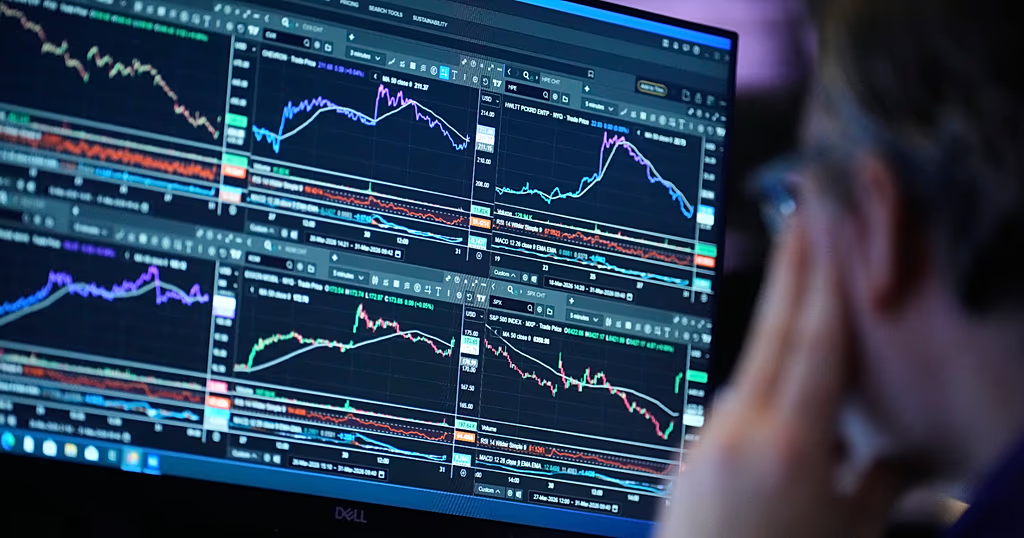
The article reports on a significant downturn in global stock markets, particularly in U.S. indices, following President Donald Trump’s announcement that the U.S. will continue to attack Iran and provide no clear timeline for ending the conflict in the Middle East. The S&P 500 fell by 1.1%, the Dow Jones Industrial Average dropped by 1.2%, and the Nasdaq composite declined by 1.6%. This market reaction is part of a broader slide observed across major indexes in Europe and Asia. The article underscores the immediate impact of geopolitical tensions on financial markets, highlighting the volatility and uncertainty in the current economic climate.
Key Points:
Actionable Takeaways:
Market Volatility and Risk Management: Investors should consider implementing risk management strategies, such as diversifying portfolios and using hedging techniques, to mitigate potential losses in volatile markets. This is particularly relevant given the recent sharp declines in major stock indices due to geopolitical tensions.
Geopolitical Risk Assessment: Companies with international operations should conduct thorough assessments of geopolitical risks, particularly in regions with ongoing conflicts. This includes evaluating supply chain dependencies, potential disruptions, and the impact on market sentiment, which can affect business operations and financial performance.
Focus on Stable Sectors: Given the current market uncertainty, investors might consider reallocating resources towards stable sectors such as utilities, consumer staples, and healthcare, which typically exhibit lower volatility compared to technology and financial sectors during times of geopolitical unrest.
Contextual Insights:
The recent market downturn is a clear illustration of how geopolitical conflicts can have immediate and profound effects on global financial markets. The article highlights the interconnectedness of economic and political landscapes, where tensions in one region can trigger a ripple effect across the world. In the context of the travel industry, this volatility can impact travel startups and fintech innovations, as investors become more cautious and risk-averse. The article suggests that while the immediate impact on travel-related sectors may not be as pronounced as in traditional financial markets, the underlying sentiment of uncertainty could influence consumer confidence and spending patterns. Thought leaders in the travel industry should monitor geopolitical developments closely and be prepared to adapt their strategies to maintain resilience in the face of potential market fluctuations.
Read the Complete Article.
Get curated travel AI insights — choose the newsletters that matter to you.
ALTOUR Expands into Thailand, Strengthening Corporate Travel Network Across Southeast Asia BANGKOK, THAILAND (25 March, 2026) – ALTOUR, a leading...
Read moreDetails


Comprehensive Summarization: The article reports on a significant downturn in global stock markets, particularly in U.S. indices, following President Donald...
Read moreDetails