




No products in the cart.
- Latest
- Trending


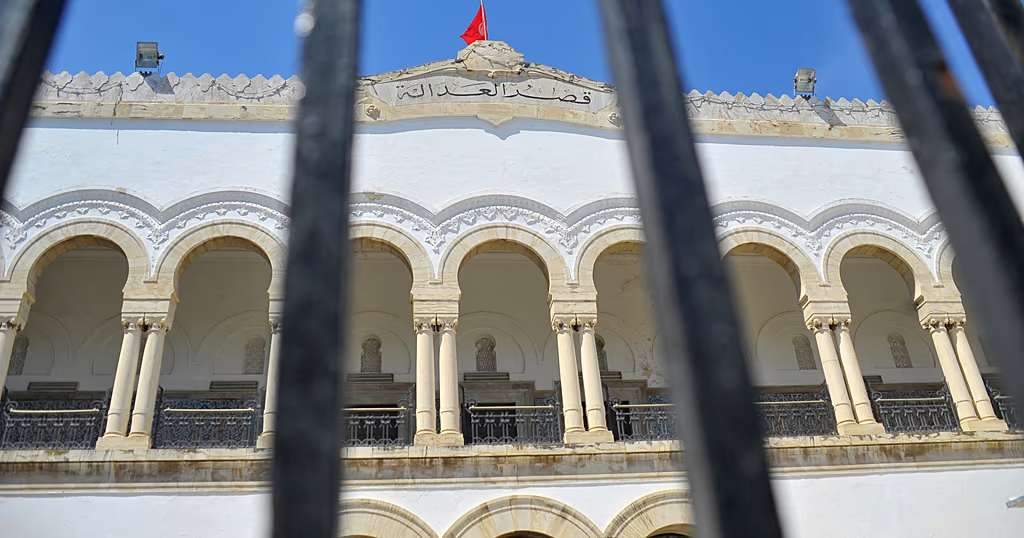
Tunisia frees NGO worker Sherifa Riahi after 20 months
Article Summary:
Sherifa Riahi, the former director of the French NGO Terre d’Asile, has been released from prison in Tunisia after more than 20 months. She was detained alongside two colleagues for charges of facilitating the illegal entry and residence of migrants. Riahi expressed relief upon her release, highlighting the emotional toll of her detention, particularly the isolation and separation from her family. The article also touches on the broader context of travel and migration issues, reflecting on the challenges faced by those involved in humanitarian efforts.
Key Points:
Actionable Takeaways:
Contextual Insights:
The release of Sherifa Riahi from prison in Tunisia is a poignant reminder of the ongoing challenges faced by humanitarian workers in the realm of migration and asylum. This case is reflective of broader trends in the travel industry, where legal and ethical considerations play a crucial role in shaping operations and partnerships. As the travel sector continues to evolve, with increasing emphasis on sustainability and social responsibility, it is imperative for stakeholders to remain vigilant about the legal and humanitarian implications of their activities. The integration of legal support mechanisms and advocacy efforts can significantly mitigate risks and enhance the credibility of travel-related initiatives, particularly those involving migrant populations. This aligns with current industry trends towards greater transparency and ethical governance, ensuring that travel and tourism contribute positively to global communities.
Read the Complete Article.
Get curated travel AI insights — choose the newsletters that matter to you.
This spot is reserved for brands with a compelling story for the travel trade. They use this space to cut...
Read moreDetailsALTOUR Expands into Thailand, Strengthening Corporate Travel Network Across Southeast Asia BANGKOK, THAILAND (25 March, 2026) – ALTOUR, a leading...
Read moreDetails


COAX Software & King Danylo University Launch 2026 Scholarship Program for Travel Tech Juniors
Read moreDetails