









No products in the cart.
- Latest
- Trending


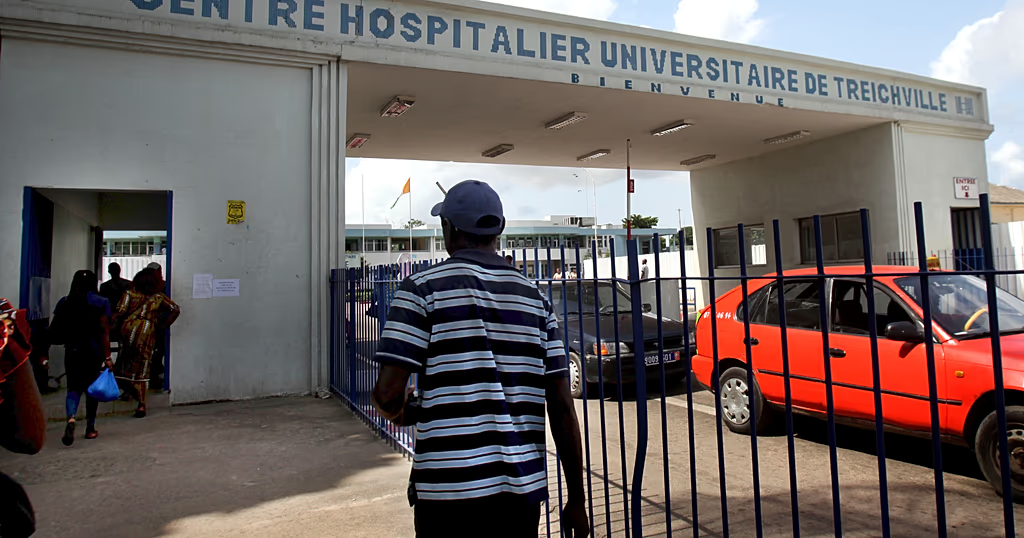
U.S. and Ivory Coast sign $487 million health agreement
Article Summary:
The Ivory Coast has signed a $487 million bilateral health agreement with the United States to strengthen its health system and improve its capacity to prevent and respond to diseases such as HIV/AIDS, malaria, and tuberculosis. The agreement emphasizes national ownership of health priorities and encourages countries to mobilize domestic resources while working with international partners. This development aligns with the United States’ new global health strategy.
Key Points:
Actionable Takeaways:
Contextual Insights:
The signing of this health agreement is a significant development in the context of global health initiatives and international cooperation. It underscores the importance of strategic partnerships between nations to address shared health challenges. In the travel industry, such health improvements can lead to increased confidence among travelers, potentially accelerating the recovery of travel and tourism sectors in affected regions. Additionally, the emphasis on national ownership of health priorities aligns with broader trends in global health governance, where countries are encouraged to take lead roles in managing their health systems. This trend is likely to influence future travel policies and investments, as destinations with robust health systems become more attractive to international tourists.
Read the Complete Article.
Get curated travel AI insights — choose the newsletters that matter to you.
This spot is reserved for brands with a compelling story for the travel trade. They use this space to cut...
Read moreDetailsALTOUR Expands into Thailand, Strengthening Corporate Travel Network Across Southeast Asia BANGKOK, THAILAND (25 March, 2026) – ALTOUR, a leading...
Read moreDetails


Comprehensive Summarization: The article discusses the challenges faced by the Pattaya tourism sector in March 2026, characterized by a weaker...
Read moreDetails