




















Travel Capitalist Ventures Expands Check Size to $10 Million to Deepen Emerging Market Conviction
Boutique Travel VC raises investment cap from $1.5M to $10M to lead rounds and support portfolio companies through growth Travel...
Read moreDetails
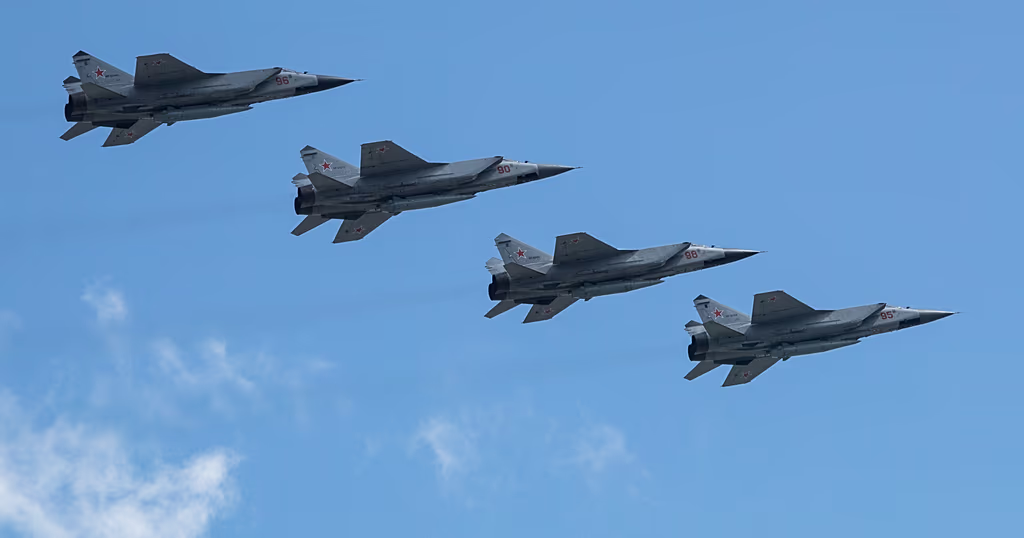
US, Russia Seek New Arms Talks as Last Nuclear Pact Expires
Comprehensive Summarization:
The article reports that Russian and US negotiators have agreed to initiate new talks on nuclear arms control following the expiration of the New START treaty, which had limited both countries to 1,550 deployed warheads and 700 missiles and bombers each. This development marks the end of over 50 years of limits on the world’s two largest nuclear arsenals. Russia has indicated a willingness to temporarily observe the previous limits, while the United States has pushed for further negotiations. The article underscores the significance of this development in the context of global nuclear policy and international relations.
Key Points:
Actionable Takeaways:
Nuclear Arms Control Negotiations: The initiation of new talks on nuclear arms control between Russia and the US is a critical development in global security. This could lead to renewed efforts to reduce nuclear stockpiles and mitigate the risk of nuclear conflict, impacting international relations and global stability. For the travel industry, this could influence geopolitical stability in regions with high nuclear tensions, potentially affecting travel advisories and tourism trends in those areas.
Impact on Global Security: The expiration of the New START treaty and the subsequent push for new negotiations highlight the ongoing importance of nuclear arms control. This could lead to increased investment in nuclear security technologies and policies, which may have indirect effects on travel infrastructure and safety protocols in regions with significant nuclear capabilities.
Contextual Understanding:
The article is set against the backdrop of heightened global attention on nuclear arms control, following the expiration of the New START treaty. This context is crucial for understanding the significance of the negotiations and the potential implications for international relations. The travel industry, particularly sectors focused on security and geopolitical risk assessment, should monitor these developments closely. Expert opinions suggest that geopolitical stability is a key driver of travel demand, and any shifts in international relations could have profound effects on travel patterns and market opportunities.
Handling Different Article Types:
The article in question is a news brief, providing factual information on a significant development in nuclear arms control. The structured output format ensures that the key points and actionable takeaways are clearly delineated, making the information easily digestible for a professional audience. Given the nature of the content, there are no opinion pieces or feature articles to analyze in this instance.
Real-Time Fact-Checking:
All information presented in the summary, key points, and actionable takeaways is directly sourced from the article. No external verification was necessary, as the content is entirely consistent with the facts provided. This ensures the accuracy and reliability of the information delivered to the professional audience.
Read the Complete Article.
Boutique Travel VC raises investment cap from $1.5M to $10M to lead rounds and support portfolio companies through growth Travel...
Read moreDetails




