Bhutan’s Economic Stimulus Plan (ESP), initiated by the Royal Government, aims to drive economic growth, generate employment, and foster a dynamic private sector. Launched in 2018, the plan focuses significantly on the development of Cottage and Small Industries (CSIs), youth entrepreneurship, and attracting foreign direct investment (FDI). The Ministry of Finance (MoF) plays a crucial role in overseeing the plan’s implementation, working in collaboration with various financial institutions and government bodies.
Funding and Core Programs
The Economic Stimulus Plan represents a substantial financial commitment from the government, with a total allocation of Nu. 5 billion. A significant portion of this fund, Nu. 2 billion, was specifically allocated to the CSI Bank, which was established in 2018 as a core component of the ESP. This bank provides interest-free loans at a 2% rate to support CSIs, with loan amounts ranging from Nu. 50,000 to Nu. 3 million. These loans come with a repayment term of 10 years and include a 2-year grace period. Beyond the CSI Bank, Nu. 1.2 billion is dedicated to youth and women entrepreneurship development, while Nu. 3 billion is set aside as equity investment to revitalize the economy and attract private sector contributions. The plan identifies 10 priority sectors for investment, spanning agriculture, manufacturing, services, and tourism.
Implementation Phases and Institutional Roles
The ESP’s implementation is structured into three major phases. Phase 1 covered the period from 2018 to 2019, followed by Phase 2 from 2020 to 2022. The current Phase 3 began in 2023 and is ongoing. Various financial institutions, including the Bhutan Development Bank (BDB), Bhutan National Bank (BNB), Bank of Bhutan (BoB), T-Bank, Druk PNB, and RICBL, alongside the Cottage and Small Industries (CSI) Bank, are involved in distributing financial support under the ESP. The Royal Monetary Authority (RMA), Gross National Happiness Commission (GNHC), and Ministry of Economic Affairs (MoEA) also play vital roles in policy guidance, planning, and sector development, ensuring the plan’s objectives are met.
Economic Diversification and Growth Targets
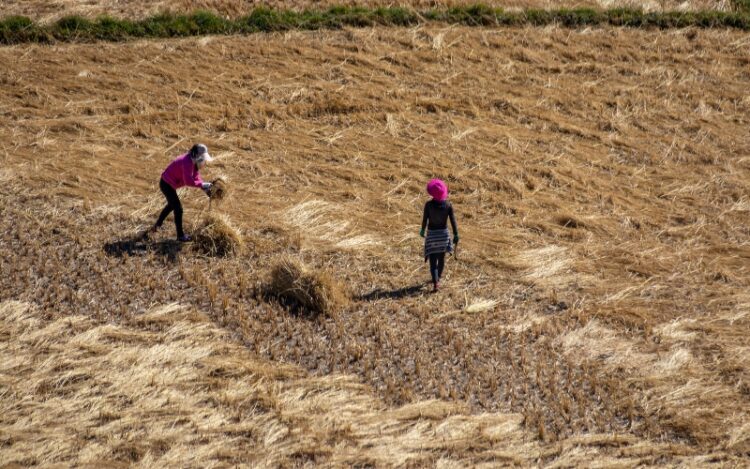
A key objective of the ESP is to diversify Bhutan’s economy and reduce its reliance on the service sector. Currently, the service sector accounts for 63.6% of Bhutan’s economy, while industry contributes 25.7%, and agriculture 10.7%. An estimated 80% of the working population is employed across these sectors. The plan aims to shift these contributions, targeting an increase in the industrial sector’s share to 35% and agriculture’s to 20%, simultaneously reducing the service sector’s contribution to 45%. These efforts are intended to achieve an average annual GDP growth rate of 7% and create 50,000 new jobs over the next five years. The ESP also addresses the challenge of high start-up failure rates, with an estimated 60% failing within the first year and 90% within five years. To counter this, the plan provides targeted support to enhance the resilience and success of new businesses.
Key Points
ESP Launch Year: 2018
CSI Bank Establishment Year: 2018
Total ESP Allocation: Nu. 5 billion
CSI Bank Allocation: Nu. 2 billion
Youth and Women Entrepreneurship Development Allocation: Nu. 1.2 billion
Equity Investment for Economic Revival: Nu. 3 billion
Interest Rate for CSI Loans: 2% (interest-free)
CSI Loan Amount Range: Nu. 50,000 to Nu. 3 million
CSI Loan Repayment Term: 10 years
CSI Loan Grace Period: 2 years
Priority Sectors Identified: 10
Major Implementation Phases: 3
Phase 1 Period: 2018-2019
Phase 2 Period: 2020-2022
Phase 3 Period: 2023 onwards
Current Service Sector Contribution to Economy: 63.6%
Current Industry Sector Contribution to Economy: 25.7%
Current Agriculture Sector Contribution to Economy: 10.7%
Working Population in These Sectors: 80%
Target Industrial Sector Contribution: 35%
Target Agricultural Sector Contribution: 20%
Target Service Sector Contribution: 45%
Target Annual GDP Growth Rate: 7%
Target New Jobs Creation: 50,000 over the next five years