







No products in the cart.
- Latest
- Trending

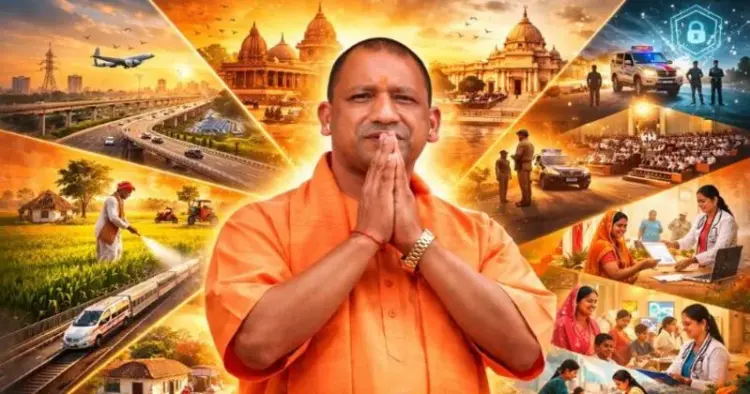
Nav Nirman Ke 9 Varsh: Uttar Pradesh Rises as India’s Spiritual Tourism Powerhouse
Comprehensive Summarization:
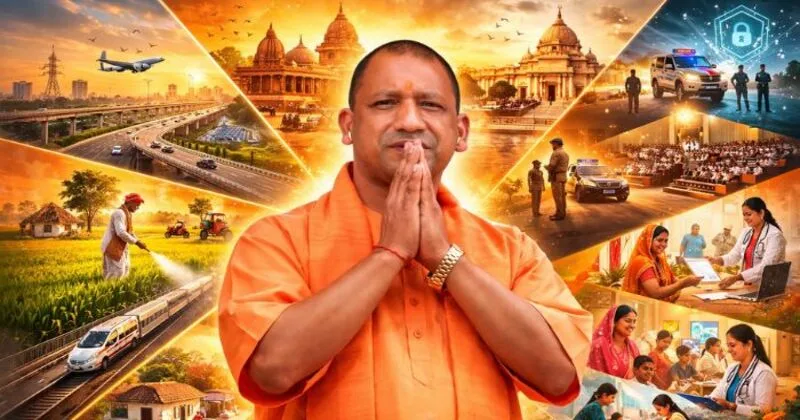
The article highlights a remarkable nine-year governance period under Yogi Adityanath in Uttar Pradesh, India, which has led to a significant transformation in the tourism sector. The state has emerged as the country’s leading destination for domestic travelers and is rapidly gaining global recognition as a spiritual tourism hub. This growth is primarily driven by the successful implementation of the Uttar Pradesh Tourism Policy 2022 and the state’s unique ‘Temple and Festival Economy’ model. Tourism in Uttar Pradesh has witnessed unprecedented growth, with tourist footfall increasing from 23.75 crore in 2017 to 64.91 crore in 2024. The momentum surged further in 2025, with the Mahakumbh 2025 event playing a pivotal role. The article underscores the state’s strategic initiatives and their impact on the tourism industry, positioning Uttar Pradesh as a key player in both domestic and global tourism markets.
Key Points:
Actionable Takeaways:
Leverage Spiritual Tourism: Uttar Pradesh’s success in spiritual tourism can serve as a model for other regions aiming to diversify their tourism offerings. By focusing on unique cultural and spiritual attractions, states can attract a broader range of travelers, enhancing their economic benefits.
Policy Implementation Matters: The success of the Uttar Pradesh Tourism Policy 2022 demonstrates the importance of well-crafted policies in driving tourism growth. States should prioritize policy development that supports tourism infrastructure, marketing, and sustainable practices to achieve similar growth trajectories.
Event-Driven Growth: Major events like Mahakumbh 2025 can significantly boost tourism numbers. States should identify and leverage such events to create strategic partnerships, enhance infrastructure, and promote their destinations on a global scale.
Contextual Insights:
The article reflects a broader trend in the travel industry towards diversification and strategic planning. The rise of Uttar Pradesh as a leading domestic tourism destination underscores the potential of niche tourism models, such as the ‘Temple and Festival Economy’, to drive significant growth. This aligns with current industry insights that emphasize the importance of leveraging cultural and spiritual attractions to attract a global audience. Furthermore, the article highlights the role of strategic policy implementation in transforming tourism sectors, a lesson that can be applied to other regions and sectors within the travel industry. As travel trends continue to evolve, focusing on unique selling propositions and strategic event management will be crucial for sustained growth and competitiveness in the global market.
Read the Complete Article.
Get curated travel AI insights — choose the newsletters that matter to you.
This spot is reserved for brands with a compelling story for the travel trade. They use this space to cut...
Read moreDetailsALTOUR Expands into Thailand, Strengthening Corporate Travel Network Across Southeast Asia BANGKOK, THAILAND (25 March, 2026) – ALTOUR, a leading...
Read moreDetails


Comprehensive Summarization: The article highlights a remarkable nine-year governance period under Yogi Adityanath in Uttar Pradesh, India, which has led...
Read moreDetails