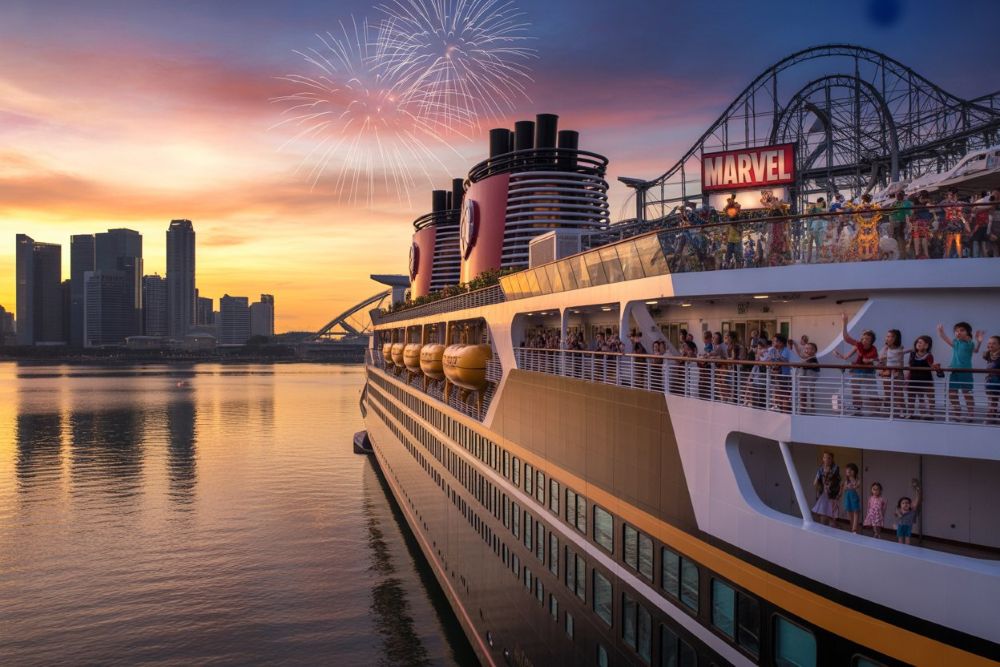
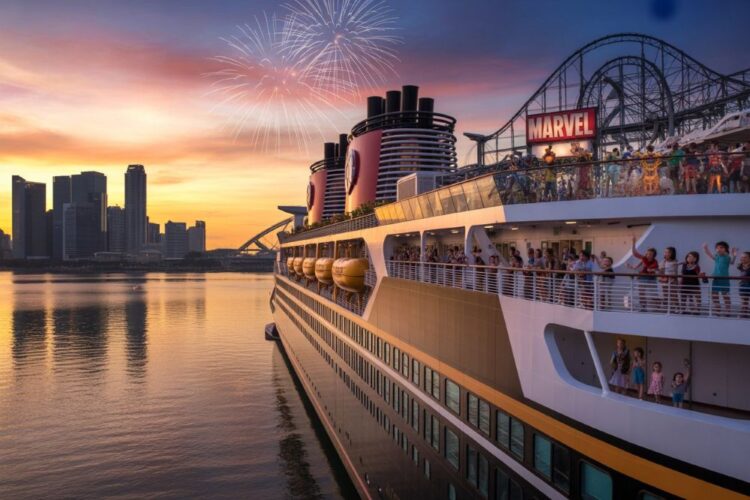
The article announces the launch of Disney Adventure, Disney Cruise Line’s first cruise ship permanently based in Asia, setting sail from the Marina Bay Cruise Centre in Singapore. This marks a significant expansion of Disney’s global footprint and positions Singapore as a key cruise gateway in the region. The launch is expected to boost Singapore’s tourism and maritime sectors, with the ship operating three- and four-night voyages. The announcement signifies a new era in cruise travel, blending Disney’s entertainment magic with Asia’s cruise industry, promising “enchanted kingdoms, Marvel showdowns, and secrets waiting beyond the horizon.”
Key Points:
Disney Cruise Line has launched its first cruise ship, Disney Adventure, permanently based in Asia.
The ship will operate from the Marina Bay Cruise Centre in Singapore, marking a significant expansion for Disney’s global cruise footprint.
The new vessel will offer three- and four-night voyages, positioning Singapore as a key cruise gateway in the region.
This launch is expected to boost Singapore’s tourism and maritime sectors, signaling a new era in cruise travel.
Actionable Takeaways:
Expansion of Disney’s Global Cruise Footprint: The launch of Disney Adventure in Singapore represents a strategic expansion for Disney Cruise Line, enhancing its global presence and offering new travel experiences for its customers. This move could lead to increased revenue streams for Disney and potentially attract more cruise enthusiasts to Singapore, benefiting the local tourism industry.
Singapore as a New Cruise Gateway: The positioning of Disney Adventure in Singapore highlights Singapore’s growing importance as a cruise hub in the Asia-Pacific region. This development could stimulate further investments in cruise infrastructure and services in Singapore, fostering growth in the maritime sector. For travel agencies and tourism boards, this presents an opportunity to capitalize on the increased cruise traffic by offering tailored cruise packages and enhancing Singapore’s cruise experience.
Integration of Entertainment and Travel: The article emphasizes Disney Adventure’s promise of “enchanted kingdoms, Marvel showdowns, and secrets waiting beyond the horizon,” indicating a trend towards integrating entertainment and travel experiences. This innovation could set a new standard for cruise offerings, encouraging other cruise lines to incorporate themed entertainment and immersive experiences into their itineraries. For startups and tech companies in the travel sector, this trend presents an opportunity to develop innovative solutions that enhance the cruise experience, such as augmented reality (AR) and virtual reality (VR) applications, thereby staying competitive in the evolving travel landscape.
Contextual Understanding:
The launch of Disney Adventure in Singapore is a strategic move that underscores the evolving nature of the cruise industry, where entertainment and travel are increasingly intertwined. Singapore’s selection as the launch location is indicative of the city-state’s robust tourism infrastructure, its strategic location in the Asia-Pacific region, and its reputation as a global tourism hub. This development aligns with broader industry trends towards experiential travel, where passengers seek unique, immersive experiences that go beyond traditional cruise offerings.
The article also reflects the growing importance of Asia as a key market for cruise lines. As more travelers seek unique and culturally rich experiences, cruise lines are expanding their routes to cater to this demand. Singapore’s role as a cruise gateway is further supported by its status as a major international financial center and its well-developed tourism infrastructure, making it an ideal location for a cruise hub.
Handling Different Article Types:
The article in question is a news blurb, providing factual information about a significant development in the cruise industry. News blurbs typically focus on the main facts and developments without delving into opinion or analysis. In handling such articles, it is crucial to adhere strictly to the provided facts and context, ensuring that the summary, key points, and actionable takeaways are directly sourced from the article. This approach ensures accuracy and relevance, making the output suitable for a professional audience seeking factual and timely information.
Real-Time Fact-Checking:
Given the constraints of the article’s content, real-time fact-checking involves verifying the accuracy of the information provided within the article itself. Since the article is self-contained and does not reference external sources, there is no need for additional fact-checking beyond confirming the factual accuracy of the details presented. This ensures that the output remains strictly aligned with the article’s content, maintaining credibility and reliability for the professional audience.