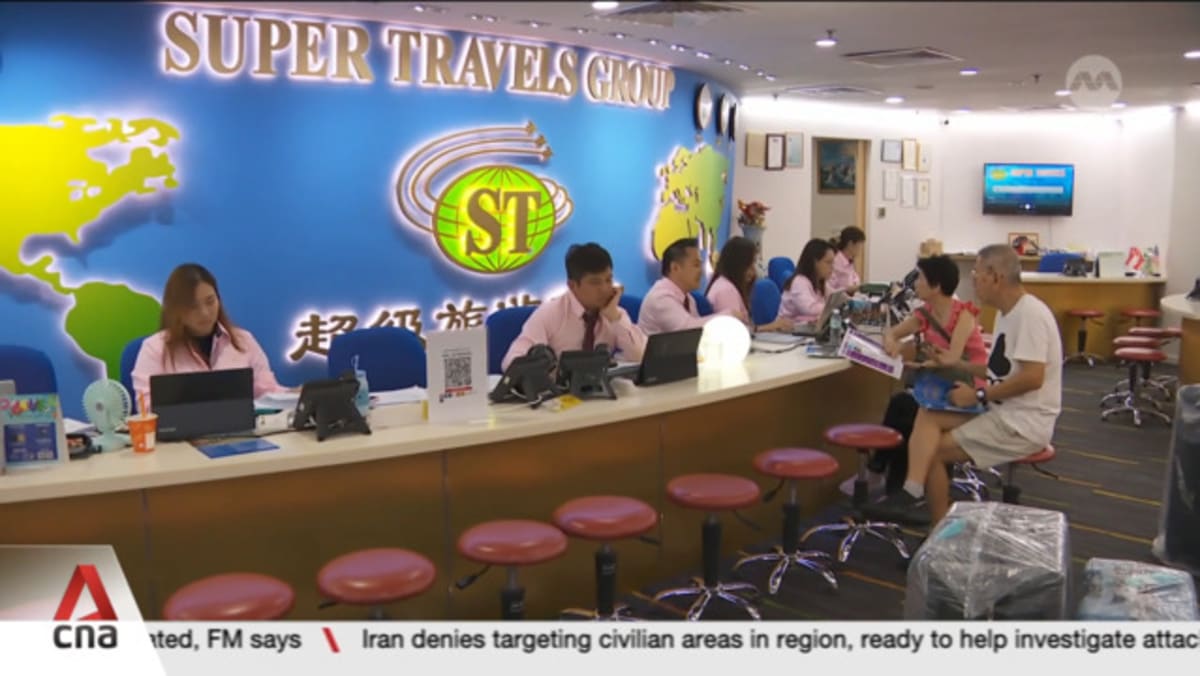
Travel agencies in Singapore are facing mounting losses as tour groups cancel or postpone trips to Europe due to the Middle East conflict. With fewer flights passing through the region, operators say some travellers are reluctant to rebook amid uncertainty. One agency expects to pay about S$270,000 in cancellation costs. Holiday makers are now turning to destinations like China and Taiwan instead, driving up demand and airfares. Nasyrah Rohim finds out more.
The article highlights the significant financial impact on travel agencies in Singapore due to the cancellation or postponement of tour groups to Europe, primarily caused by the Middle East conflict. This situation has led to a decrease in flights passing through the region, causing some travelers to be hesitant about rebooking due to uncertainty. One agency anticipates incurring cancellation costs amounting to approximately S$270,000. In response to this shift, holidaymakers are increasingly opting for alternative destinations such as China and Taiwan, which is driving up demand and airfares. The article underscores the evolving travel preferences and the financial challenges faced by travel agencies in this context.
Key Points:
Travel agencies in Singapore are experiencing substantial losses due to cancellations and postponements of European tours caused by the Middle East conflict.
The decrease in flights through Singapore is leading to reluctance among travelers to rebook, citing uncertainty.
Alternative destinations like China and Taiwan are witnessing a surge in demand, which is driving up airfares.
One travel agency is expected to incur cancellation costs of around S$270,000.
The shift in travel preferences is impacting the travel industry dynamics, particularly in terms of demand and pricing.
Actionable Takeaways:
Diversify Travel Offerings: Travel agencies should consider diversifying their offerings to include destinations outside Europe, such as China and Taiwan, to mitigate losses from canceled trips. This strategy can help maintain revenue streams despite the current travel uncertainties.
Implement Flexible Booking Policies: To encourage travelers to rebook, agencies could introduce flexible booking policies that allow for easier cancellations or rescheduling without hefty penalties. This approach could alleviate some of the uncertainty and hesitation among travelers.
Monitor and Adapt to Market Trends: Agencies should closely monitor market trends and adapt their marketing strategies to highlight the safety and appeal of alternative destinations. Providing reassurance through transparent communication about safety measures and travel advisories can help rebuild traveler confidence.
Contextual Insights:
The article reflects the current challenges faced by the travel industry in the wake of geopolitical tensions, specifically the Middle East conflict. This situation has led to a reevaluation of travel preferences, with travelers seeking safer and more stable destinations. The surge in demand for destinations like China and Taiwan underscores a broader trend of travelers prioritizing safety and stability over traditional European destinations. This shift highlights the importance of adaptability and innovation in travel marketing strategies. Furthermore, the financial implications for travel agencies, such as the S$270,000 cancellation costs, emphasize the need for robust contingency planning and flexible policies to navigate such crises effectively. As the travel industry continues to evolve, staying informed about emerging trends and thought leader insights will be crucial for agencies to remain competitive and resilient in the face of unforeseen challenges.
Comprehensive Summarization: The North East India Tourism Confederation (NEITC) has signed a strategic memorandum of understanding (MoU) with the Association...