


![[At one go] There was no reverse sweep Korean Air 'Champ Up With Winning Game 5'](https://images.traveltrade.today/wp-content/uploads/2026/04/Korean-Air-Triumphs-in-Game-5-Reverse-Sweep-Victory.jpg)


















Travel Capitalist Ventures Expands Check Size to $10 Million to Deepen Emerging Market Conviction
Boutique Travel VC raises investment cap from $1.5M to $10M to lead rounds and support portfolio companies through growth Travel...
Read moreDetails
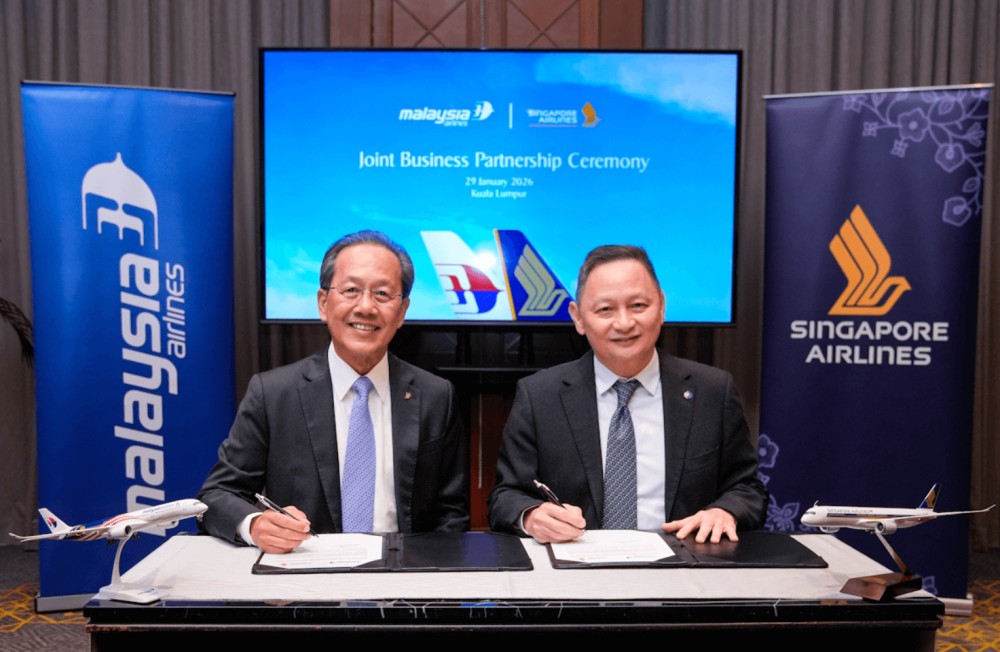
Malaysia Airlines and Singapore Airlines Formalize its Joint Business Agreement to Strengthen New Co...
Comprehensive Summarization:
Malaysia Airlines and Singapore Airlines have formalized a strategic joint business agreement effective from January 29, 2026. This agreement allows the two full-service carriers to share revenue, coordinate joint fare products, and flight schedules, thereby enhancing their cross-border travel offerings for both leisure and business travelers. The partnership aims to improve airline efficiency and expand connectivity within Malaysia, Singapore, and the broader Southeast Asia region. This development is significant for the travel and tourism industry in the region, as it signifies a concerted effort to bolster connectivity and travel options amidst evolving market dynamics.
Key Points:
Actionable Takeaways:
Enhanced Connectivity and Travel Options: The joint business agreement between Malaysia Airlines and Singapore Airlines is expected to significantly enhance connectivity and travel options for passengers in the region. By sharing revenue and coordinating fare products and flight schedules, the airlines can offer more competitive pricing and flexible travel options, catering to both leisure and business travelers. This move is likely to attract more travelers, thereby boosting the travel and tourism industry in Malaysia, Singapore, and the broader Southeast Asia region.
Increased Revenue Sharing Opportunities: The agreement opens up new avenues for revenue sharing between the two airlines. This could lead to more lucrative partnerships and potentially lower fares for consumers, as the airlines can leverage their combined resources to optimize pricing strategies. For industry stakeholders, this presents an opportunity to explore similar revenue-sharing models with other airlines, fostering a more competitive and dynamic market environment.
Strategic Alignment with Regional Travel Trends: The joint venture aligns with the broader trend of airlines seeking to strengthen their market presence through strategic partnerships. As the travel industry continues to recover from the impacts of the COVID-19 pandemic, such collaborations are becoming increasingly common as carriers look to expand their networks and improve operational efficiencies. For travel industry professionals, this underscores the importance of forming alliances to navigate the evolving landscape and capitalize on emerging opportunities.
Contextual Insights:
The formalization of this joint business agreement between Malaysia Airlines and Singapore Airlines is a strategic response to the evolving dynamics of the global travel industry. In the wake of the pandemic, airlines have been focusing on enhancing connectivity and improving operational efficiencies to regain market share and meet growing consumer demand. This partnership exemplifies a broader trend where airlines are leveraging technology and strategic alliances to offer seamless travel experiences and competitive pricing.
Moreover, the agreement reflects the increasing importance of cross-border travel in the region, particularly in the context of Southeast Asia’s growing economic and tourism potential. As countries in the region continue to recover and reopen their borders, airlines play a crucial role in facilitating travel and fostering economic growth. The joint venture between Malaysia Airlines and Singapore Airlines is thus not only a testament to their commitment to enhancing regional connectivity but also a strategic move to capitalize on the burgeoning travel demand in the region.
In the context of travel tech and innovation, this partnership could also pave the way for further technological integrations and innovations. For instance, the airlines may explore shared digital platforms for fare management, customer service, and data analytics, which could lead to more efficient operations and enhanced customer experiences. This aligns with the broader trend of digital transformation in the travel industry, where technology is increasingly being leveraged to drive efficiency, improve service quality, and meet the evolving expectations of modern travelers.
Read the Complete Article.
Boutique Travel VC raises investment cap from $1.5M to $10M to lead rounds and support portfolio companies through growth Travel...
Read moreDetails



European hotel investment shrugged off uncertainty in 2025, with deal flow holding firm across all four quarters despite a challenging...
Read moreDetails
