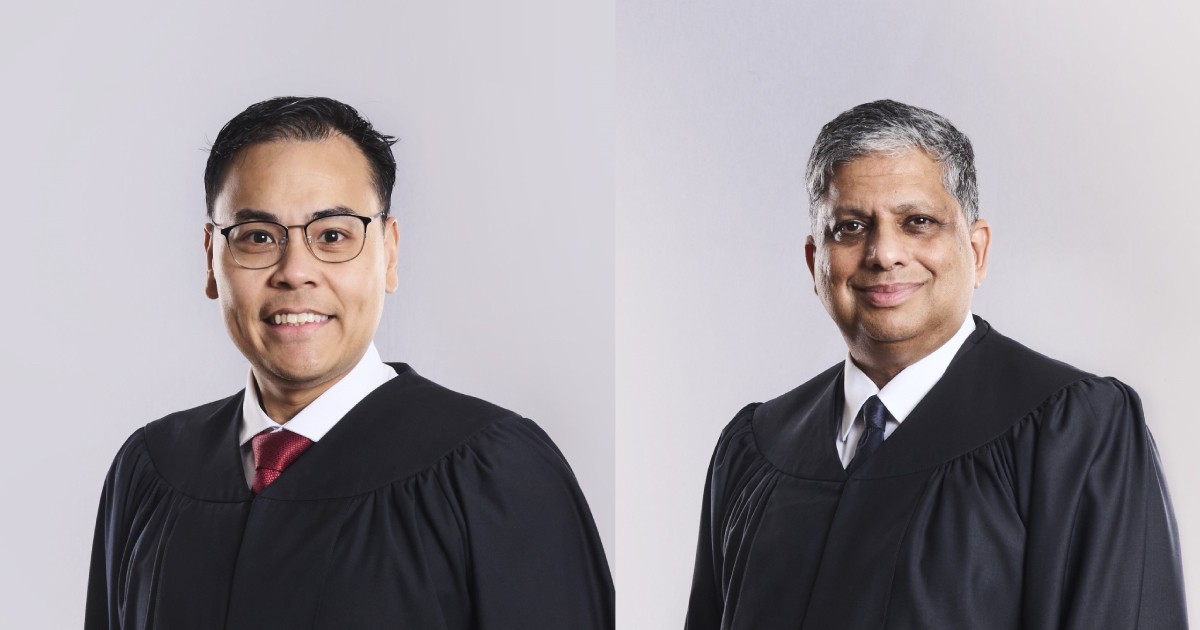
The article announces the appointment of two judicial commissioners, Justices Mohamed Faizal Mohamed Abdul Kadir and Sushil Sukumaran Nair, as High Court judges effective from March 9, 2024. This appointment brings the total number of judges on the Supreme Court to 35, including the Chief Justice, five Justices of the Court of Appeal, four judges of the Appellate Division, 19 judges of the High Court, a judicial commissioner, and five senior judges. The total also includes 26 international judges. Justice Faizal was appointed as a judicial commissioner in May 2024 for a two-year term, having joined the legal service in 2005 as a justices’ law clerk in the Supreme Court. The news release from the Prime Minister’s Office (PMO) provides these details, emphasizing the judicial appointments and their impact on the Supreme Court’s composition.
Key Points:
Two judicial commissioners, Justices Mohamed Faizal Mohamed Abdul Kadir and Sushil Sukumaran Nair, have been appointed as High Court judges.
This appointment increases the total number of judges on the Supreme Court to 35, including the Chief Justice, Court of Appeal Justices, Appellate Division judges, High Court judges, a judicial commissioner, and five senior judges.
The total also comprises 26 international judges, highlighting the diverse composition of the judiciary.
Justice Faizal was appointed as a judicial commissioner in May 2024 for a two-year term, with a background in the Supreme Court since 2005.
Actionable Takeaways:
Diverse Judicial Composition: The appointment of two new judicial commissioners increases the diversity of the Supreme Court, potentially bringing fresh perspectives and expertise to judicial decisions. This could enhance the court’s ability to handle complex cases, particularly those involving international law or multi-jurisdictional issues.
International Representation: With 26 international judges on the Supreme Court, the court is better positioned to address global legal challenges and provide rulings that are relevant to an international audience. This could be particularly beneficial for cases involving cross-border disputes or international treaties, enhancing the court’s credibility and influence on the global stage.
Contextual Insights:
The appointment of judicial commissioners and the increase in the number of judges on the Supreme Court reflect broader trends in judicial systems worldwide, where larger and more diverse courts are seen as more effective and representative. This aligns with current industry trends in the travel and legal sectors, where globalization and the increasing complexity of legal issues necessitate a more comprehensive judicial framework. The presence of international judges underscores the court’s role in mediating disputes that transcend national boundaries, a trend that is likely to continue as international travel and commerce increase. For travel startups and fintech companies, this could mean a greater need for legal expertise in international law and cross-border transactions, potentially driving innovation in legal tech solutions to support these sectors.
Comprehensive Summarization: The article discusses Thailand's initiative to introduce regulations requiring international tourists to obtain accident insurance before entering the...