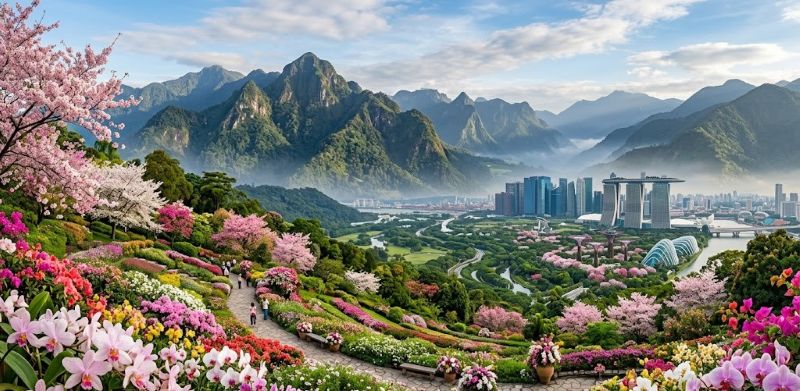
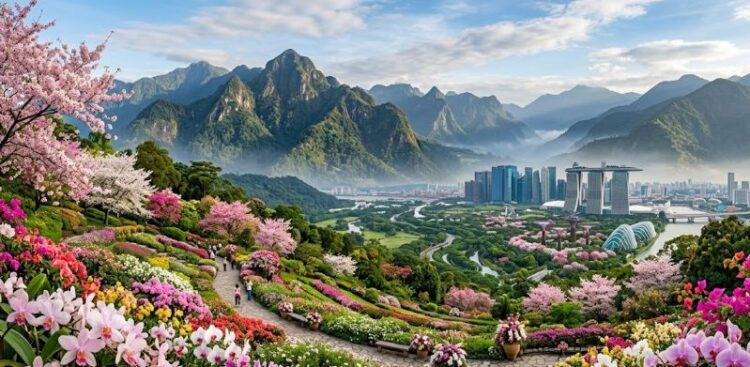
The article highlights a unique natural phenomenon occurring in Singapore in 2026, where an unusually heavy period of precipitation has led to a premature and spectacular explosion of color. This ecological shift has awakened over 4,800 native and exotic plant species, transforming the city into a vibrant living tapestry. As a result, travelers from around the globe are flocking to Singapore, marking a significant shift in the tourism landscape of Southeast Asia. The article underscores the transformative power of nature on tourism trends and the increasing global interest in such unique natural spectacles.
Key Points:
An unusually heavy period of precipitation in early 2026 has led to a premature and vibrant explosion of color in Singapore due to the awakening of over 4,800 native and exotic plant species.
This ecological shift has significantly impacted the tourism landscape of Southeast Asia, attracting travelers from all over the world to the island.
The phenomenon represents a new trend in travel, where natural spectacles are becoming a major draw for tourists, redefining the appeal of destinations in the region.
Actionable Takeaways:
Leverage Natural Spectacles for Tourism Growth: Travel agencies and destination marketers should capitalize on unique natural events, such as the color explosion in Singapore, to attract tourists. This could involve creating themed travel packages, promotional campaigns, and partnerships with local businesses to enhance the visitor experience.
Invest in Eco-Tourism Infrastructure: With the increasing interest in natural spectacles, there is a growing opportunity for investment in eco-tourism infrastructure. This includes developing sustainable travel routes, accommodations, and services that cater to tourists seeking unique natural experiences, thereby supporting local economies and preserving natural habitats.
Contextual Understanding:
The article reflects the current trend in the travel industry towards experiential travel, where destinations are being chosen based on unique natural phenomena rather than traditional attractions. This shift is driven by travelers’ desire for authentic and memorable experiences. The phenomenon in Singapore is a testament to how natural events can significantly influence tourism trends, prompting industry stakeholders to innovate and adapt to these changes. Furthermore, the article aligns with the broader trend of integrating sustainability into travel, as eco-tourism infrastructure development is highlighted as a potential avenue for growth.
Handling Different Article Types:
The article is a news blurb, providing factual information about a recent natural event impacting tourism in Singapore. The summary, key points, and actionable takeaways are structured to cater to a professional audience interested in travel trends, tourism marketing, and sustainable travel practices. The content is concise yet informative, ensuring it meets the needs of readers seeking insights into the evolving travel landscape.
markdown
Comprehensive Summarization:
Singapore is experiencing a natural spectacle in 2026, where unusually heavy precipitation has awakened over 4,800 native and exotic plant species, transforming the city into a vibrant living tapestry. This has attracted global travelers, marking a significant shift in Southeast Asia’s tourism landscape.
Key Points:
Heavy precipitation in early 2026 led to a premature explosion of color in Singapore due to the awakening of over 4,800 native and exotic plant species.
This ecological shift has significantly impacted the tourism landscape of Southeast Asia, attracting travelers from around the world.
The phenomenon represents a new trend in travel, where natural spectacles are becoming a major draw for tourists.
Actionable Takeaways:
Leverage Natural Spectacles for Tourism Growth: Travel agencies and destination marketers should capitalize on unique natural events to attract tourists through themed packages and partnerships.
Invest in Eco-Tourism Infrastructure: There is an opportunity for investment in sustainable travel routes, accommodations, and services catering to tourists seeking unique natural experiences.
Contextual Insights:
The article reflects the growing trend in the travel industry towards experiential travel, where destinations are chosen based on unique natural phenomena. This shift underscores the importance of adapting to changing traveler preferences and integrating sustainability into travel practices.
Comprehensive Summarization: The North East India Tourism Confederation (NEITC) has signed a strategic memorandum of understanding (MoU) with the Association...