Comprehensive Summarization:
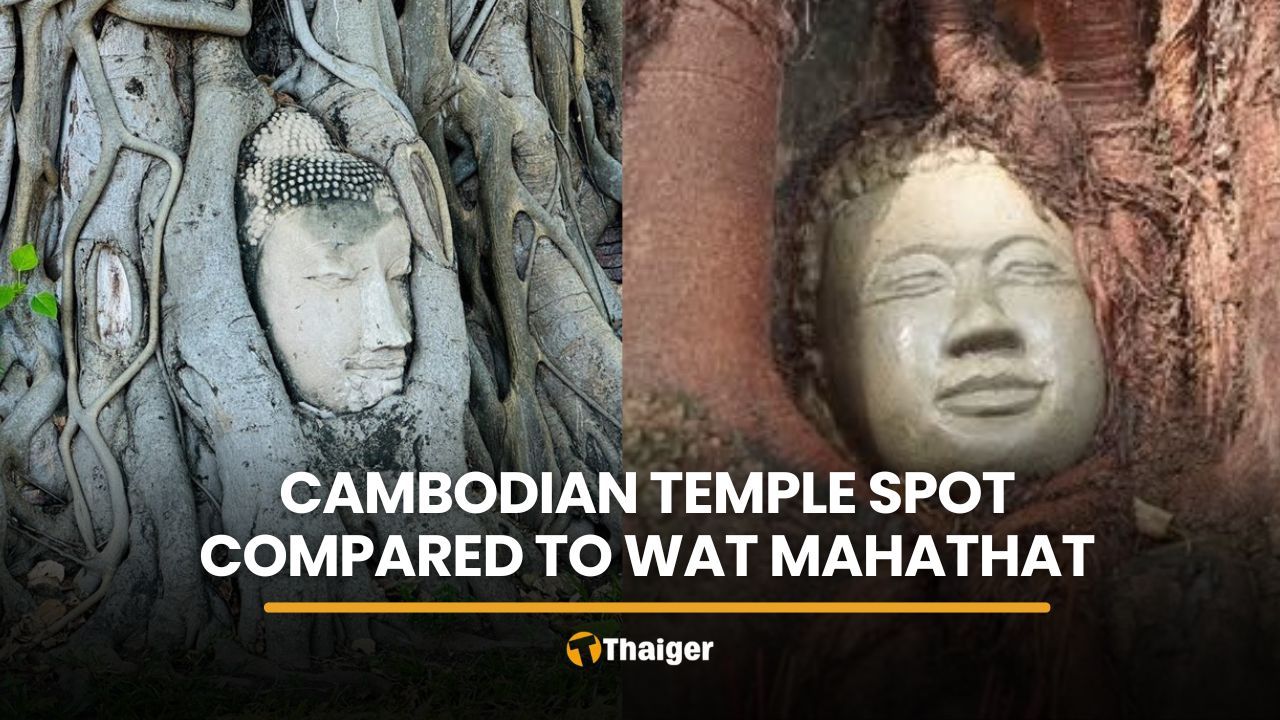
The article discusses a newly constructed photo spot in Cambodia that closely resembles Wat Mahathat’s Buddha head in tree roots in Ayutthaya, Thailand. This resemblance has sparked discussions on social media, with many users pointing out the structure’s apparent newness, particularly the cement around the base and the tree roots that do not seem fully dry. The article highlights the criticism that this imitation could be an attempt to recreate a “natural” ancient-site aesthetic associated with Thailand’s tourism branding, including “Unseen Thailand.” Following the online debate, a reporter visited Wat Mahathat in Ayutthaya, confirming the similarities between the two sites. This incident raises questions about the authenticity of tourist attractions and the potential impact on Thailand’s tourism branding.
Key Points:
- A newly built photo spot in Cambodia resembles Wat Mahathat’s Buddha head in tree roots in Ayutthaya, Thailand.
- Social media users noted the structure’s apparent newness, with concerns about the cement around the base and tree roots not appearing fully dry.
- Critics argue that this imitation attempts to recreate a “natural” ancient-site aesthetic linked to Thailand’s tourism branding, such as “Unseen Thailand.”
- A reporter’s visit to Wat Mahathat confirmed the similarities between the two sites, raising questions about authenticity in tourism.
Actionable Takeaways:
-
Authenticity in Tourism: The article highlights the importance of maintaining authenticity in tourism attractions. Tourists and stakeholders should be wary of structures that closely resemble iconic landmarks, as this could lead to accusations of imitation and potentially damage the reputation of genuine historical sites. This emphasizes the need for careful planning and execution in tourism development projects to ensure they respect and preserve the original cultural and historical significance of the locations.
-
Tourism Branding and Reputation Management: The incident underscores the significance of tourism branding and reputation management in the travel industry. Thailand’s tourism branding, including initiatives like “Unseen Thailand,” relies on showcasing unique and authentic experiences. Businesses and destinations must be cautious about imitating well-known landmarks to avoid negative publicity and potential legal issues. This takeaway suggests that proactive reputation management strategies, such as clear communication about the authenticity of attractions and engaging with the public to address concerns, are crucial for maintaining a positive brand image in the competitive travel market.
Contextual Insights:
The article reflects current concerns within the travel industry regarding the balance between tourism development and cultural preservation. With the rise of social media and instant sharing of images, there is increased scrutiny on tourist attractions, especially those that are replicas or imitations of iconic landmarks. This trend aligns with broader industry trends focusing on authenticity and experiential travel, where travelers seek genuine cultural experiences over superficial imitations. Experts in the field, such as travel technologists and branding specialists, emphasize the need for innovative yet respectful approaches to tourism development. For instance, leveraging technology to enhance the visitor experience while ensuring that the core authenticity of historical sites is preserved can be a forward-looking strategy. Additionally, the incident serves as a reminder for travel startups and fintech companies to focus on creating value-added services that enhance the authenticity of travel experiences, such as virtual reality tours that educate visitors about the cultural significance of landmarks, thereby mitigating the risk of imitation and preserving the integrity of historical sites.
Read the Complete Article.