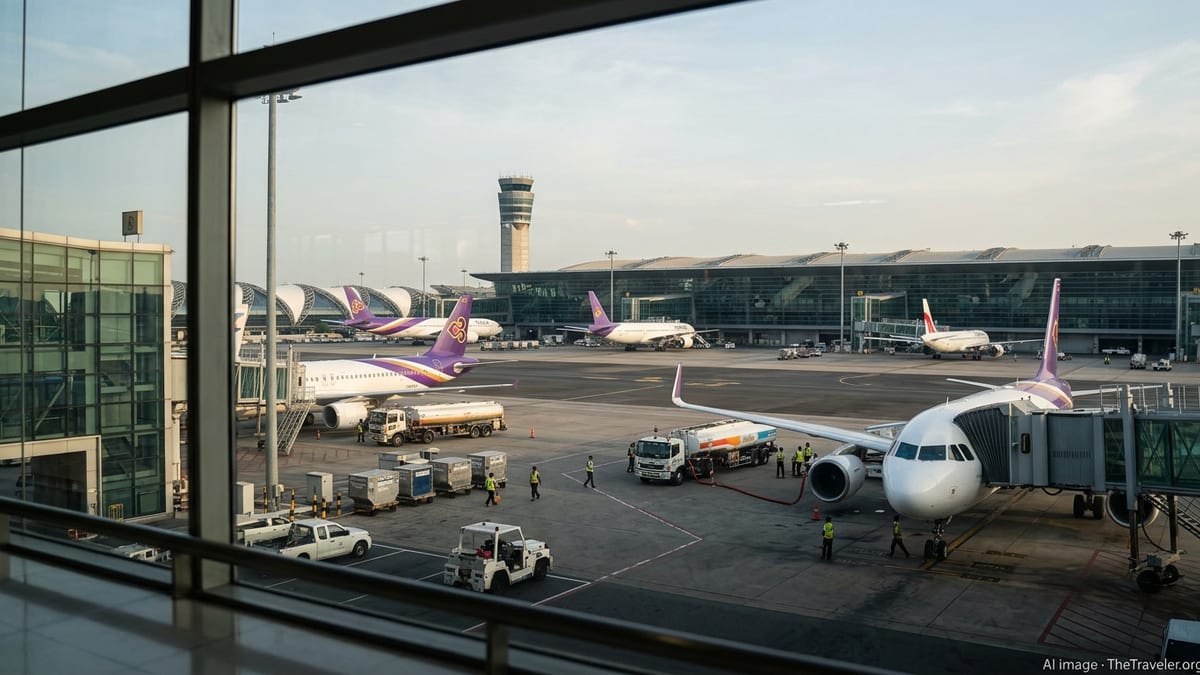
Thailand’s aviation sector is urging for relief on jet fuel taxes due to rising oil prices, new carbon costs, and regional conflict risks, which threaten to sharply increase airfares as the country’s tourism recovery gains momentum. The surge in jet fuel costs is primarily driven by escalating conflict in the Middle East and volatility in global oil markets. This situation is particularly concerning as it coincides with efforts to boost tourism, highlighting a critical challenge for the industry.
Key Points:
Jet fuel prices in Thailand have rapidly increased due to conflict in the Middle East and global oil market volatility.
Carbon pricing and rising oil costs are contributing factors to the surge in jet fuel costs.
The aviation sector is calling for relief on jet fuel taxes to prevent a sharp rise in airfares.
The increase in airfares could negatively impact Thailand’s tourism recovery efforts.
Actionable Takeaways:
Mitigate Airfare Increases: Airlines and policymakers should explore immediate relief measures for jet fuel taxes to prevent significant increases in airfares, which could deter tourists and hinder the tourism recovery.
Invest in Sustainable Aviation Fuels: The sector should accelerate the adoption of sustainable aviation fuels to reduce dependency on volatile oil prices and mitigate carbon costs, aligning with global efforts to reduce carbon emissions.
Diversify Tourism Markets: Thailand should diversify its tourism markets to reduce reliance on domestic and regional tourism, thereby spreading risk and ensuring resilience against external shocks.
Contextual Insights:
The current surge in jet fuel costs is a direct consequence of broader geopolitical tensions and market volatility, which are impacting global oil prices. This situation is particularly challenging for the travel industry, especially for a country like Thailand that heavily relies on tourism as a key economic driver. The aviation sector’s call for relief on jet fuel taxes underscores the urgent need for policy interventions to stabilize airfares and support the tourism sector’s recovery. Furthermore, the emphasis on sustainable aviation fuels reflects a growing industry trend towards environmental sustainability, which could open new avenues for innovation and investment in the sector. As the travel industry continues to evolve, staying ahead of these trends and adapting to changing market conditions will be crucial for sustained growth and resilience.
Comprehensive Summarization: The article highlights the growing tourism slowdown affecting several countries, including the United States, Greece, Turkey, Sri Lanka,...