Comprehensive Summarization:
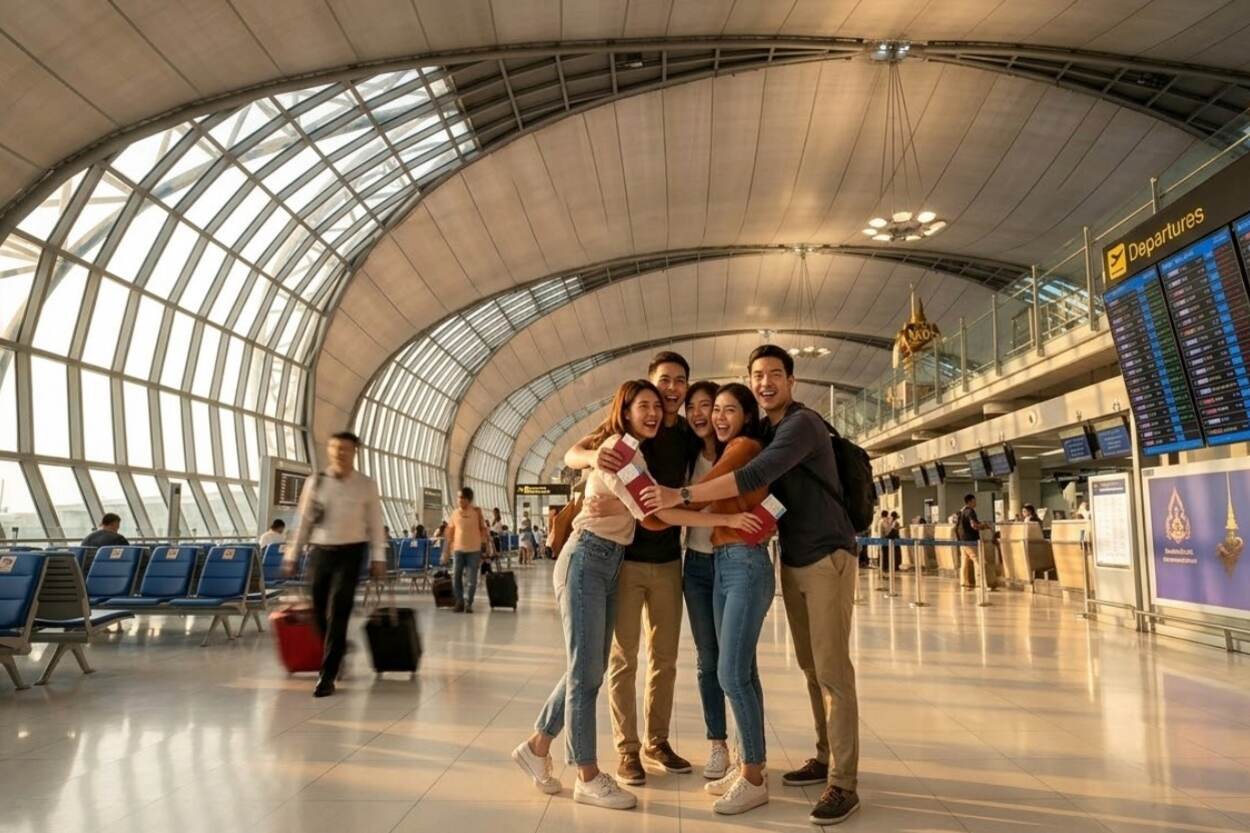
On February 28, 2026, a sudden closure of Middle East airspace led to the stranding of approximately 40,000 international tourists across Thailand. In response, Thailand’s Civil Aviation Authority (CAAT) granted emergency approval for empty charter flights to facilitate the evacuation of these stranded travelers. Among those successfully evacuated was a group of 315 Nordic tourists who were flown home to Copenhagen on March 9, 2026, aboard a charter flight operated by Sunclass Airlines. The article emphasizes that independent travelers not associated with tour groups are strongly advised to contact their respective embassies immediately for assistance.
Key Points:
- Stranded Tourists: Approximately 40,000 international tourists were stranded in Thailand following the closure of Middle East airspace on February 28, 2026.
- Emergency Evacuation: The Civil Aviation Authority of Thailand granted emergency approval for empty charter flights to evacuate the stranded tourists.
- Successful Evacuation: Out of the stranded tourists, 315 Nordic tourists were successfully evacuated to Copenhagen on March 9, 2026, on a charter flight operated by Sunclass Airlines.
- Advice for Independent Travelers: Independent travelers not linked to tour groups are urged to contact their embassies immediately for assistance.
Actionable Takeaways:
- Emergency Evacuation Protocols: Travel agencies and tourism boards should develop and implement robust emergency evacuation protocols for tourists, especially in regions prone to sudden airspace closures. This includes pre-arranged charter flight agreements with airlines and clear communication channels with embassies.
- Collaboration with Embassies: Independent travelers should be encouraged to maintain open lines of communication with their respective embassies. Establishing a dedicated contact point or hotline for such situations can expedite the evacuation process and provide reassurance to travelers.
- Investment in Travel Tech: The incident underscores the importance of investing in travel technology solutions that can quickly adapt to unforeseen circumstances. Startups focusing on real-time travel tracking, emergency communication, and charter flight coordination could find significant opportunities in this sector.
Contextual Understanding:
The article reflects the current challenges faced by the travel industry in the face of geopolitical events and airspace restrictions. The rapid response by Thailand’s Civil Aviation Authority to facilitate the evacuation of stranded tourists highlights the critical role of governmental bodies in managing travel disruptions. This event also emphasizes the need for travel startups and fintech companies to innovate in areas such as real-time travel tracking, emergency communication, and charter flight coordination. As geopolitical tensions and airspace restrictions become more prevalent, the travel industry must remain agile and invest in technologies that can mitigate the impact of such disruptions.
Handling Different Article Types:
The provided article is a news brief, offering factual information about a specific incident in the travel industry. The analysis adheres strictly to the facts and context provided, focusing on the key developments, actionable insights, and contextual understanding relevant to the travel sector.
Read the Complete Article.