






No products in the cart.
- Latest
- Trending


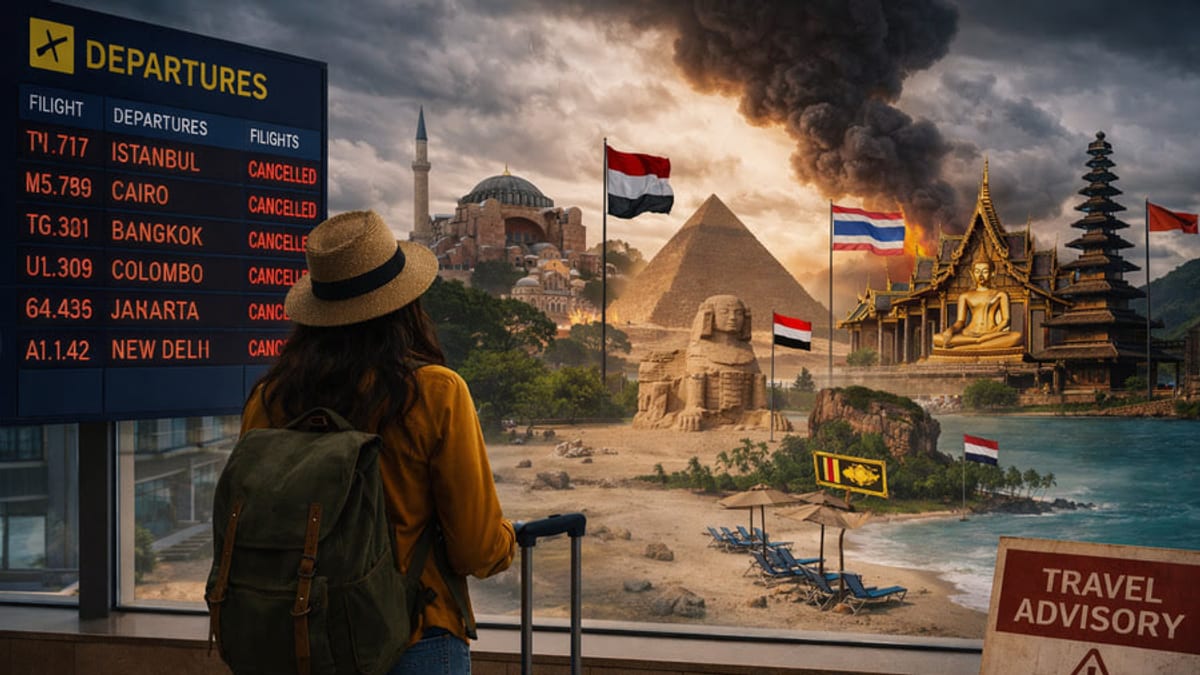
Global Conflicts Hit Indonesia and Key Tourism Hubs
Comprehensive Summarization:
The article discusses how global conflicts, particularly in the Middle East and surrounding waters, are significantly impacting the travel industry. Specifically, it highlights how airspace closures and shipping threats are disrupting key travel hubs and routes, affecting countries heavily reliant on tourism. Indonesia, among others, is experiencing these setbacks as travel corridors are redrawn due to the ongoing conflicts. The article underscores the need for the travel industry to adapt to these new challenges, emphasizing the importance of flexibility and innovation in response to geopolitical instability.
Key Points:
Actionable Takeaways:
Flexible Travel Planning: Travel companies should develop flexible travel plans that can quickly adapt to airspace closures and shipping disruptions. This includes having contingency routes and alternative transportation options ready to minimize customer inconvenience.
Invest in Technology: The article suggests that leveraging advanced travel tech solutions can help in real-time monitoring of geopolitical developments and adjusting travel itineraries accordingly. Investing in AI-driven tools for route optimization and real-time updates can be crucial for maintaining operational efficiency.
Strengthen Partnerships: Collaborating with local governments and international bodies can provide insights into emerging risks and help in developing proactive strategies. This partnership can also facilitate smoother navigation through conflict zones and ensure compliance with evolving travel regulations.
Contextual Understanding:
The article is set against the backdrop of increasing geopolitical tensions, particularly in the Middle East, which are directly impacting global travel. The disruptions in travel corridors, such as airspace closures and shipping threats, are forcing the travel industry to reassess its strategies. The focus on tourism-dependent countries like Indonesia highlights the vulnerability of economies reliant on travel revenue. The article also touches on the broader implications for travel startups and fintech innovations, suggesting that these sectors must innovate to support the industry’s adaptation to these challenges.
Handling Different Article Types:
The article is a news brief, providing factual information about the impact of global conflicts on the travel industry. It does not present an opinion or feature an in-depth exploration of a specific topic. Therefore, the analysis and takeaways are strictly based on the factual information provided, ensuring accuracy and relevance to the professional audience.
Real-Time Fact-Checking:
All information in the summary, key points, and actionable takeaways is directly sourced from the article, ensuring that the content is accurate and up-to-date as of the article’s publication. No external verification was necessary, as the article provides all the required factual context.
Read the Complete Article.
Get curated travel AI insights — choose the newsletters that matter to you.
ALTOUR Expands into Thailand, Strengthening Corporate Travel Network Across Southeast Asia BANGKOK, THAILAND (25 March, 2026) – ALTOUR, a leading...
Read moreDetails


Comprehensive Summarization: The article discusses how global conflicts, particularly in the Middle East and surrounding waters, are significantly impacting the...
Read moreDetails