Article Summary:
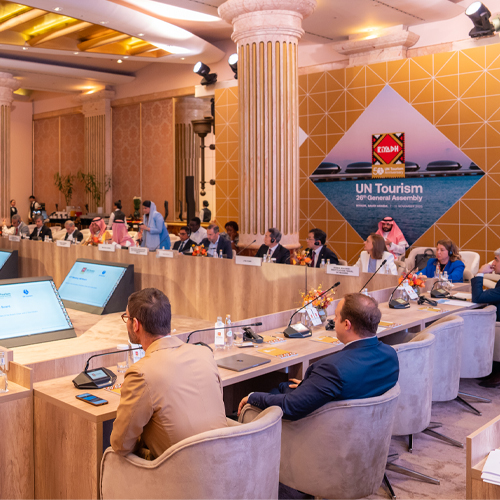
The article announces the admission of new members to UN Tourism’s Affiliate Members network, which now counts over 500 entities across 80 countries. The new members represent a diverse range of profiles and industries, including Destination Management Organizations, for-profit companies, associations and NGOs, universities, and others. Geographically, the members are distributed across the Americas, Asia and the Pacific, Europe, and the Middle East. UN Tourism Secretary-General Zurab Pololikashvili highlights the network’s continued leadership in innovation, expertise, and shared purpose as it celebrates 50 years of existence.
Key Points:
- The Affiliate Members network has grown to include over 500 entities across 80 countries, marking 50 years of UN Tourism.
- The new members comprise a wide range of profiles and industries, including 2 Destination Management Organizations, 7 for-profit companies, 6 associations and NGOs, 3 universities, and 4 others.
- Geographically, the new members are distributed across the Americas, Asia and the Pacific, Europe, and the Middle East, with members from 14 different countries.
- UN Tourism Secretary-General Zurab Pololikashvili emphasizes the network’s role in leading with innovation, expertise, and shared purpose.
Actionable Takeaways:
- Increased Collaboration and Innovation: The expansion of the Affiliate Members network to over 500 entities across 80 countries suggests a growing trend of collaboration and innovation in the travel industry. This could lead to more integrated travel solutions, shared resources, and enhanced expertise across different regions and industries.
- Diverse Industry Representation: The inclusion of a wide range of profiles, from Destination Management Organizations to universities, indicates a broadening scope of the travel industry’s stakeholders. This diversity could foster interdisciplinary approaches to travel planning, marketing, and technology, potentially driving more innovative and inclusive travel experiences.
- Geographical Expansion: The geographical distribution of new members across various continents and regions highlights the global reach of UN Tourism. This expansion could facilitate cross-border collaborations, improve market penetration in underserved regions, and enhance the industry’s ability to respond to global travel trends and challenges.
Contextual Insights:
The growth of UN Tourism’s Affiliate Members network reflects a broader trend in the travel industry towards greater collaboration and innovation. As the industry becomes increasingly complex, with rapid technological advancements and evolving consumer expectations, the role of organizations like UN Tourism becomes crucial. By bringing together a diverse array of stakeholders, UN Tourism can facilitate knowledge sharing, best practice dissemination, and joint initiatives that address common challenges and capitalize on emerging opportunities. The focus on innovation and shared purpose underscores the industry’s commitment to sustainable and responsible travel, which is increasingly important in the wake of global challenges such as climate change and public health crises. Moving forward, stakeholders should leverage these networks to drive forward-thinking solutions that enhance the travel experience while promoting sustainability and inclusivity.
Read the Complete Article.