








No products in the cart.
- Latest
- Trending

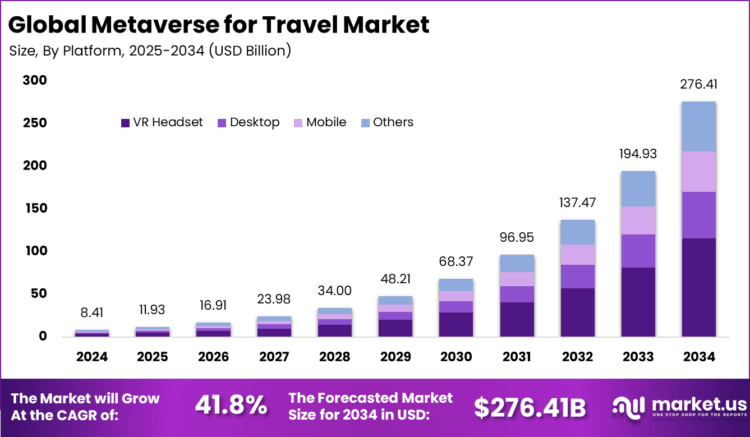
Metaverse for Travel Market Size
Article Summary:
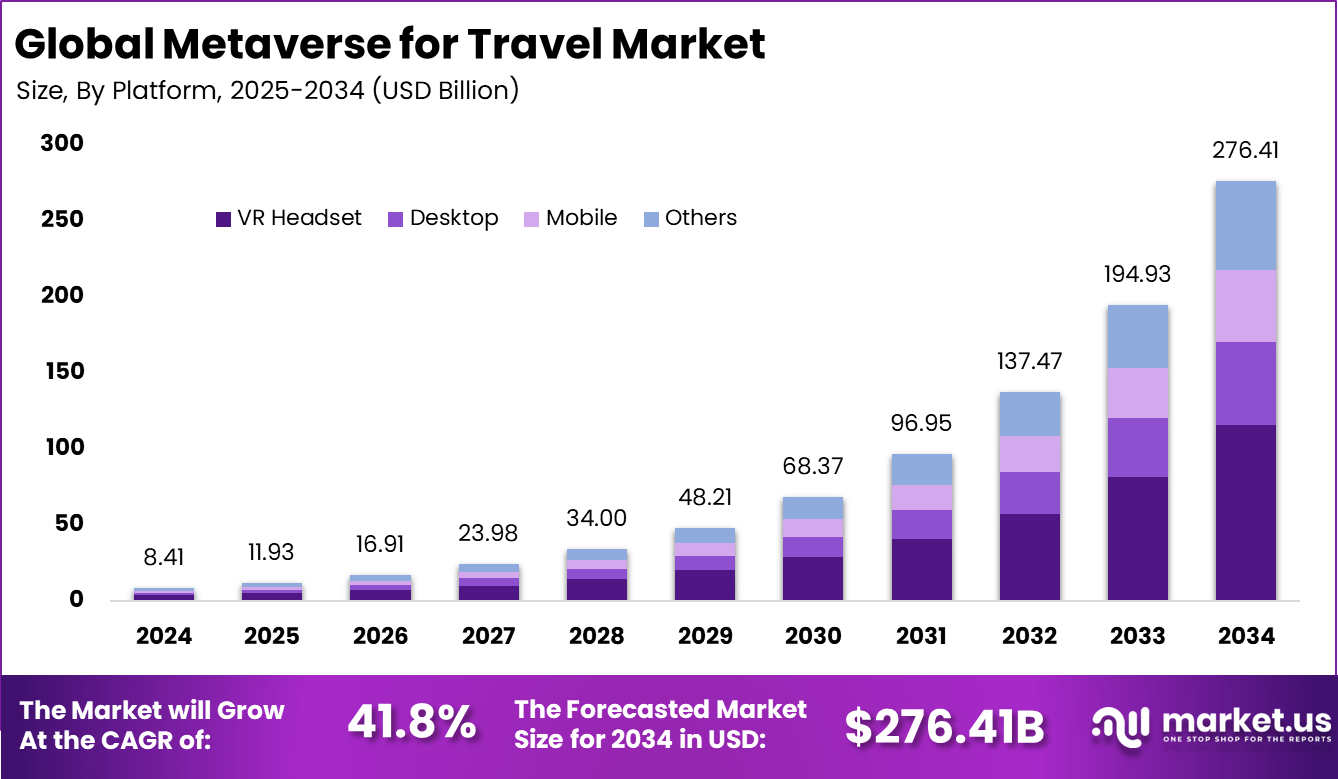
The Global Metaverse for Travel Market is projected to reach USD 276.41 billion by 2034, growing from USD 8.41 billion in 2024 at a CAGR of 41.8%. North America currently dominates the market with over 43.8% share and USD 3.68 billion revenue in 2024. The market’s expansion is driven by the adoption of immersive digital environments by travelers, tourism boards, and service providers. Key growth factors include the rising demand for VR and AR technologies, improved visualization tools, and broader acceptance of mixed reality in the travel decision process. The market now encompasses virtual tours, digital attractions, interactive travel planning experiences, and simulated cultural environments.
Key Points:
Actionable Takeaways:
Contextual Insights:
The article reflects the current state of the travel industry, where digital transformation is rapidly reshaping how travelers explore and experience destinations. The emphasis on VR and AR technologies, along with the increasing adoption of mixed reality, underscores a shift towards more immersive and interactive travel experiences. This trend is supported by the rising demand for advanced visualization tools and the growing acceptance of digital environments in travel decision-making. As the market is expected to grow exponentially, it presents a fertile ground for innovation and investment in travel tech, particularly in areas that leverage immersive technologies to enhance the travel experience.
Read the Complete Article.
Get curated travel AI insights — choose the newsletters that matter to you.
ALTOUR Expands into Thailand, Strengthening Corporate Travel Network Across Southeast Asia BANGKOK, THAILAND (25 March, 2026) – ALTOUR, a leading...
Read moreDetails


Kuala Lumpur, Malaysia — August 14, 2023 In short: Capital A CEO Tony Fernandes announces new Deputy CEO appointment and...
Read moreDetails