No products in the cart.
- Latest
- Trending

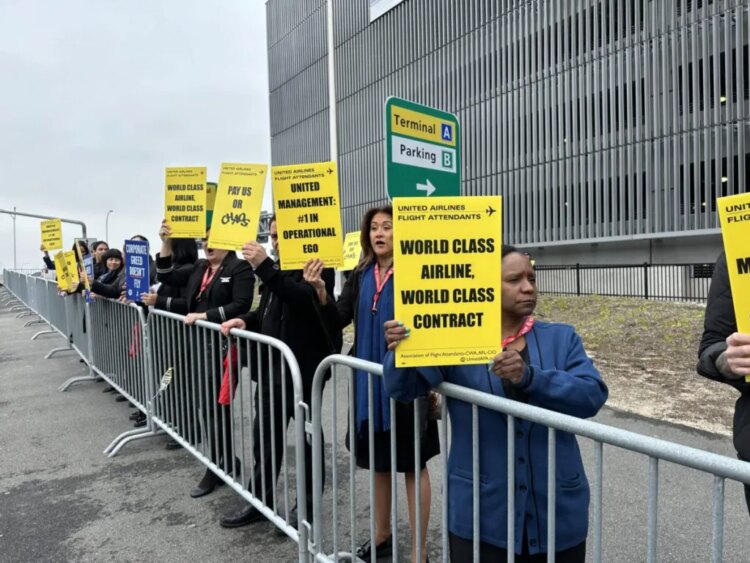
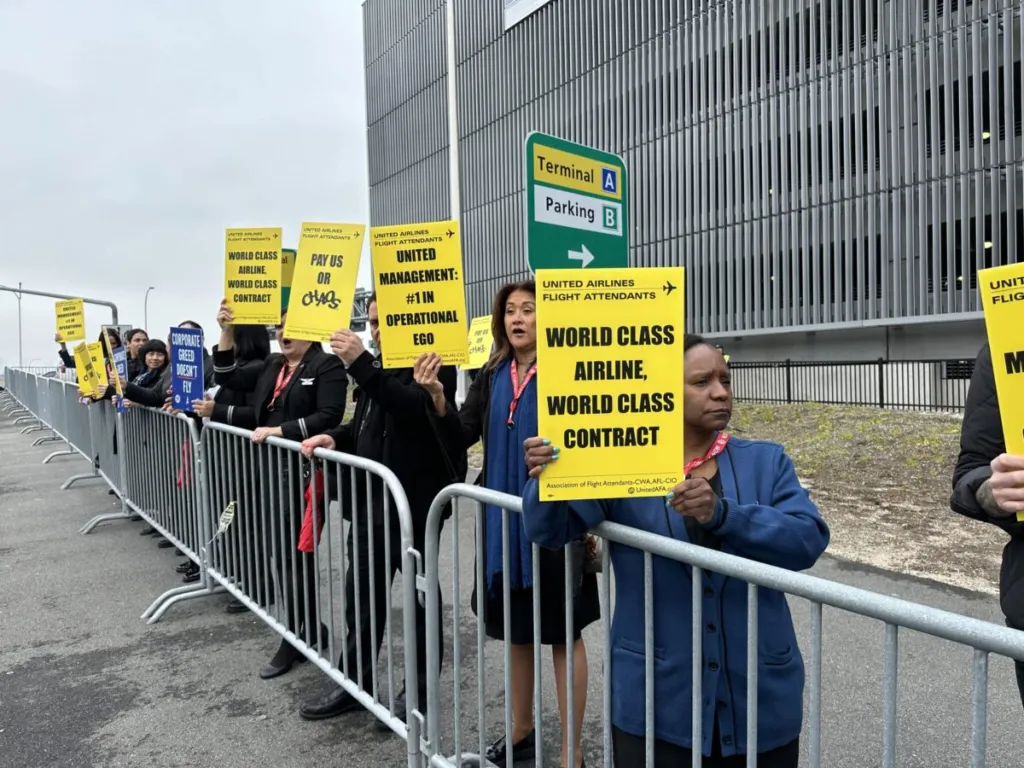
Photo Caption: United Airlines flight attendants picket at LaGuardia Airport on Thursday, April 11. Meghna Maharishi
Comprehensive Summarization:
United Airlines has reached a new tentative agreement with its flight attendants’ union, marking the first wage increase in approximately six years. Under the proposed agreement, flight attendants would receive immediate raises and top wage rates reaching $100 an hour by the contract’s end. This would position United flight attendants among the highest-paid in the industry. Additional benefits include boarding pay, compensation for long gaps between flights, and signing bonuses totaling $740 per employee. The article also touches on broader travel industry trends and insights from thought leaders, highlighting the ongoing evolution of the sector.
Key Points:
Actionable Takeaways:
Increased Competitive Pay for Flight Attendants: The proposed wage increase could enhance United Airlines’ attractiveness as an employer in the competitive travel industry, potentially improving employee retention and service quality. This move aligns with broader industry trends of recognizing and compensating essential service roles more generously.
Potential Market Impact on Travel Startups: The focus on competitive wages for flight attendants may influence other airlines to reassess their compensation packages, potentially creating a ripple effect across the industry. This could spur innovation in travel tech and services aimed at enhancing employee satisfaction and operational efficiency, benefiting startups in the travel sector.
Enhanced Employee Retention and Service Quality: The signing bonuses and additional pay for long gaps between flights could significantly improve employee retention rates. Higher retention rates are crucial for maintaining consistent service quality, which is vital for customer satisfaction and loyalty in the travel industry.
Contextual Insights:
The agreement reflects a broader trend in the travel industry towards recognizing the critical role of service staff, such as flight attendants, in delivering exceptional customer experiences. As the industry continues to recover from pandemic-related disruptions, there is a growing emphasis on employee welfare and competitive compensation packages. This aligns with insights from industry thought leaders who emphasize the importance of investing in human capital to drive operational excellence and customer satisfaction. Furthermore, the focus on signing bonuses and long gap compensation indicates a strategic shift towards retaining talent in a highly competitive labor market, a trend that is likely to influence future hiring and retention strategies across the travel sector.
Read the Complete Article.
Get curated travel AI insights — choose the newsletters that matter to you.
This spot is reserved for brands with a compelling story for the travel trade. They use this space to cut...
Read moreDetailsALTOUR Expands into Thailand, Strengthening Corporate Travel Network Across Southeast Asia BANGKOK, THAILAND (25 March, 2026) – ALTOUR, a leading...
Read moreDetails


Comprehensive Summarization: President Donald Trump has announced his intention to sign an executive order instructing the Department of Homeland Security...
Read moreDetails