








No products in the cart.
- Latest
- Trending

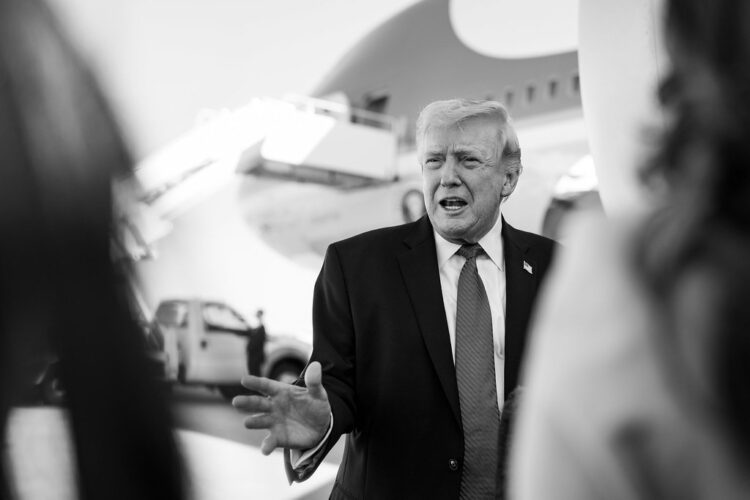
Photo Credit: President Donald J. Trump boarding Air Force One at Palm Beach International Airport in West Palm Beach, Florida on Monday, March 23, 2026, en route to Memphis, Tennessee. Courtesy of the White House via Flickr / Molly Riley
Comprehensive Summarization:
The article discusses the Trump administration’s new AI framework, which aims to prohibit states from regulating AI development. This move could be beneficial for travel companies developing chatbots, agents, and automation systems. However, the framework does not address the issue of how companies price travel, leaving this regulatory challenge unresolved. The Travel Technology Association’s president and CEO, Laura Chadwick, acknowledges digital fragmentation as a persistent obstacle in the industry and supports the framework’s direction towards a unified federal approach under the Federal Trade Commission. Despite the support, the association’s backing has its limits, indicating that the issue of pricing remains a significant regulatory hurdle.
Key Points:
Actionable Takeaways:
Regulatory Clarity for AI Innovators: The unified federal approach under the Federal Trade Commission could provide regulatory clarity for AI innovators in the travel sector, potentially streamlining compliance processes. This could accelerate the adoption of AI technologies like chatbots and automation systems, enhancing operational efficiency and customer service in travel.
Pricing Regulation as a Challenge: The absence of a regulatory framework for travel pricing highlights a significant challenge for the industry. Without clear guidelines, travel companies may face uncertainty and increased operational costs, impacting pricing strategies and consumer trust. Addressing this issue could be crucial for maintaining competitive pricing and ensuring fair market practices.
Contextual Insights:
The introduction of the AI framework by the Trump administration reflects a broader trend of regulatory shifts aimed at fostering innovation while maintaining consumer protection. In the travel industry, this development is particularly relevant as companies increasingly leverage AI to enhance services such as booking, customer support, and personalized travel recommendations. The emphasis on a unified federal approach aligns with the industry’s push for digital transformation and efficiency. However, the exclusion of travel pricing from the framework underscores the complexity of balancing innovation with consumer protection. As travel companies continue to adopt AI technologies, they must navigate the evolving regulatory landscape, ensuring compliance while capitalizing on the benefits of AI-driven solutions. This situation highlights the need for ongoing dialogue between regulators, industry stakeholders, and thought leaders to address emerging challenges and opportunities in the travel sector.
Read the Complete Article.
Get curated travel AI insights — choose the newsletters that matter to you.
This spot is reserved for brands with a compelling story for the travel trade. They use this space to cut...
Read moreDetailsALTOUR Expands into Thailand, Strengthening Corporate Travel Network Across Southeast Asia BANGKOK, THAILAND (25 March, 2026) – ALTOUR, a leading...
Read moreDetails


Comprehensive Summarization: The article discusses the Trump administration's new AI framework, which aims to prohibit states from regulating AI development....
Read moreDetails