



No products in the cart.
- Latest
- Trending

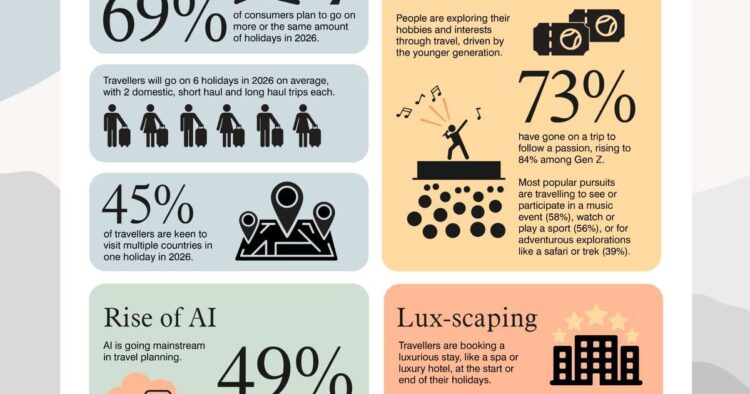
Article Summary:
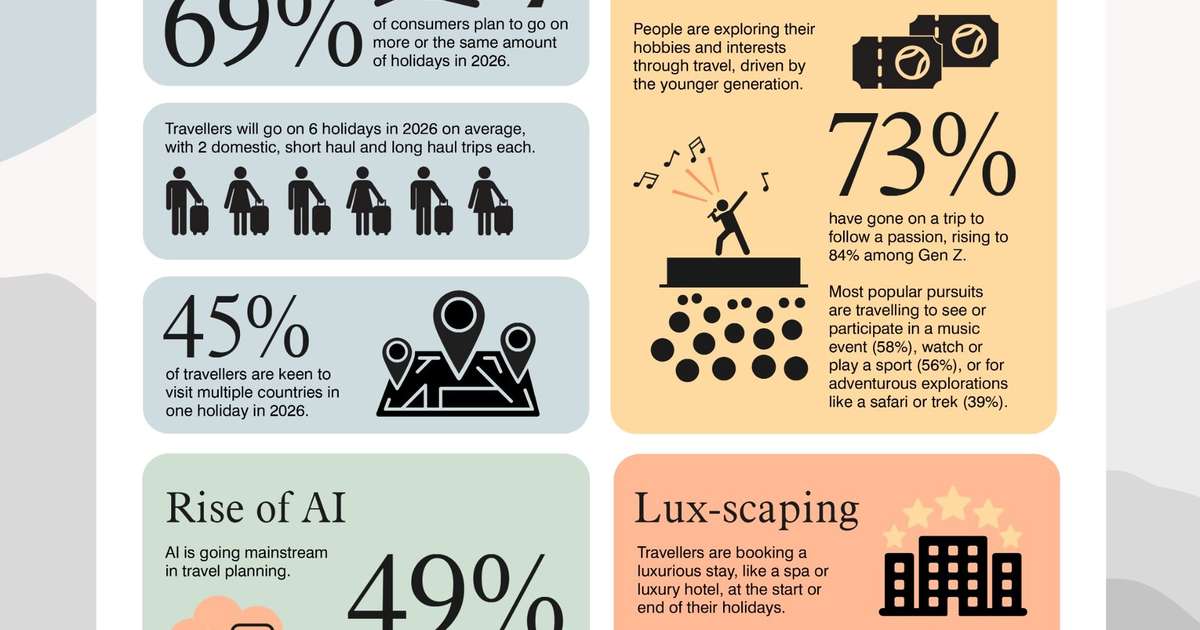
The article presents research findings from over 2,000 South African travelers indicating a strong intent to continue or increase their holiday frequency in 2026, with 69% of respondents planning more or the same number of trips. The study also highlights the mainstream adoption of AI in holiday planning, with 59% of travelers expressing trust in AI for booking accommodations. Additionally, the trend of "lux-scaping" is identified as a significant development for 2026, where travelers are increasingly opting for luxurious stays such as spa or luxury hotel experiences at the beginning or end of their trips, alongside pursuing passion-related activities.
Key Points:
Actionable Takeaways:
Contextual Insights:
The article reflects current travel industry trends post-pandemic, where there is a strong recovery in travel demand, evidenced by the high percentage of travelers planning more trips. The adoption of AI in travel planning signifies a shift towards technology-driven solutions, which are increasingly trusted by consumers. Lux-scaping highlights a shift towards experiential luxury travel, where travelers seek not just accommodation but immersive experiences. These insights are crucial for travel startups and established companies to adapt their offerings and technologies to meet evolving consumer expectations. The focus on luxury and AI-driven services underscores the importance of innovation and customer-centric strategies in navigating the post-pandemic travel landscape.
Read the Complete Article.
Get curated travel AI insights — choose the newsletters that matter to you.
ALTOUR Expands into Thailand, Strengthening Corporate Travel Network Across Southeast Asia BANGKOK, THAILAND (25 March, 2026) – ALTOUR, a leading...
Read moreDetails


Upgrade Your Travel Experience: Essential Browsers for palmbeachdailynews.com
Read moreDetails