








No products in the cart.
- Latest
- Trending


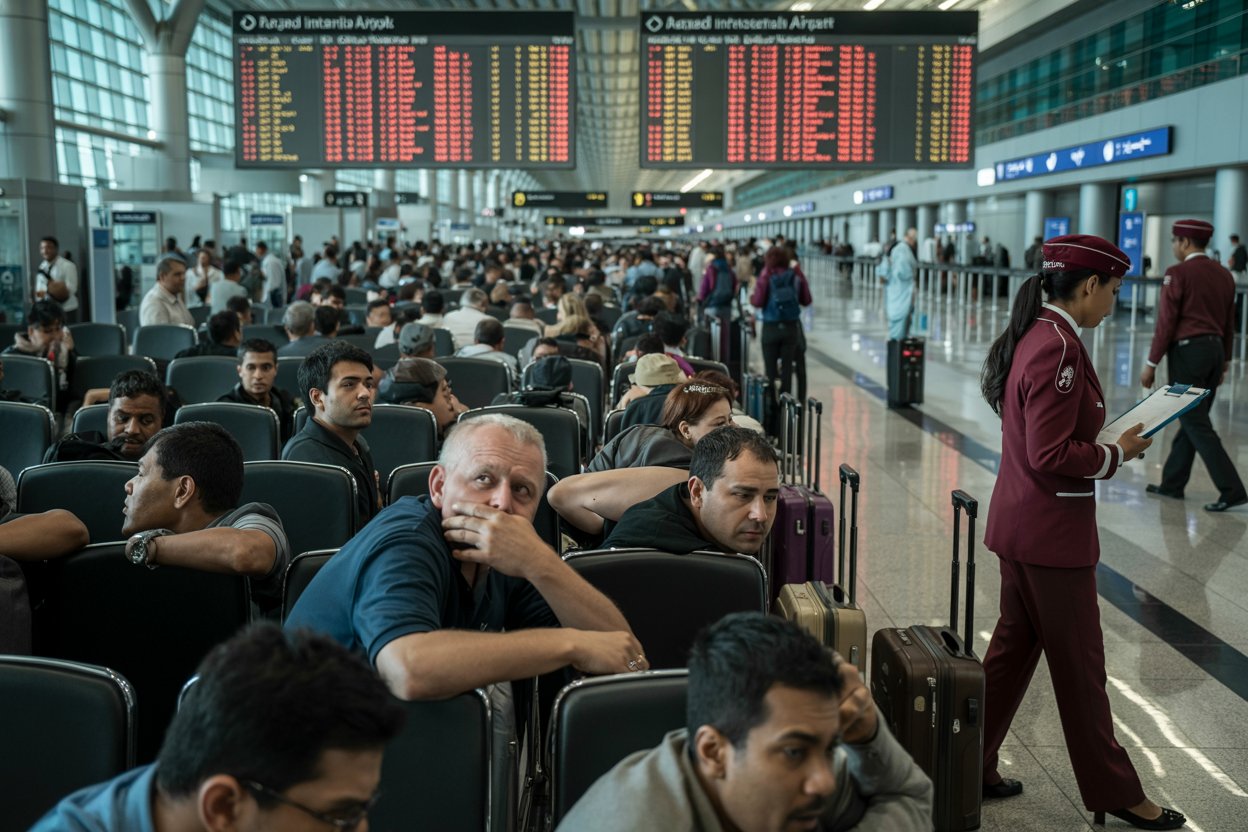
Hundreds of Passengers Stranded in London, UK as Heathrow and Gatwick Airports Delay 590 and Cancel ...
Comprehensive Summarization:
The article reports on unprecedented disruption at London Heathrow and Gatwick airports, where a combined total of 590 flights were delayed and 26 flights were canceled. This disruption affected major airlines including British Airways, Delta, and EasyJet, impacting routes to cities such as New York, Paris, and Dubai. The article highlights the operational strain on these airports, leaving hundreds of passengers stranded and disrupting travel plans. The incident underscores the challenges faced by the travel industry in managing large-scale operational issues, particularly in major hubs like London.
Key Points:
Actionable Takeaways:
Enhanced Operational Resilience: The incident at Heathrow and Gatwick highlights the need for airlines and airports to enhance operational resilience. Implementing advanced scheduling systems and real-time communication tools can help mitigate the impact of such disruptions. This is crucial for maintaining passenger trust and minimizing financial losses.
Investment in Airport Technology: The disruption emphasizes the importance of investing in airport technology to improve efficiency and passenger experience. Technologies such as AI-driven flight tracking, automated baggage handling, and enhanced customer service platforms can significantly reduce delays and cancellations, thereby improving overall airport performance.
Focus on Passenger Communication: Effective communication with passengers during disruptions is critical. Airlines should leverage digital platforms to provide real-time updates and alternative travel options. This not only helps in managing passenger expectations but also in retaining customer loyalty during challenging times.
Contextual Insights:
The disruption at London Heathrow and Gatwick airports is a stark reminder of the vulnerabilities within the global travel infrastructure, particularly in major hubs that handle a high volume of international traffic. The incident reflects broader trends in the travel industry, where operational efficiency and passenger experience are paramount. Recent advancements in travel tech, such as AI-driven predictive analytics and blockchain-based ticketing systems, offer promising solutions to enhance operational resilience and passenger communication. As the industry continues to evolve, integrating these innovations will be key to addressing the challenges posed by large-scale disruptions and ensuring a seamless travel experience for millions of passengers worldwide.
Read the Complete Article.
Get curated travel AI insights — choose the newsletters that matter to you.
This spot is reserved for brands with a compelling story for the travel trade. They use this space to cut...
Read moreDetailsTravel One Technologies launches the world’s first Traveler DNA Platform, targeting the structural data gap at the core of an...
Read moreDetails