





No products in the cart.
- Latest
- Trending

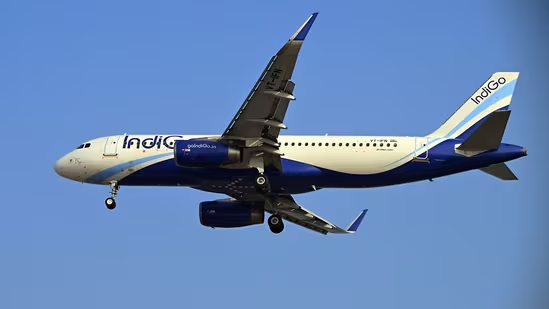
Several Indian airlines, including IndiGo, have announced fuel surcharges to deal with rising fuel costs. (Bloomberg)
Comprehensive Summarization:
Several Indian airlines, including Air India, IndiGo, and Akasa Air, have introduced fuel surcharges on domestic and international flights due to the rising cost of aviation turbine fuel (ATF) amid the ongoing conflict in West Asia. The conflict, involving Iran and the United States backed by Israel, has significantly increased ATF prices. Willie Walsh, a notable figure in the industry, is among those discussing the implications of these surcharges. The article also touches on the latest travel trends and insights from thought leaders, highlighting the impact of rising fuel costs on air travel in India.
Key Points:
Actionable Takeaways:
Fuel Surcharges Impact on Travel Costs: The introduction of fuel surcharges by Indian airlines is a direct response to the rising cost of ATF due to geopolitical tensions. This development is likely to increase air travel costs for consumers in India, potentially affecting travel demand and airline revenue. Airlines may need to explore cost-cutting measures or pass on these surcharges to passengers to maintain profitability.
Geopolitical Factors Influencing Air Travel: The conflict in West Asia is a significant driver of the increase in ATF prices. This highlights the vulnerability of the aviation industry to geopolitical events. Travel companies and policymakers should monitor geopolitical developments closely to anticipate and mitigate the impact on air travel costs and consumer behavior.
Importance of Monitoring ATF Prices: The surge in ATF prices underscores the importance of monitoring fuel costs for airlines. Airlines may need to develop hedging strategies or diversify their fuel supply sources to mitigate the impact of price volatility on their operations and profitability.
Contextual Insights:
The introduction of fuel surcharges by Indian airlines in response to rising ATF prices due to geopolitical tensions in West Asia reflects the interconnected nature of the travel industry with global events. This trend is indicative of a broader industry shift where airlines are increasingly vulnerable to external factors beyond their control, such as geopolitical conflicts and commodity price fluctuations.
In the context of current industry trends, this situation emphasizes the need for airlines to adopt more resilient financial strategies, such as hedging against fuel price volatility and diversifying their fuel supply sources. Additionally, the surge in fuel surcharges may prompt consumers to reconsider their travel plans, potentially impacting airline revenues and necessitating innovative marketing strategies to retain market share.
Furthermore, this development highlights the importance of thought leadership in the travel industry, where experts like Willie Walsh play a crucial role in analyzing and communicating the implications of such developments to stakeholders. As the industry continues to evolve, staying informed about geopolitical events and their economic implications will be essential for making informed decisions and adapting to changing market conditions.
Read the Complete Article.
Get curated travel AI insights — choose the newsletters that matter to you.
This spot is reserved for brands with a compelling story for the travel trade. They use this space to cut...
Read moreDetailsTravel One Technologies launches the world’s first Traveler DNA Platform, targeting the structural data gap at the core of an...
Read moreDetails