Comprehensive Summarization:
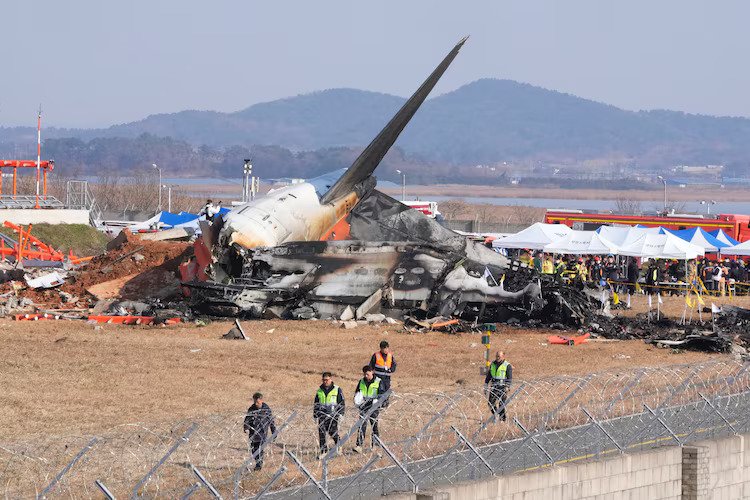
The article reports on investigations into the December 2024 crash of Jeju Air Flight 2216 at Muan International Airport in South Korea, which resulted in the deaths of 179 out of 181 people on board. The crash occurred when the Boeing 737-800 belly-landed after a suspected bird strike, overran the runway, and struck a concrete embankment supporting a navigation localiser antenna. Investigations revealed that the structure did not meet international safety standards requiring frangible supports, suggesting the crash might have been survivable otherwise. South Korea’s government acknowledged the safety lapse, launched an independent inquiry, and initiated a review of runway infrastructure nationwide. The final investigation report is expected in 2026. The tragedy has prompted a nationwide review of runway safety areas and navigation equipment installations at airports across the country, highlighting longstanding infrastructure safety failures.
Key Points:
- Jeju Air Flight 2216 crashed at Muan International Airport on December 29, 2024, killing 179 of the 181 people on board.
- The crash was caused by a belly-landing following a suspected bird strike, leading to overrunning the runway and striking a concrete embankment.
- Investigations found that the concrete embankment did not meet international safety standards requiring frangible supports, potentially making the crash survivable otherwise.
- South Korea’s government acknowledged the safety lapse, initiated an independent inquiry, and began reviewing runway infrastructure nationwide.
- The final investigation report is expected in 2026, with authorities continuing to analyze flight data, cockpit recordings, and infrastructure safety standards.
Actionable Takeaways:
-
Enhanced Airport Infrastructure Safety Standards: The incident underscores the critical need for runway infrastructure to meet international safety standards, particularly the requirement for frangible supports that break on impact. Travel companies and aviation authorities should prioritize upgrading such structures to prevent similar disasters. This action is crucial as it directly addresses a systemic safety issue that could save lives in emergency situations.
-
Comprehensive Post-Crash Investigations: The launch of an independent inquiry and the commitment to a detailed final report highlight the importance of thorough post-accident investigations. Travel companies and regulatory bodies should ensure that all accidents are investigated comprehensively, including the roles of mechanical failures, bird strikes, and infrastructure issues. This approach not only aids in understanding the accident but also in implementing preventive measures to enhance overall aviation safety.
-
Transparency and Accountability in Reporting: The tragedy has raised concerns about transparency and accountability in the investigation process. Travel companies and governments should strive for transparency in reporting accident details and findings. This includes timely and open communication with the public, families of victims, and regulatory bodies. Enhanced transparency can build trust and facilitate a more effective response to future incidents.
Contextual Understanding:
The article is set against the backdrop of a growing emphasis on aviation safety and infrastructure integrity within the travel industry. Recent events, such as this crash, have prompted a reevaluation of safety protocols and infrastructure standards worldwide. The focus on frangible supports and runway design reflects a broader trend toward adopting advanced technologies and safety measures to mitigate risks in air travel. Additionally, the article highlights the importance of government oversight and accountability in ensuring that aviation infrastructure meets stringent safety requirements. As the travel industry continues to evolve, integrating real-time safety assessments and leveraging technological innovations will be key to maintaining high safety standards and preventing catastrophic incidents.
Read the Complete Article.