











• Latest
  • Trending
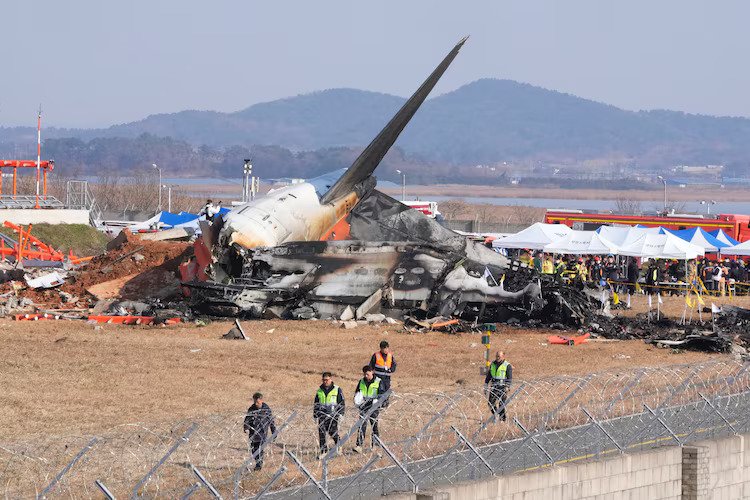
Jeju Air Crash Probe Finds Airport Structure May Have Worsened Deadly 2024 Disaster SEO DES: Investigators say the structure failed international standards requiring frangible supports, suggesting the crash might have been survivable otherwise SOCIAL: Investigations into the December 2024 crash of Jeju Air Flight 2216 at Muan International Airport, South Korea, have linked the disaster to longstanding airport infrastructure safety failures. The Boeing 737-800 belly-landed after a suspected bird strike but overran the runway and struck a rigid concrete embankment supporting a navigation localiser antenna, causing a catastrophic fire that killed 179 of the 181 people on board. Investigators say the structure did not meet international safety standards requiring frangible supports that break on impact, suggesting the crash may have been survivable otherwise. South Korea’s government has acknowledged the safety lapse, launched an independent inquiry, and begun reviewing runway infrastructure nationwide while a final investigation report is expected in 2026. Image: Aero Time Video: TOI Muan, South Korea: Investigations into the 2024 crash of a Jeju Air passenger jet in South Korea have revealed that longstanding airport infrastructure failures likely played a critical role in turning a survivable emergency landing into the country’s deadliest aviation disaster. Jeju Air Flight 2216, a Boeing 737-800 operating from Bangkok to Muan, crashed at Muan International Airport on 29 December 2024, killing 179 of the 181 people on board. Only two cabin crew members survived the accident. Recent findings cited in a government-commissioned report suggest that the aircraft’s occupants may have survived if the plane had not collided with a rigid concrete structure located at the end of the runway. The aircraft had belly-landed during an emergency approach and slid beyond the runway before striking a concrete mound supporting a navigation localiser antenna, triggering a catastrophic fire. The concrete embankment that the aircraft struck has become a central focus of the investigation. Structural simulations conducted after the accident indicated that the impact with the runway overrun itself was survivable and that the aircraft could have come to a halt with far fewer casualties if the structure had been designed to break on impact. Experts and lawmakers have argued that the structure did not meet international aviation safety standards, which typically require runway navigation equipment to be mounted on “frangible” supports designed to collapse during an aircraft collision. South Korea’s transport authorities later acknowledged that the embankment contributed to the severity of the crash and announced plans to remove or redesign similar structures at several airports across the country. Opposition lawmakers have also blamed decades of government negligence, noting that the problematic structure had existed since the late 1990s without corrective action despite safety concerns. Investigators believe the emergency landing was triggered by a bird strike during the aircraft’s final approach. Remains of birds were found in both engines during the preliminary investigation. Evidence later indicated that the pilots may have inadvertently shut down the less-damaged engine after the bird strike, potentially reducing available thrust during the emergency landing attempt. The aircraft ultimately landed without deploying its landing gear and slid along the runway before colliding with the concrete structure at the runway’s end, leading to an explosion and fire that destroyed the aircraft. The disaster has triggered widespread criticism of the investigation process and government oversight of aviation safety. Families of the victims have accused authorities of delaying reports and failing to provide transparency about the causes of the crash. In response to mounting pressure, South Korea’s parliament approved an independent inquiry to examine the accident, including the role of bird strikes, possible mechanical failures, and the runway structure that the aircraft struck. South Korea’s Transport Ministry has also acknowledged that a navigation structure at Muan International Airport failed to meet safety standards, contributing to the deadly crash of a Jeju Air Boeing 737-800 in December 2024. Authorities admitted the structure should have been designed to break on impact, in line with international safety guidelines, and its rigid construction likely worsened the disaster. A final report from investigators is expected in 2026, as officials continue to analyze flight data, cockpit recordings and infrastructure safety standards. The tragedy remains the deadliest aviation accident in South Korean history and has prompted a nationwide review of runway safety areas and navigation equipment installations at airports across the country.

Jeju Air Crash: Airport Structure May Have Exacerbated 2024 Disaster

March 14, 2026
Wellness tourism: The growing trend of barefoot walking

Wellness Tourism Booms with Barefoot Walking Trend

April 29, 2026
The replica of Toast Hut includes owner Melvin Soh's late mother.

US Tourist Surprises Singapore Hawkers with Lego Models

April 29, 2026
Tourism Ministry and ASEAN-China Centre Reaffirm Commitment to Boosting Chinese Arrivals – វិមាន៧មករ...

Tourism Ministry & ASEAN-China Centre Strengthen Chinese Travel Boost

April 29, 2026

Minor Hotels Introduces Private Jet Experience

April 29, 2026
Why MakeMyTrip has joined hands with Adani Airport Holdings

MakeMyTrip Partners with Adani Airport Holdings

April 29, 2026
Traveler using smartphone eSIM in Paris with Eiffel Tower backdrop, highlighting mobile connectivity for European travel.

eSIM Revolution: Transforming Connectivity for European Travelers

April 29, 2026
Daily Record

Top 10 Global Attractions: 2 Scottish Gems Revealed

April 29, 2026
Ryanair Head Predicts Quick Demise for Wizz Air and Air Baltic

Ryanair Forecasts Rapid Collapse of Wizz Air & Air Baltic

April 29, 2026

China-Laos Railway: 800K+ Cross-Border Passenger Trips in 3 Years

April 29, 2026
Some UAE residents rethink Eid Al Adha travel plans to India amid heat wave

UAE Residents Reconsider India Travel Plans Due to Heat Wave

April 29, 2026

Secure Travel Connections: Ensuring Safe Access

April 29, 2026

China-Laos Railway: 800K+ Cross-Border Passenger Trips in 3 Years

April 29, 2026
  • Login
  • Register
Plugin Install : Cart Detail need WooCommerce plugin to be installed.
TravelTradeToday
  • Featured
  • Travel News (General)
  • Travel AI
    • Travel Fintech
  • Airlines
    • American Airlines
    • AirAsia
    • Air India
    • Air Canada
    • Arajet
    • British Airways
    • Citilink Indonesia
    • Delta Airlines
    • Emirates Airlines
    • Ethiopian Airlines
    • FlyDubai
    • FlySafair
    • Indigo Airlines
    • Jetblue Airlines
    • Jeju Air
    • Kenya Airways
    • Korean Air
    • Other Airlines
      • Go Air
      • Jet2.com
      • Spring Airline
      • Thai Lion Air
      • Vietjet
      • Wizz Air
    • Qatar Airways
    • Riyadh Air
    • United Airlines
    • Vistara
  • DMC
  • GDS
    • Amadeus
    • SABRE Corporation
    • Travelport
  • Special Interest TourismNew!!
    • Wellness Tourism
    • Medical Tourism
    • Sustainable Tourism
  • Hotel
    • Hotel Trade News
    • Hotel Technology
      • Rategain
  • OTA’s
    • All
    • Agoda
    • Booking Holdings
    • Despegar
    • eDreams Odigeo
    • Expedia Group
    • HostelWorld
    • MakeMyTrip
    • TripAdvisor
    • Traveloka
    • TUI Group
    • Yanolja
  • Travel Startups
    • Airline Startups
    • Notable Travel Startups
    • Travel Startups
  • Travel Tech
    • Travel Tech Companies
      • Hopper
      • Mystifly
      • SAP Concur
    • Travel AI
    • Travel Fintech
    • Travel Blockchain
    • Travel Metaverse
    • Travel NFT’s
    • NDC OneOrder
    • Travel Payment Provider
  • Business Travel News
    • AMEX GBT
  • M.I.C.E.
  • Travel Insights
    • IDEO
    • Lighthouse
    • McKinsey Insights
    • OAG
    • Sojern
    • Think Google
  • Travel Trends
    • Insights Forecasts Trends
    • Travel Trends
  • Tourism (By Country)
    • All Countries
    • Africa Tourism
    • Bangladesh Tourism
    • Bhutan Tourism
    • Brazil Tourism
    • Cambodia Tourism
    • China Tourism
    • India Tourism
    • Iran Tourism
    • Korea Tourism
    • Laos Tourism
    • Myanmar Tourism
    • Nepal Tourism
    • Pakistan Tourism
    • Qatar Tourism
    • Saudi Arabia Tourism
    • Singapore Tourism
    • South Africa Tourism
    • Thailand Tourism
    • Turkey Tourism
    • UAE Tourism
    • Vietnam Tourism
  • Trade Associations
    • IATA – International Air Transport Association
    • International Transport Forum
    • World Travel Tourism Council
    • UNWTO
  • Help
    • FAQ’s & Help Docs
    • Contact Us
    • Content Suggestion Form
    • Shop!
    • Accessibility
    • Terms and Conditions
    • Privacy Policy
    • About
  • Submit Travel Press Release
    • Free Travel Press Release Distribution
    • Help (Travel Press Release Distribution)
No Result
View All Result
  • Featured
  • Travel News (General)
  • Travel AI
    • Travel Fintech
  • Airlines
    • American Airlines
    • AirAsia
    • Air India
    • Air Canada
    • Arajet
    • British Airways
    • Citilink Indonesia
    • Delta Airlines
    • Emirates Airlines
    • Ethiopian Airlines
    • FlyDubai
    • FlySafair
    • Indigo Airlines
    • Jetblue Airlines
    • Jeju Air
    • Kenya Airways
    • Korean Air
    • Other Airlines
      • Go Air
      • Jet2.com
      • Spring Airline
      • Thai Lion Air
      • Vietjet
      • Wizz Air
    • Qatar Airways
    • Riyadh Air
    • United Airlines
    • Vistara
  • DMC
  • GDS
    • Amadeus
    • SABRE Corporation
    • Travelport
  • Special Interest TourismNew!!
    • Wellness Tourism
    • Medical Tourism
    • Sustainable Tourism
  • Hotel
    • Hotel Trade News
    • Hotel Technology
      • Rategain
  • OTA’s
    • All
    • Agoda
    • Booking Holdings
    • Despegar
    • eDreams Odigeo
    • Expedia Group
    • HostelWorld
    • MakeMyTrip
    • TripAdvisor
    • Traveloka
    • TUI Group
    • Yanolja
  • Travel Startups
    • Airline Startups
    • Notable Travel Startups
    • Travel Startups
  • Travel Tech
    • Travel Tech Companies
      • Hopper
      • Mystifly
      • SAP Concur
    • Travel AI
    • Travel Fintech
    • Travel Blockchain
    • Travel Metaverse
    • Travel NFT’s
    • NDC OneOrder
    • Travel Payment Provider
  • Business Travel News
    • AMEX GBT
  • M.I.C.E.
  • Travel Insights
    • IDEO
    • Lighthouse
    • McKinsey Insights
    • OAG
    • Sojern
    • Think Google
  • Travel Trends
    • Insights Forecasts Trends
    • Travel Trends
  • Tourism (By Country)
    • All Countries
    • Africa Tourism
    • Bangladesh Tourism
    • Bhutan Tourism
    • Brazil Tourism
    • Cambodia Tourism
    • China Tourism
    • India Tourism
    • Iran Tourism
    • Korea Tourism
    • Laos Tourism
    • Myanmar Tourism
    • Nepal Tourism
    • Pakistan Tourism
    • Qatar Tourism
    • Saudi Arabia Tourism
    • Singapore Tourism
    • South Africa Tourism
    • Thailand Tourism
    • Turkey Tourism
    • UAE Tourism
    • Vietnam Tourism
  • Trade Associations
    • IATA – International Air Transport Association
    • International Transport Forum
    • World Travel Tourism Council
    • UNWTO
  • Help
    • FAQ’s & Help Docs
    • Contact Us
    • Content Suggestion Form
    • Shop!
    • Accessibility
    • Terms and Conditions
    • Privacy Policy
    • About
  • Submit Travel Press Release
    • Free Travel Press Release Distribution
    • Help (Travel Press Release Distribution)
No Result
View All Result
TravelTradeToday
No Result
View All Result

Jeju Air Crash: Airport Structure May Have Exacerbated 2024 Disaster

by Robert Van Pash (Editor)
March 14, 2026
in Jeju Air
0 0
A A
0
Jeju Air Crash Probe Finds Airport Structure May Have Worsened Deadly 2024 Disaster SEO DES: Investigators say the structure failed international standards requiring frangible supports, suggesting the crash might have been survivable otherwise SOCIAL: Investigations into the December 2024 crash of Jeju Air Flight 2216 at Muan International Airport, South Korea, have linked the disaster to longstanding airport infrastructure safety failures. The Boeing 737-800 belly-landed after a suspected bird strike but overran the runway and struck a rigid concrete embankment supporting a navigation localiser antenna, causing a catastrophic fire that killed 179 of the 181 people on board. Investigators say the structure did not meet international safety standards requiring frangible supports that break on impact, suggesting the crash may have been survivable otherwise. South Korea’s government has acknowledged the safety lapse, launched an independent inquiry, and begun reviewing runway infrastructure nationwide while a final investigation report is expected in 2026. Image: Aero Time Video: TOI Muan, South Korea: Investigations into the 2024 crash of a Jeju Air passenger jet in South Korea have revealed that longstanding airport infrastructure failures likely played a critical role in turning a survivable emergency landing into the country’s deadliest aviation disaster. Jeju Air Flight 2216, a Boeing 737-800 operating from Bangkok to Muan, crashed at Muan International Airport on 29 December 2024, killing 179 of the 181 people on board. Only two cabin crew members survived the accident. Recent findings cited in a government-commissioned report suggest that the aircraft’s occupants may have survived if the plane had not collided with a rigid concrete structure located at the end of the runway. The aircraft had belly-landed during an emergency approach and slid beyond the runway before striking a concrete mound supporting a navigation localiser antenna, triggering a catastrophic fire. The concrete embankment that the aircraft struck has become a central focus of the investigation. Structural simulations conducted after the accident indicated that the impact with the runway overrun itself was survivable and that the aircraft could have come to a halt with far fewer casualties if the structure had been designed to break on impact. Experts and lawmakers have argued that the structure did not meet international aviation safety standards, which typically require runway navigation equipment to be mounted on “frangible” supports designed to collapse during an aircraft collision. South Korea’s transport authorities later acknowledged that the embankment contributed to the severity of the crash and announced plans to remove or redesign similar structures at several airports across the country. Opposition lawmakers have also blamed decades of government negligence, noting that the problematic structure had existed since the late 1990s without corrective action despite safety concerns. Investigators believe the emergency landing was triggered by a bird strike during the aircraft’s final approach. Remains of birds were found in both engines during the preliminary investigation. Evidence later indicated that the pilots may have inadvertently shut down the less-damaged engine after the bird strike, potentially reducing available thrust during the emergency landing attempt. The aircraft ultimately landed without deploying its landing gear and slid along the runway before colliding with the concrete structure at the runway’s end, leading to an explosion and fire that destroyed the aircraft. The disaster has triggered widespread criticism of the investigation process and government oversight of aviation safety. Families of the victims have accused authorities of delaying reports and failing to provide transparency about the causes of the crash. In response to mounting pressure, South Korea’s parliament approved an independent inquiry to examine the accident, including the role of bird strikes, possible mechanical failures, and the runway structure that the aircraft struck. South Korea’s Transport Ministry has also acknowledged that a navigation structure at Muan International Airport failed to meet safety standards, contributing to the deadly crash of a Jeju Air Boeing 737-800 in December 2024. Authorities admitted the structure should have been designed to break on impact, in line with international safety guidelines, and its rigid construction likely worsened the disaster. A final report from investigators is expected in 2026, as officials continue to analyze flight data, cockpit recordings and infrastructure safety standards. The tragedy remains the deadliest aviation accident in South Korean history and has prompted a nationwide review of runway safety areas and navigation equipment installations at airports across the country.

Image: Aero Time

Share on FacebookShare on LinkedInShare to WhatsAppShare to E-mailShare to ChatGPTShare to PerplexityShare to Vk

Comprehensive Summarization:

The article reports on investigations into the December 2024 crash of Jeju Air Flight 2216 at Muan International Airport in South Korea, which resulted in the deaths of 179 out of 181 people on board. The crash occurred when the Boeing 737-800 belly-landed after a suspected bird strike, overran the runway, and struck a concrete embankment supporting a navigation localiser antenna. Investigations revealed that the structure did not meet international safety standards requiring frangible supports, suggesting the crash might have been survivable otherwise. South Korea’s government acknowledged the safety lapse, launched an independent inquiry, and initiated a review of runway infrastructure nationwide. The final investigation report is expected in 2026. The tragedy has prompted a nationwide review of runway safety areas and navigation equipment installations at airports across the country, highlighting longstanding infrastructure safety failures.

Key Points:

  1. Jeju Air Flight 2216 crashed at Muan International Airport on December 29, 2024, killing 179 of the 181 people on board.
  2. The crash was caused by a belly-landing following a suspected bird strike, leading to overrunning the runway and striking a concrete embankment.
  3. Investigations found that the concrete embankment did not meet international safety standards requiring frangible supports, potentially making the crash survivable otherwise.
  4. South Korea’s government acknowledged the safety lapse, initiated an independent inquiry, and began reviewing runway infrastructure nationwide.
  5. The final investigation report is expected in 2026, with authorities continuing to analyze flight data, cockpit recordings, and infrastructure safety standards.

Actionable Takeaways:

  • Enhanced Airport Infrastructure Safety Standards: The incident underscores the critical need for runway infrastructure to meet international safety standards, particularly the requirement for frangible supports that break on impact. Travel companies and aviation authorities should prioritize upgrading such structures to prevent similar disasters. This action is crucial as it directly addresses a systemic safety issue that could save lives in emergency situations.

  • Comprehensive Post-Crash Investigations: The launch of an independent inquiry and the commitment to a detailed final report highlight the importance of thorough post-accident investigations. Travel companies and regulatory bodies should ensure that all accidents are investigated comprehensively, including the roles of mechanical failures, bird strikes, and infrastructure issues. This approach not only aids in understanding the accident but also in implementing preventive measures to enhance overall aviation safety.

  • Transparency and Accountability in Reporting: The tragedy has raised concerns about transparency and accountability in the investigation process. Travel companies and governments should strive for transparency in reporting accident details and findings. This includes timely and open communication with the public, families of victims, and regulatory bodies. Enhanced transparency can build trust and facilitate a more effective response to future incidents.

Contextual Understanding:

The article is set against the backdrop of a growing emphasis on aviation safety and infrastructure integrity within the travel industry. Recent events, such as this crash, have prompted a reevaluation of safety protocols and infrastructure standards worldwide. The focus on frangible supports and runway design reflects a broader trend toward adopting advanced technologies and safety measures to mitigate risks in air travel. Additionally, the article highlights the importance of government oversight and accountability in ensuring that aviation infrastructure meets stringent safety requirements. As the travel industry continues to evolve, integrating real-time safety assessments and leveraging technological innovations will be key to maintaining high safety standards and preventing catastrophic incidents.

Read the Complete Article.

Tags: jeju-air
ShareShareSendSendSummarizeSummarizeShare

See Your Travel Press Release Here!

Press Releases

Travel Capitalist Ventures Expands Check Size to $10 Million to Deepen Emerging Market Conviction

by Noshad Ali
April 9, 2026
0

Boutique Travel VC raises investment cap from $1.5M to $10M to lead rounds and support portfolio companies through growth Travel...

Read moreDetails

ALTOUR Strengthens Southeast Asia Presence Through Thailand Expansion with International Tour Centre

March 25, 2026

Zimbali Lodge refurbishment strengthens premium positioning and MICE capabilities

March 25, 2026

World’s First Traveller DNA Platform to Fix AI’s Personalisation Blind Spot

March 9, 2026

India’s intercity mobility ecosystem is at an inflection point.

February 10, 2026

Browse by Category

Travel Press Release Distribution Service from TravelTradeToday

10X More QR Code, Link and File Link Quotas.

LinkTransfer Link Management

Search Travel Trade News

No Result
View All Result

Categories

Browse by Tag

africa-tourism agoda air-asia air-canada air-india airbnb american-airlines booking-holdings british-airways business-travel china-tourism delta-airlines emirates-airlines ethiopian-airlines expedia-group flydubai hotel-news hotel-technology iag india tourism indigo-airlines jetblue-airlines kenya-airways korea-tourism korean-air nepal-tourism pakistan tourism qatar-airways saudi-arabia-tourism singapore-tourism south africa tourism thailand-tourism travel-ai travel-insights travel-pass travel-technology travel startups travel trade turkey tourism uae tourism united-airlines vaccine-passport vietjet wellness-tourism wizz-air

© 2026 Travel Trade Today Ltd. All Rights Reserved. Use Constitutes Acceptance of Site Terms and Conditions & Privacy Policy. Void Where Prohibited By Law. Contact Us with questions/concerns/content removals.

Welcome Back!

Sign In with Google
Sign In with Linked In
OR

Login to your account below

Forgotten Password? Sign Up

Create New Account!

Sign Up with Google
Sign Up with Linked In
OR

Fill the forms below to register

All fields are required. Log In

Retrieve your password

Please enter your username or email address to reset your password.

Log In
No Result
View All Result
  • Airlines
  • Business Travel
  • Featured
  • Hotel
  • OTA’s
  • Wellness
  • Travel Trade
  • Travel Insights
  • Travel Startups
  • Tourism News
  • Help
    • Accessibility
    • Contact
  • Register
  • Submit Travel Press Release
  • Contact Us

© 2026 Travel Trade Today Ltd. All Rights Reserved. Use Constitutes Acceptance of Site Terms and Conditions & Privacy Policy. Void Where Prohibited By Law. Contact Us with questions/concerns/content removals.

Are you sure want to unlock this post?
Unlock left : 0
Are you sure want to cancel subscription?