Comprehensive Summarization:
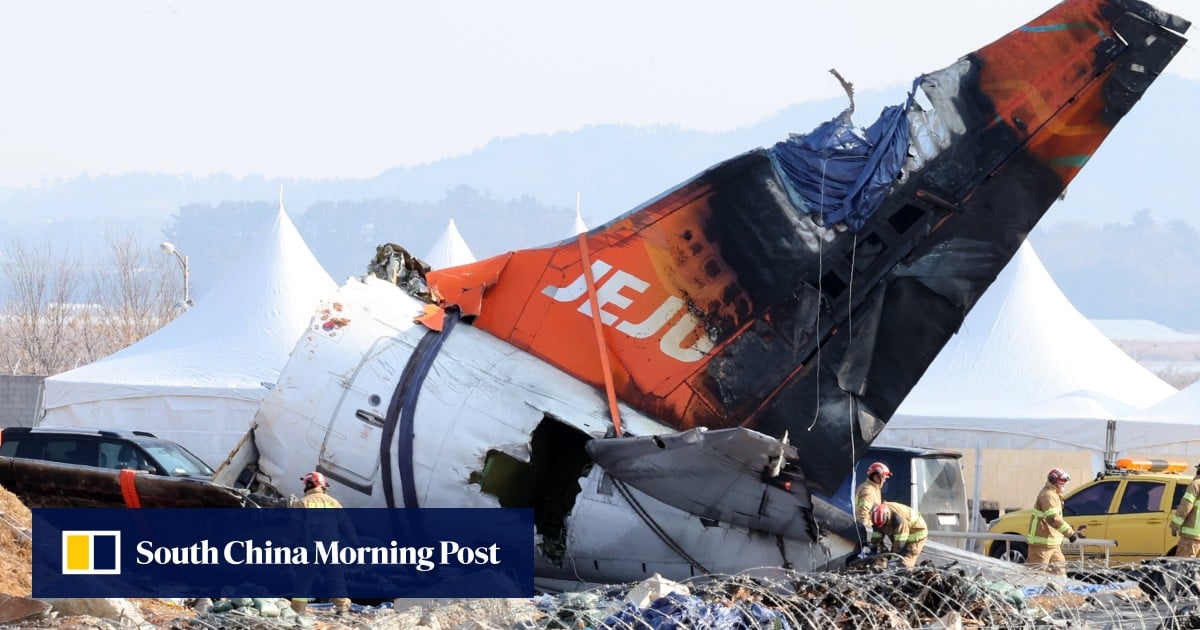
The article reports on South Korea’s transport ministry approving improper airport safety structures for over two decades, leading to a significant aviation safety incident. Specifically, a December 2024 crash involving a Boeing 737-800, which was struck by birds, belly-landed, and overran the runway at Muan International Airport, killing 179 people. The crash occurred after the aircraft struck a concrete support for a localiser antenna. The state auditor’s report on aviation safety management highlights this incident as a consequence of the approved unsafe structures, raising serious concerns about the ministry’s oversight and commitment to aviation safety.
Key Points:
- South Korea’s transport ministry approved improper airport safety structures for more than two decades.
- A December 2024 crash involving a Boeing 737-800 killed 179 people after the aircraft belly-landed and overran the runway.
- The crash was caused by the aircraft striking a concrete support for a localiser antenna.
- The state auditor’s report emphasizes the safety risks associated with the approved structures.
Actionable Takeaways:
-
Enhanced Oversight and Regulation: The incident underscores the need for stricter oversight and regulation of airport safety structures by transport ministries. Implementing rigorous safety audits and enforcing compliance with international safety standards can prevent similar tragedies. This action is crucial as it directly addresses the root cause of the crash and can significantly enhance aviation safety in South Korea and potentially other countries with similar oversight issues.
-
Investment in Safety Technology: The crash highlights the importance of investing in advanced safety technologies, such as bird strike countermeasures and runway safety systems. Airlines and airports should prioritize the integration of such technologies to mitigate risks associated with wildlife strikes and runway overruns. This takeaway is particularly relevant in the context of increasing air travel and the growing need for safer aviation infrastructure.
Contextual Insights:
The incident reflects broader concerns within the global aviation industry regarding safety management and regulatory compliance. Recent trends indicate a growing emphasis on safety technology and regulatory reforms to enhance aviation safety worldwide. Thought leaders in the travel industry are advocating for more robust safety frameworks and the adoption of innovative solutions to address emerging risks. The South Korea incident serves as a stark reminder of the potential consequences of lax safety oversight and the critical role of technology in modern aviation safety. As the industry continues to evolve, integrating cutting-edge safety technologies and maintaining stringent regulatory standards will be essential to prevent future incidents and ensure the safety of millions of passengers globally.
Read the Complete Article.