









No products in the cart.
- Latest
- Trending

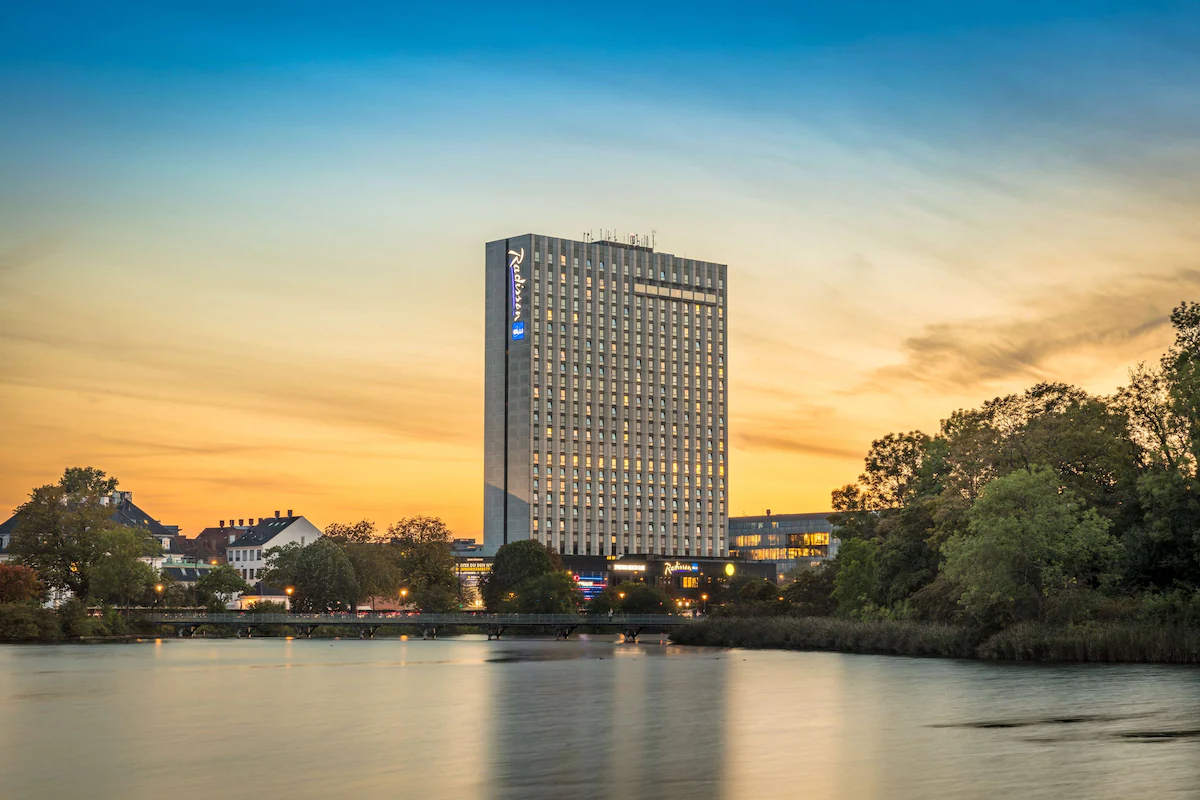
The roadmap includes a phased 2026 roll-out beginning in Norway, followed by Denmark, Sweden, the United Kingdom, and South Africa. (Shown here: Radisson Blu Scandinavia Hotel, Copenhagen)
Comprehensive Summarization:
Radisson Hotel Group is intensifying its commitment to sustainability by scaling its Verified Net Zero (VNZ) Hotels program from a limited pilot to 100 properties globally by 2030. This initiative was unveiled at the International Hospitality Investment Forum 2026, marking a significant shift in the hospitality industry’s approach to decarbonization. The focus of Radisson’s strategy is on retrofitting existing assets rather than constructing new hotels, a move that aligns with broader industry trends where the majority of hotel inventory is already built. This approach presents a practical solution to the challenges of decarbonization, leveraging the vast existing hotel infrastructure to achieve sustainability goals.
Key Points:
Actionable Takeaways:
Retrofitting Existing Hotels for Sustainability: Radisson’s strategy to retrofit existing hotel assets for sustainability presents a cost-effective and practical approach to achieving net-zero goals. This method leverages the vast existing hotel inventory, making it a scalable solution for the industry. It underscores the importance of operational efficiency and resource optimization in achieving sustainability targets without the high costs associated with new construction.
Industry Shift Towards Decarbonization: The expansion of Radisson’s VNZ Hotels program reflects a broader industry trend towards sustainability. As hospitality brands confront the financial and technical challenges of decarbonization, initiatives like VNZ provide a roadmap for operational transformation. This shift could drive increased investment in sustainable technologies and practices across the industry, fostering innovation in areas such as energy efficiency, waste reduction, and carbon offsetting.
Alignment with Global Sustainability Goals: By committing to a 2030 target for 100 VNZ Hotels, Radisson aligns with global sustainability objectives, such as those outlined in the Paris Agreement. This commitment not only enhances Radisson’s brand reputation but also positions the company as a leader in sustainable hospitality. It sets a precedent for other hotel chains to follow, potentially accelerating the industry-wide adoption of net-zero initiatives.
Contextual Insights:
The article’s focus on retrofitting existing hotel assets for sustainability is particularly relevant in the current context of the travel industry, where operational efficiency and cost management are paramount. As the industry grapples with the financial implications of decarbonization, initiatives like Radisson’s VNZ program offer a pragmatic pathway to achieving sustainability goals without the prohibitive costs associated with new construction. This approach is likely to resonate with other hotel chains facing similar challenges, potentially leading to a wave of similar sustainability initiatives across the industry.
Moreover, the timing of this announcement at the International Hospitality Investment Forum 2026 suggests a proactive industry response to sustainability challenges. As travel trends continue to evolve, with increasing consumer demand for sustainable travel options, hotels that proactively invest in net-zero initiatives will likely gain a competitive edge. This forward-looking perspective aligns with the broader industry trend of integrating sustainability into core business strategies, driven by both regulatory pressures and consumer expectations.
In conclusion, Radisson Hotel Group’s ambitious plan to scale its VNZ Hotels program underscores a significant shift in the hospitality industry’s approach to sustainability. By focusing on retrofitting existing assets, the company not only addresses the practical challenges of decarbonization but also sets a benchmark for operational efficiency and cost-effectiveness. This initiative is likely to influence broader industry trends, driving innovation and investment in sustainable hospitality practices.
Read the Complete Article.
Get curated travel AI insights — choose the newsletters that matter to you.
ALTOUR Expands into Thailand, Strengthening Corporate Travel Network Across Southeast Asia BANGKOK, THAILAND (25 March, 2026) – ALTOUR, a leading...
Read moreDetails


Comprehensive Summarization: Radisson Hotel Group is intensifying its commitment to sustainability by scaling its Verified Net Zero (VNZ) Hotels program...
Read moreDetails