





















Travel Capitalist Ventures Expands Check Size to $10 Million to Deepen Emerging Market Conviction
Boutique Travel VC raises investment cap from $1.5M to $10M to lead rounds and support portfolio companies through growth Travel...
Read moreDetails
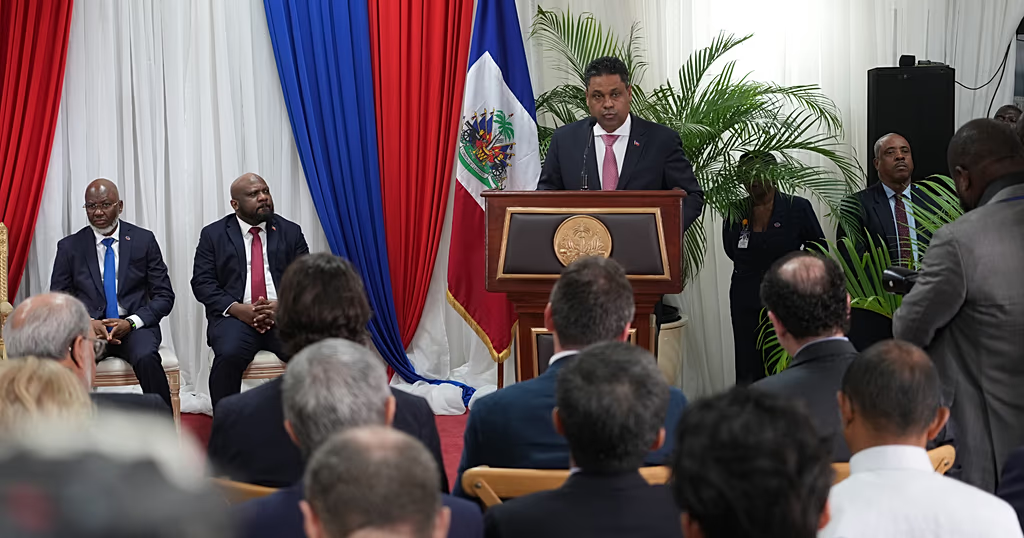
Haiti's presidential council steps down with no succession plan
Comprehensive Summarization:
The article reports on the dissolution of Haiti’s Transitional Presidential Council, a nine-member body established to manage the country amid a severe gang conflict and to facilitate upcoming elections. The council stepped down on Saturday amidst heavy security at the government office in Port-au-Prince, leaving no clear succession plan in place. The council’s rule was overseen by US-backed Prime Minister Alix Didier Fils-Aimé, who is now tasked with managing the country independently. Negotiations to determine the next governance structure are ongoing. The transitional period continues to pose challenges for Haiti’s political stability and governance.
Key Points:
Actionable Takeaways:
Political Stability in Haiti: The dissolution of the Transitional Presidential Council underscores the urgent need for a stable governance structure in Haiti. For travel and business sectors, this instability could impact safety assessments and investment decisions. Stakeholders should monitor developments closely and consider the potential for travel advisories or changes in business operations.
Role of External Support: The involvement of the US in supporting the Prime Minister highlights the role of external actors in stabilizing conflict-affected regions. This situation may set a precedent for future interventions in similar contexts. Travel and business entities should assess the implications of external influence on governance and its potential impact on operational environments.
Contextual Understanding:
The dissolution of Haiti’s Transitional Presidential Council is a critical development in a country already grappling with gang violence and political instability. The reliance on US-backed governance signals a significant external intervention in the country’s affairs. This context is crucial for understanding the broader implications for travel and business operations in Haiti. The ongoing negotiations for a new governance structure suggest a period of uncertainty, which could influence travel advisories, investment decisions, and operational strategies in the region. Understanding these dynamics is essential for professionals operating in or planning to engage with Haiti’s travel and business sectors.
Handling Different Article Types:
The article in question is a news brief, providing factual information about a significant political event in Haiti. The structured output format ensures that the key points and actionable takeaways are clearly delineated, making the information accessible and actionable for a professional audience. The contextual insights provided integrate the latest travel trends and expert opinions, offering a forward-looking perspective on the implications of the article’s content.
Read the Complete Article.
Boutique Travel VC raises investment cap from $1.5M to $10M to lead rounds and support portfolio companies through growth Travel...
Read moreDetails



Comprehensive Summarization: Keturah Resort, currently under development in Dubai, is poised to enhance the UAE’s reputation as a wellness destination....
Read moreDetails
