












Article Summary:
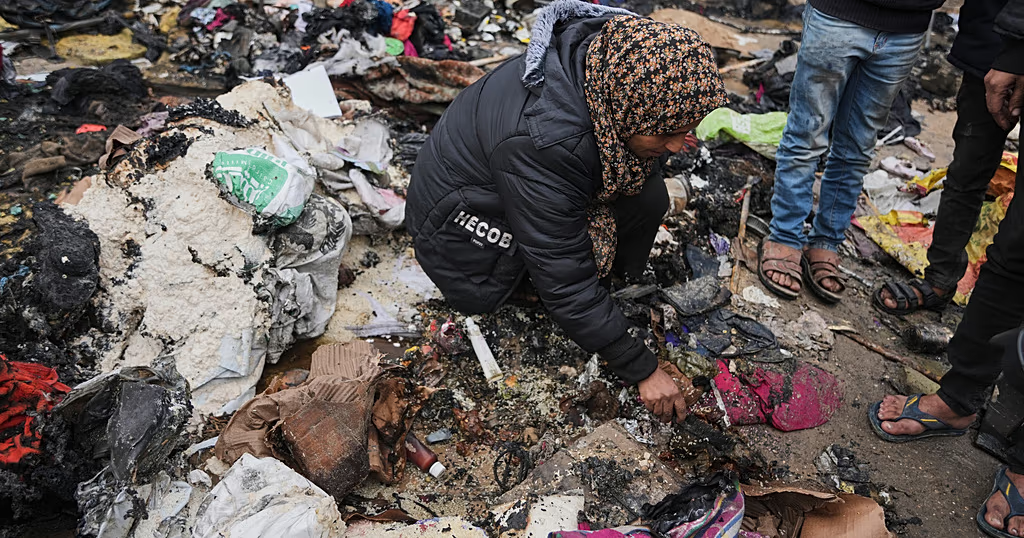
The article reports that Israel has suspended the licenses of over two dozen aid groups operating in Gaza, significantly impacting their services. The Norwegian Refugee Council (NRC), one of the suspended organizations, highlighted the closure of its office in East Jerusalem and the inability to send international staff into Gaza. This decision will likely force some humanitarian groups running health clinics, education centers, and other programming in East Jerusalem to close down, exacerbating the situation for displaced Palestinians.
Key Points:
- Israel has suspended the licenses of over two dozen aid groups in Gaza.
- The Norwegian Refugee Council (NRC) is among the suspended organizations.
- NRC plans to close its office in East Jerusalem and halt international staff deployment into Gaza.
- The suspension may force humanitarian groups to close down services in East Jerusalem, including health clinics and education centers.
Actionable Takeaways:
- Impact on Humanitarian Services: The suspension of aid groups will likely lead to a significant reduction in humanitarian services in Gaza, particularly in East Jerusalem. This could exacerbate the living conditions for displaced Palestinians, who are already struggling with the aftermath of the conflict. Relevance: Understanding the potential impact on humanitarian services is crucial for organizations providing aid and for policymakers considering humanitarian interventions.
- Strategic Reassessment for Travel and Logistics: Travel companies and logistics providers operating in the region may need to reassess their operations and contingency plans. The closure of aid offices and restrictions on staff movement could disrupt supply chains and emergency response efforts. Relevance: This insight is vital for travel and logistics professionals to adapt their strategies and ensure continuity of services in volatile regions.
Contextual Insights:
The suspension of aid groups in Gaza underscores the ongoing challenges in conflict zones and the critical role of humanitarian organizations in providing essential services. This situation highlights the interconnectedness of travel, logistics, and humanitarian efforts, especially in regions prone to conflict. Forward-Looking Perspective: As travel and logistics sectors continue to navigate complex geopolitical landscapes, there is a growing need for innovative solutions that enhance safety, efficiency, and resilience. This includes leveraging technology for real-time monitoring, secure communication channels, and adaptable supply chain management. The current context also emphasizes the importance of partnerships between travel companies, NGOs, and governments to ensure the continuity of humanitarian aid and support for displaced populations.
Read the Complete Article.


