












Comprehensive Summarization:
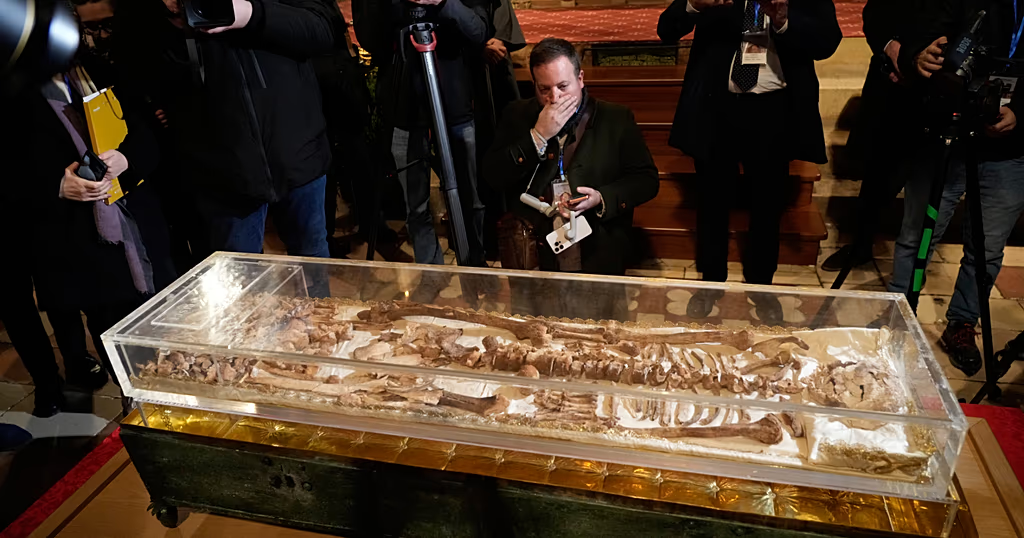
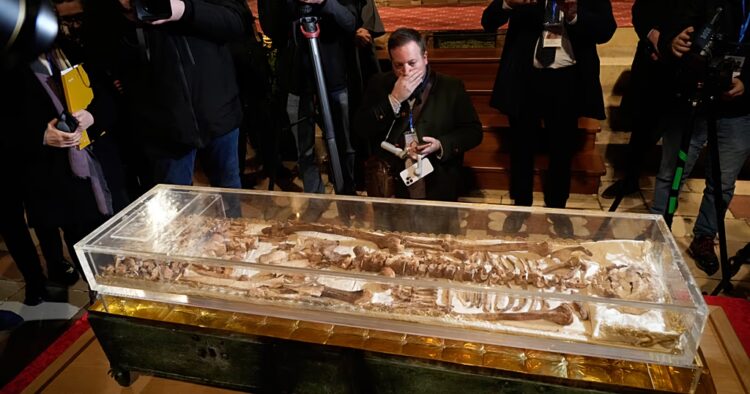
The article reports that the bones of St Francis of Assisi, the medieval friar who inspired the late Pope Francis, are being displayed publicly for the first time in Italy. The skeleton will be on public display in the Basilica of Saint Francis of Assisi in the town of the same name in Umbria for a month. To manage the expected influx of visitors, 400 volunteers have been recruited to guide them through the medieval city’s cobblestone streets and into the church. The bones are housed in a bulletproof glass box to ensure their safety.
Key Points:
- The bones of St Francis of Assisi are being displayed publicly for the first time in Italy.
- The display is set to take place in the Basilica of Saint Francis of Assisi in Umbria.
- 400 volunteers have been recruited to assist with managing the public display.
- The bones are kept in a bulletproof glass box for safety.
Actionable Takeaways:
-
Increased Tourism Potential: The display of St Francis of Assisi’s bones is expected to draw hundreds of thousands of visitors, presenting a significant tourism opportunity for the town of Assisi. This could lead to increased revenue for local businesses, including hotels, restaurants, and souvenir shops. Understanding this trend could be beneficial for travel startups focusing on cultural tourism or for fintech companies offering travel-related financial services.
-
Enhanced Visitor Experience: The recruitment of 400 volunteers to guide visitors through the city highlights a potential trend in enhancing visitor experiences through human interaction. This approach could be adopted by other travel destinations to improve customer satisfaction and differentiate themselves in a competitive market. Travel tech companies could explore innovations in visitor management systems or guide apps to support such initiatives.
Contextual Insights:
The display of St Francis of Assisi’s bones reflects the enduring appeal of religious and historical sites in the travel industry. This trend aligns with the growing interest in cultural tourism, where visitors seek to connect with historical figures and events. The use of volunteers to manage the influx of visitors underscores the importance of human interaction in enhancing the visitor experience. This aligns with current industry trends emphasizing personalized and immersive travel experiences. Furthermore, the safety measures, such as the bulletproof glass box, reflect the industry’s focus on ensuring the preservation and security of historical artifacts, a critical consideration for travel startups and fintech companies involved in heritage tourism.
Read the Complete Article.



