






No products in the cart.
- Latest
- Trending

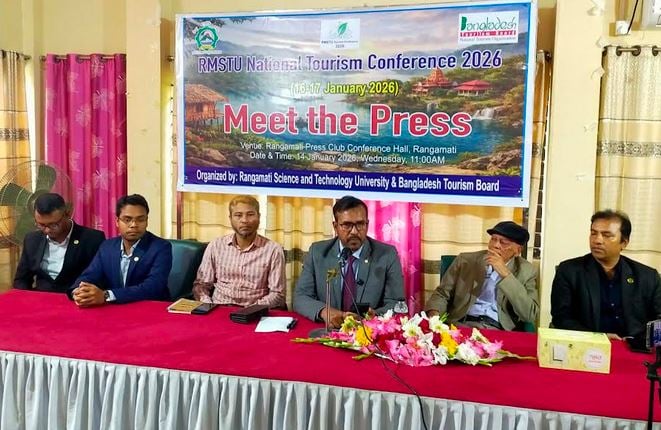
‘Mini Tourism Hub’ to be developed at Rangamati Science University
Article Summary:
Rangamati Science and Technology University (RMSTU) in Bangladesh is developing a ‘Mini Tourism Hub’ on its campus to integrate education, research, and tourism, leveraging the natural beauty of Rangamati. Vice-Chancellor Professor Dr. Atiar Rahman announced this initiative during a press briefing, aiming to create a sustainable model that combines academic and tourism activities to benefit the local community and promote eco-friendly tourism.
Key Points:
Initiative Announcement: RMSTU has launched a ‘Mini Tourism Hub’ project on its campus to merge educational and research activities with tourism development, utilizing the scenic Rangamati region.
Objective: The hub aims to enhance sustainable tourism by integrating academic resources, research facilities, and tourism infrastructure, fostering a symbiotic relationship between education and travel.
Leadership Involvement: Vice-Chancellor Professor Dr. Atiar Rahman highlighted the initiative’s potential to create a unique educational and tourist destination, emphasizing its role in promoting eco-friendly tourism practices.
Community Benefit: The project seeks to provide alternative livelihood opportunities for workers involved in stone extraction, redirecting them towards sustainable tourism-related jobs.
Actionable Takeaways:
Develop Integrated Tourism-Education Models: Establish frameworks that combine academic programs with tourism activities, such as offering courses on sustainable tourism management, eco-tourism practices, and regional cultural studies. This approach can attract students interested in travel and hospitality while providing practical, hands-on learning experiences.
Leverage Natural Resources for Sustainable Tourism: Utilize Rangamati’s natural beauty and ecological diversity to develop eco-tourism offerings, such as nature trails, wildlife observation tours, and cultural heritage tours. This can help reduce the environmental impact of tourism by promoting responsible travel practices and preserving local ecosystems.
Create Job Opportunities for Local Communities: Design the tourism hub to offer employment opportunities for local residents, particularly those displaced by stone extraction activities. By training and employing locals in tourism roles, the project can improve livelihoods, reduce unemployment, and foster community engagement with tourism initiatives.
Contextual Insights:
The development of a ‘Mini Tourism Hub’ at RMSTU aligns with broader global trends in sustainable tourism, where educational institutions are increasingly partnering with tourism sectors to promote eco-friendly practices. This initiative reflects a growing recognition of the importance of integrating education with tourism to create sustainable, community-driven economic opportunities. By focusing on eco-tourism and leveraging natural resources, RMSTU’s project exemplifies how tourism can be a tool for environmental conservation and socio-economic development. As the travel industry continues to prioritize sustainability, such models can serve as benchmarks for other institutions aiming to balance academic rigor with responsible tourism practices.
Read the Complete Article.
Get curated travel AI insights — choose the newsletters that matter to you.
This spot is reserved for brands with a compelling story for the travel trade. They use this space to cut...
Read moreDetailsTravel One Technologies launches the world’s first Traveler DNA Platform, targeting the structural data gap at the core of an...
Read moreDetails