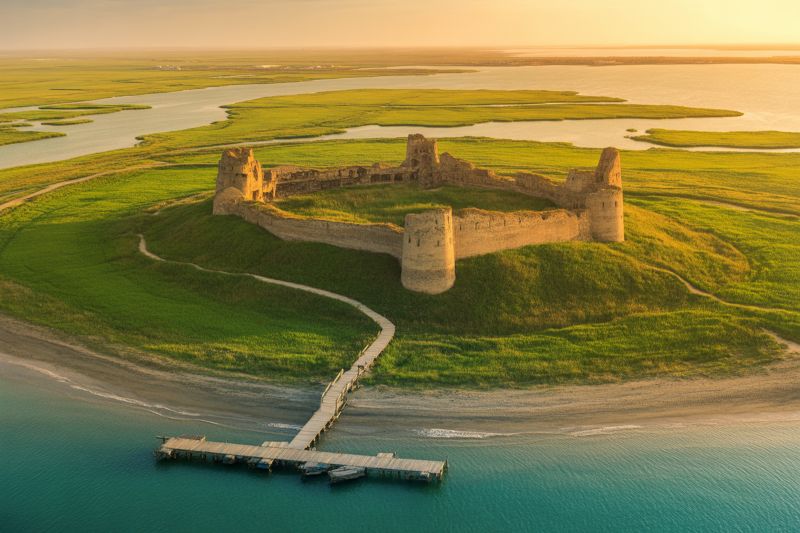
The article reports on the commencement of renovation work on the historical Russian fortress located on Ashuradeh Island, situated in the Miankaleh Peninsula near Bandar Torkaman, northern Iran. This development is poised to significantly impact the tourism industry in the region, leveraging the island’s rich history, natural beauty, and strategic location. Ashuradeh Island has long been a focal point for tourists seeking a blend of cultural heritage and scenic landscapes. The restoration of the fortress is expected to enhance the island’s appeal, potentially attracting more visitors and boosting local tourism economies. The article underscores the importance of preserving historical sites while promoting sustainable tourism practices, aligning with broader industry trends towards heritage conservation and eco-friendly travel.
Key Points:
Restoration of the Russian fortress on Ashuradeh Island has begun, marking a significant step in revitalizing tourism in northern Iran.
Ashuradeh Island is renowned for its historical significance, natural beauty, and strategic location, making it a prime candidate for tourism growth.
The renovation aims to enhance the island’s appeal, potentially increasing visitor numbers and benefiting the local economy.
The project exemplifies the broader trend of integrating historical preservation with modern tourism development.
Actionable Takeaways:
Investment in Historical Preservation: The restoration of the Russian fortress on Ashuradeh Island presents an opportunity for investors and tourism stakeholders to engage in heritage conservation projects. Such initiatives not only preserve cultural heritage but also stimulate economic growth through increased tourism. This aligns with current industry trends emphasizing sustainable and culturally rich travel experiences.
Leveraging Historical Sites for Tourism Growth: The article highlights the potential of historical sites like Ashuradeh Island to become key attractions in the tourism sector. For travel companies and local governments, investing in the restoration and promotion of such sites can yield significant returns by attracting a niche market of history enthusiasts and nature lovers. This strategy can be replicated in other regions with similar historical assets.
Sustainable Tourism Practices: The emphasis on preserving historical sites while promoting tourism underscores the importance of sustainable tourism practices. Travel companies should prioritize eco-friendly initiatives, such as minimizing environmental impact during restoration projects and promoting responsible tourism behaviors among visitors. This approach not only preserves natural and cultural resources but also enhances the overall travel experience, meeting the growing demand for responsible travel.
Contextual Insights:
The restoration of the Russian fortress on Ashuradeh Island is a timely development that aligns with current industry trends towards heritage conservation and sustainable tourism. As the travel industry increasingly focuses on preserving cultural and historical assets, projects like this serve as models for balancing development with preservation. The integration of historical sites into tourism strategies reflects a growing recognition of their value in attracting diverse visitor demographics, from history buffs to nature enthusiasts. Furthermore, the project’s potential to boost local economies through tourism highlights the broader impact of heritage preservation on regional development. As thought leaders in the travel industry continue to advocate for sustainable practices, such initiatives are likely to gain traction, fostering a new wave of tourism that respects and celebrates cultural heritage while promoting responsible travel.