










No products in the cart.
- Latest
- Trending

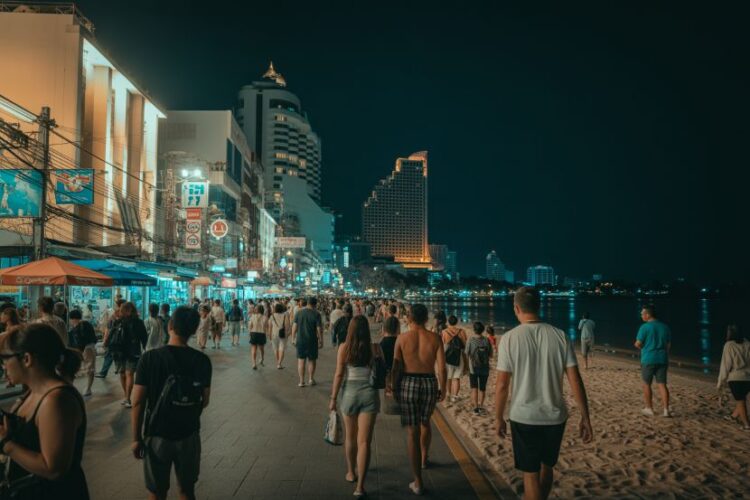
Pattaya’s Crossroads in Thailand: Between Russian Holidaymakers, Chinese Group Tours, and India’s Ri...
Comprehensive Summarization:
The article titled “Pattaya’s Crossroads in Thailand: Between Russian Holidaymakers, Chinese Group Tours, and India’s Rising Travel Market from Bangkok to Phuket — Key Developments Every Traveler Should Watch” discusses the evolving tourism landscape in Pattaya, Thailand. Once primarily a nightlife hub, Pattaya is now at a pivotal point where its visitor base is diversifying across various regions, including Russia, China, and India. The article highlights Pattaya’s strategic position between Bangkok and Phuket, emphasizing its role in Thailand’s broader tourism future. It underscores the shift from a single dominant source market (Russian tourists) to a more diversified approach, reflecting broader trends in global travel patterns. The piece also touches on the implications of this diversification for local businesses, tourism infrastructure, and the overall economic impact on Thailand’s tourism sector.
Key Points:
Actionable Takeaways:
Diversification of Tourism Markets: Travel businesses should focus on diversifying their target markets to reduce dependency on a single source of revenue. This strategy can enhance resilience against fluctuations in specific tourist demographics, as highlighted by the shift from Russian tourists to a more diversified mix including Chinese and Indian travelers.
Infrastructure and Service Adaptation: Local businesses and tourism operators in Pattaya should invest in infrastructure and services that cater to the varied needs of different tourist groups. This includes enhancing facilities for Russian tourists, while also ensuring that services are appealing to Chinese and Indian travelers, thereby maximizing market reach and profitability.
Strategic Location Utilization: Pattaya’s strategic position between Bangkok and Phuket offers a unique opportunity for tourism operators to leverage this location for cross-regional tourism promotions. By marketing Pattaya as a gateway or a stopover destination, businesses can attract travelers looking to explore multiple regions within Thailand, thereby increasing overall tourist footfall.
Contextual Insights:
The article reflects current industry trends where destinations are increasingly recognizing the importance of diversifying their visitor base to ensure long-term sustainability. Pattaya’s shift from a single-market dependency to a more diversified tourism model mirrors broader global trends in travel, where destinations are leveraging their unique selling propositions to attract a wider range of tourists. This shift is particularly relevant in the context of geopolitical and economic changes affecting traditional tourist markets like Russia and China. Furthermore, the article’s focus on Pattaya’s role in Thailand’s tourism future underscores the broader impact of such diversification on the country’s tourism sector, potentially leading to increased economic benefits and job creation in the region. As the travel industry continues to evolve, understanding and adapting to these trends will be crucial for stakeholders aiming to thrive in a competitive and dynamic market.
Read the Complete Article.
Get curated travel AI insights — choose the newsletters that matter to you.
This spot is reserved for brands with a compelling story for the travel trade. They use this space to cut...
Read moreDetailsTravel One Technologies launches the world’s first Traveler DNA Platform, targeting the structural data gap at the core of an...
Read moreDetails