












Article Summary:
The Edirne province in Turkey is planning to create an underwater miniature city in the Saros Gulf to enhance marine life and promote diving tourism. This project involves recreating major cultural landmarks of Edirne in stone models and placing them underwater near İbrice Harbor, an emerging hub for divers. Governor Yunus Sezer highlighted the potential of this initiative to boost tourism and enrich the local ecosystem.
Key Points:
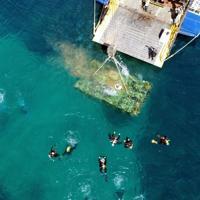
- Authorities in Edirne are preparing to submerge a miniature complex of the city in the Saros Gulf.
- The miniature city will feature scaled-down architectural models of major cultural landmarks.
- The project aims to enrich marine life and expand diving tourism by creating an artificial reef.
- İbrice Harbor is already a growing diving hotspot, making it an ideal location for this initiative.
- The miniature city will serve as both an artificial reef and an attraction for divers.
Actionable Takeaways:
- Tourism Boost: The underwater miniature city project is expected to significantly boost diving tourism in the region. By creating an artificial reef, it offers divers a unique experience while also contributing to marine conservation efforts. This could lead to increased revenue for local businesses, including dive shops, hotels, and restaurants.
- Marine Conservation: The project aligns with global trends in sustainable tourism, where efforts are made to preserve natural environments while promoting tourism. By creating an artificial reef, Edirne is contributing to marine biodiversity, which is crucial for the long-term health of ocean ecosystems.
- Technological Innovation: The use of stone models for the miniature city represents a blend of traditional architecture and modern technology. This approach could inspire other destinations to explore innovative ways of promoting tourism that are both environmentally friendly and culturally enriching.
Contextual Insights:
The initiative in Edirne reflects a broader trend in the travel industry towards sustainable and immersive experiences. As travelers become more environmentally conscious, destinations are seeking ways to offer unique experiences that do not compromise the integrity of natural ecosystems. The underwater miniature city project is a forward-thinking approach that combines cultural heritage with marine conservation, setting a precedent for other regions to follow. Additionally, the project highlights the potential for technology to play a role in tourism, even in the form of physical replicas that enhance the visitor experience without causing environmental harm. This aligns with the growing emphasis on tech-driven solutions in the travel sector, such as virtual reality tours and augmented reality experiences, which are becoming increasingly popular among travelers seeking novel and engaging ways to explore destinations.
Read the Complete Article.



