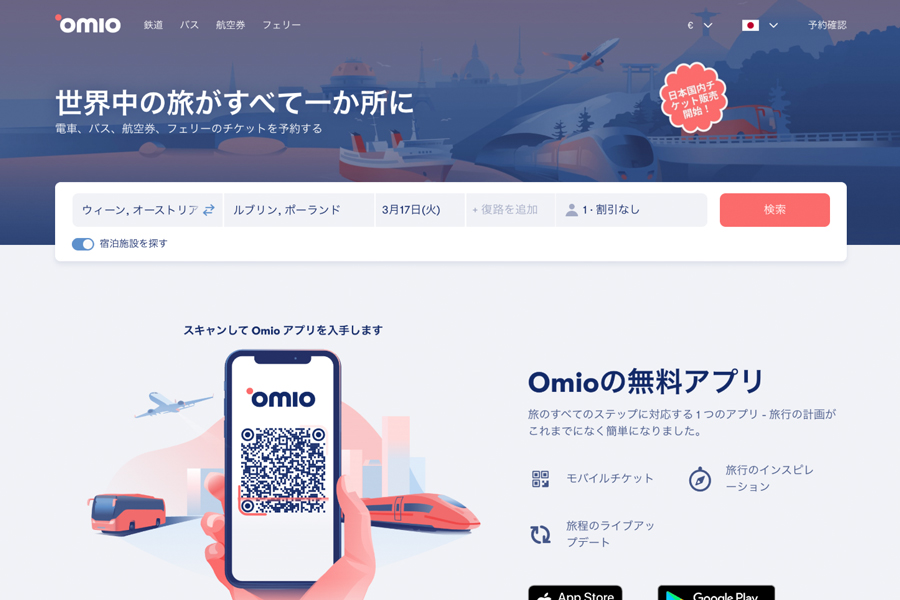
Omio, a global travel booking platform founded in 2013, has announced its entry into the Japanese market, marking its 47th market expansion. The platform will offer integrated reservations for Shinkansen bullet trains, local railways, flights, buses, ferries, and Japan Rail Pass purchases. A standout feature of Omio’s Japanese service is its support for 32 languages and 33 currencies, catering to the diverse needs of inbound visitors to Japan. This strategic move follows Omio’s successful expansion into Southeast Asia and Brazil, and the company plans to roll out services in over 70 markets worldwide by 2028. With offices in Berlin, Prague, Melbourne, Bengaluru, and Singapore, and a workforce of more than 430 employees, Omio continues to innovate in travel technology, aiming to simplify and enhance the travel booking experience for millions of users.
Key Points:
Omio is entering the Japanese market, becoming its 47th market.
The platform will support integrated reservations for Shinkansen bullet trains, local railways, flights, buses, ferries, and Japan Rail Pass purchases.
Omio’s service will offer support for 32 languages and 33 currencies.
This expansion follows Omio’s successful entry into Southeast Asia and Brazil.
Omio plans to roll out services in over 70 markets worldwide by 2028.
Founded in 2013, Omio operates under two brands, Omio and Rome2Rio, and has offices in multiple global locations.
The company employs over 430 people and sells more than 100,000 tickets per day.
Actionable Takeaways:
Market Expansion Opportunity: Omio’s entry into the Japanese market presents a significant opportunity for travel startups and fintech companies to explore similar expansion strategies in East Asia. The demand for integrated travel booking services, especially in regions with diverse linguistic and currency needs, highlights a growing market trend that could be leveraged for innovation and growth.
Importance of Multilingual and Multicurrency Support: The inclusion of 32 languages and 33 currencies in Omio’s Japanese service underscores the importance of catering to a global audience. Travel tech companies can enhance their offerings by prioritizing multilingual and multicurrency support, thereby improving user experience and accessibility in international markets.
Strategic Growth Plans: Omio’s ambitious plan to expand services to over 70 markets by 2028 suggests a forward-thinking approach to market penetration and growth. Startups and established players in the travel industry should consider long-term strategic planning and scalability in their business models to stay competitive in the rapidly evolving travel tech landscape.
Contextual Insights:
The entry of Omio into the Japanese market is a strategic move that aligns with the broader trend of travel tech companies expanding globally to cater to the increasing demand for seamless, integrated travel solutions. As the travel industry continues to recover and evolve post-pandemic, there is a heightened focus on technological advancements that enhance user experience, such as multilingual support and integrated booking options. This trend is supported by thought leaders who emphasize the importance of innovation in travel services to meet the diverse needs of modern travelers. Furthermore, Omio’s expansion strategy reflects the industry’s shift towards digital transformation, where technology plays a crucial role in simplifying and personalizing the travel booking process. By leveraging such insights, travel startups and fintech companies can position themselves at the forefront of industry innovation, capitalizing on the growing demand for sophisticated travel solutions.