
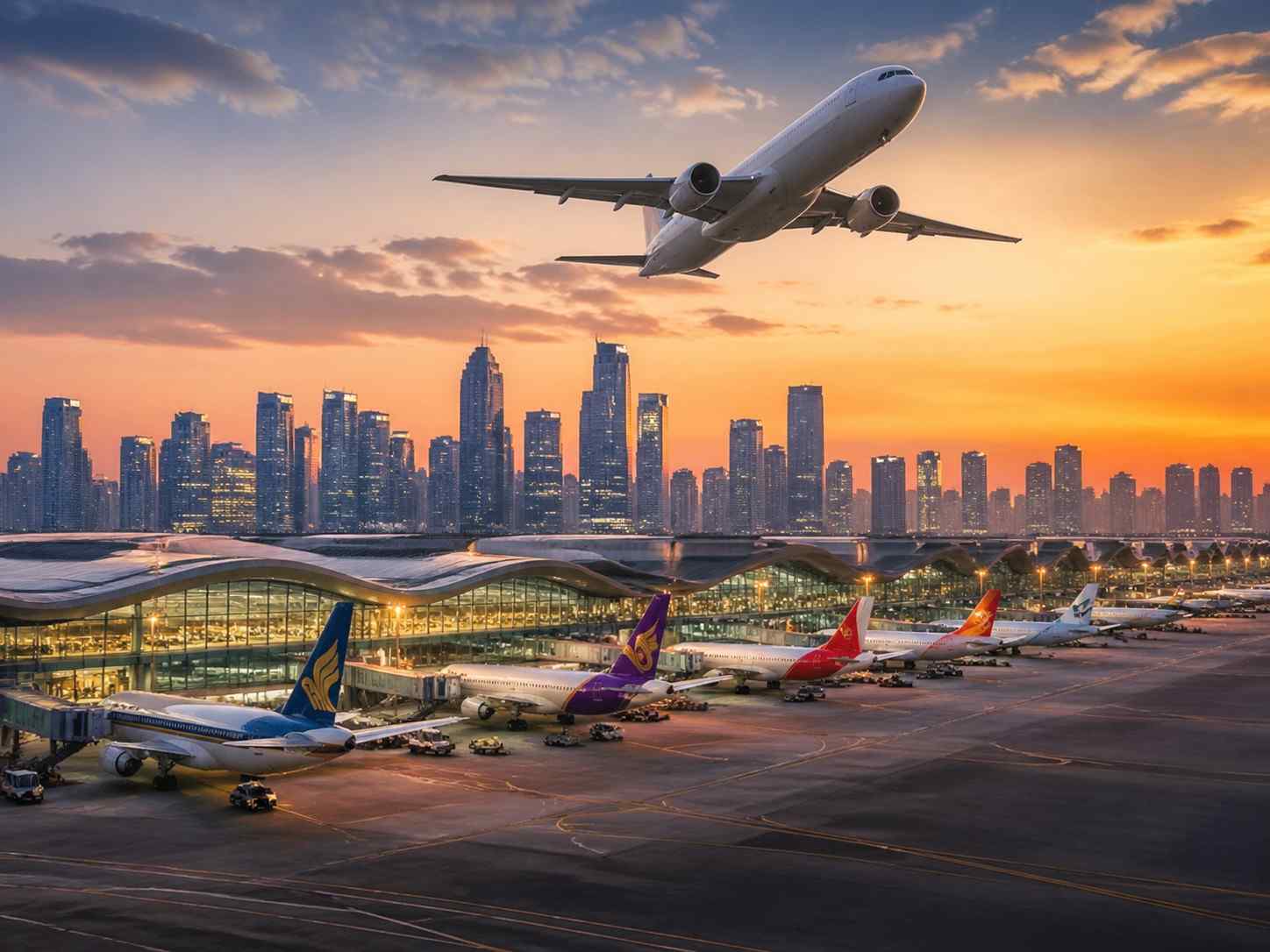
Singapore Airlines teams with Thai Airways, Malaysia Airlines, VietJet, AirAsia
THE NEWS: Analysis: Singapore Airlines is joining Thai Airways, Malaysia Airlines, VietJet and AirAsia in a drive to position Southeast...
Read moreDetailsEvery alert that matters — when it happens.

Malaysia's AirAsia flight criticized for landing at wrong airport in South Korea
A recent incident involving AirAsia has highlighted a critical error in air travel, leaving passengers confused and frustrated. An AirAsia flight from Kuala Lumpur, Malaysia, was scheduled to land at the Gimhae International Airport in Busan, South Korea, but instead touched down at the smaller, regional Muan International Airport, approximately 240 kilometers (149 miles) away. This significant detour has raised questions about operational procedures and passenger safety.
The flight, a scheduled service from the Malaysian capital, was intended to bring tourists and business travelers to Busan, a major coastal city and a popular destination. However, due to what reports suggest was an error in flight planning or execution, the Airbus A330 aircraft, carrying 254 passengers, landed at Muan International Airport, near the southwestern city of Gwangju.
While Muan International Airport is equipped to handle commercial flights, it is not the intended destination for this route. Passengers onboard experienced considerable confusion and inconvenience. Upon realizing the mistake, the airline arranged for passengers to be transported to their original destination in Busan via bus. This overland journey would have taken several hours, significantly disrupting travel plans and adding an unexpected element of stress to their South Korean adventure.
This operational misstep is particularly concerning for a reputable airline like AirAsia, known for its extensive network across Asia. Such an error can have a considerable impact on passenger trust and brand reputation. While the airline has reportedly apologized for the inconvenience, the exact cause of the diversion is under investigation. Potential factors could range from miscommunication in the cockpit to an error in the navigation systems or ground handling instructions.
For travelers flying into South Korea, especially on routes with multiple airport options, it underscores the importance of staying informed about flight details. Passengers should always confirm their arrival airport with the airline and monitor flight status updates. While airlines strive for precision, unforeseen circumstances or human error can, albeit rarely, lead to such situations.
The incident serves as a stark reminder of the complexities of air travel and the meticulous planning required to ensure seamless journeys. For the travel industry, it’s an opportunity to review and reinforce operational protocols, particularly in international routes where language and geographical nuances can add layers of complexity. Passengers affected by such diversions are often entitled to compensation, and it’s advisable for them to inquire with the airline about their rights. This AirAsia incident, while an anomaly, offers valuable lessons for both airlines and their passengers.
Key Points
Read the Complete Article.
THE NEWS: Analysis: Singapore Airlines is joining Thai Airways, Malaysia Airlines, VietJet and AirAsia in a drive to position Southeast...
Read moreDetails
Experience the magic of the Nile aboard Kenzy Dahabeya, a luxury boutique sailing cruise that offers an unforgettable journey between...
Read moreDetails





