











Sail Through Time: Discover the Timeless Wonders of Upper Egypt Aboard Kenzy Dahabeya
Experience the magic of the Nile aboard Kenzy Dahabeya, a luxury boutique sailing cruise that offers an unforgettable journey between...
Read moreDetails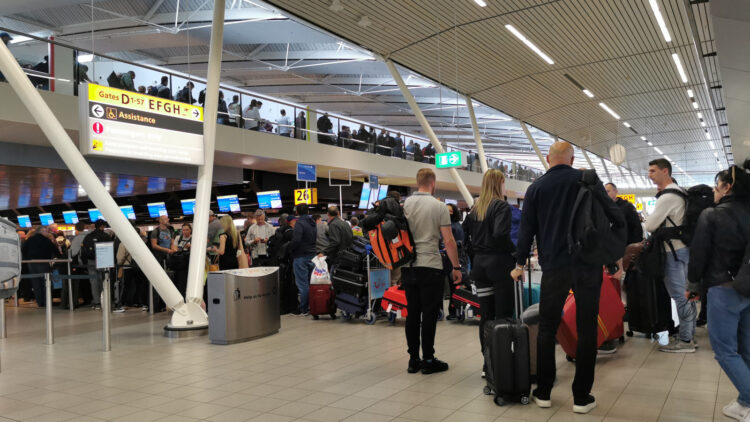
Amsterdam Schiphol Airport passengers waiting in line.
Article Summary:
Delta Air Lines is experiencing significant operational challenges in 2023, primarily due to delays and cancellations at its major hub, Hartsfield-Jackson Airport in Atlanta. The company has been forced to delay flights as a result of “crew duty time being exhausted,” leading to a buildup of cancellations. Additionally, the Federal Aviation Administration (FAA) has imposed airspace restrictions over several Caribbean destinations, further complicating Delta’s flight operations. Despite these challenges, Delta has managed to resume flights once the FAA restrictions were lifted, though cancellations are still expected.
Key Points:
Actionable Takeaways:
Contextual Insights:
The challenges faced by Delta Air Lines highlight broader issues within the travel industry, particularly the strain on major hubs due to crew management and regulatory restrictions. These issues underscore the importance of operational efficiency and regulatory compliance in maintaining service reliability. As the industry navigates these challenges, there is a growing emphasis on technological solutions to enhance operational transparency and passenger communication. Startups and fintech innovations are likely to play a crucial role in addressing these operational hurdles, offering tools for real-time data management, predictive analytics for scheduling, and seamless passenger experiences. The ability to adapt quickly to regulatory changes and operational constraints will be a key determinant of success for travel companies in the coming years.
Read the Complete Article.
Experience the magic of the Nile aboard Kenzy Dahabeya, a luxury boutique sailing cruise that offers an unforgettable journey between...
Read moreDetails



