












Comprehensive Summarization:
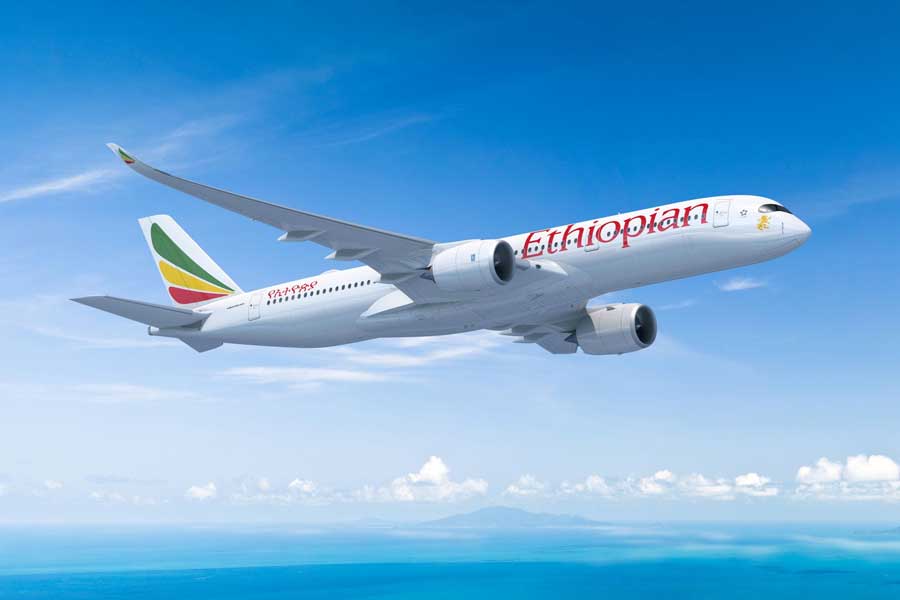
Ethiopian Airlines is set to introduce an Airbus A350-900 on its Tokyo/Narita to Seoul/Incheon–Addis Ababa route starting March 29. This upgauged service will replace the current Boeing 787 aircraft, offering a total of 330 seats, including 30 business class seats and 300 economy class seats. The Airbus A350-900 is noted for its fuel efficiency and passenger comfort, aligning with the airline’s strategy to enhance its global network. The summer schedule will see six daily flights, reflecting the airline’s commitment to expanding its international reach and improving travel experiences for passengers.
Key Points:
- Ethiopian Airlines will begin operating an Airbus A350-900 on its Tokyo/Narita–Seoul/Incheon–Addis Ababa route from March 29.
- The Airbus A350-900 will replace the current Boeing 787 aircraft on this route, offering increased capacity with 330 seats.
- The new aircraft is configured with 30 business class seats and 300 economy class seats, enhancing passenger comfort and service.
- The summer schedule will feature six daily flights, indicating an expansion of the airline’s international presence.
Actionable Takeaways:
-
Enhanced Connectivity and Capacity: The introduction of the Airbus A350-900 will significantly boost Ethiopian Airlines’ capacity on the Tokyo/Narita–Seoul/Incheon–Addis Ababa route. This expansion is likely to enhance connectivity for passengers traveling between Asia and Africa, potentially increasing the airline’s market share and revenue. (Relevance: Directly impacts the airline’s operational strategy and market position.)
-
Adoption of Fuel-Efficient Technology: The Airbus A350-900 is known for its advanced fuel efficiency and passenger comfort features. By deploying this aircraft, Ethiopian Airlines aligns with industry trends towards sustainable aviation and improved travel experiences. This move could position the airline as a leader in adopting green technologies within the travel sector. (Relevance: Reflects broader industry trends towards sustainability and technological innovation.)
-
Strategic Route Expansion: The addition of this route underscores Ethiopian Airlines’ strategy to expand its global network, particularly in high-demand Asian-African corridors. This expansion could attract more business travelers and tourists, benefiting both the airline and the regions it connects. (Relevance: Highlights the strategic importance of route expansion in the context of global travel demand.)
Contextual Insights:
The deployment of the Airbus A350-900 by Ethiopian Airlines is a strategic move that aligns with current industry trends towards enhancing connectivity and operational efficiency. The aviation sector is increasingly focusing on fuel-efficient aircraft to reduce carbon emissions and operational costs, a trend supported by thought leaders in the travel industry. This move by Ethiopian Airlines not only reflects its commitment to modernizing its fleet but also positions it favorably against competitors in the Asian-African market. Furthermore, the airline’s strategic route expansion is indicative of the broader industry trend of diversifying routes to tap into emerging travel markets, particularly in regions with growing economic activity and tourism potential. As travel technology continues to evolve, innovations like the Airbus A350-900 play a crucial role in shaping the future of air travel, offering both airlines and passengers enhanced experiences through improved comfort and efficiency.
Read the Complete Article.



