












Comprehensive Summarization:
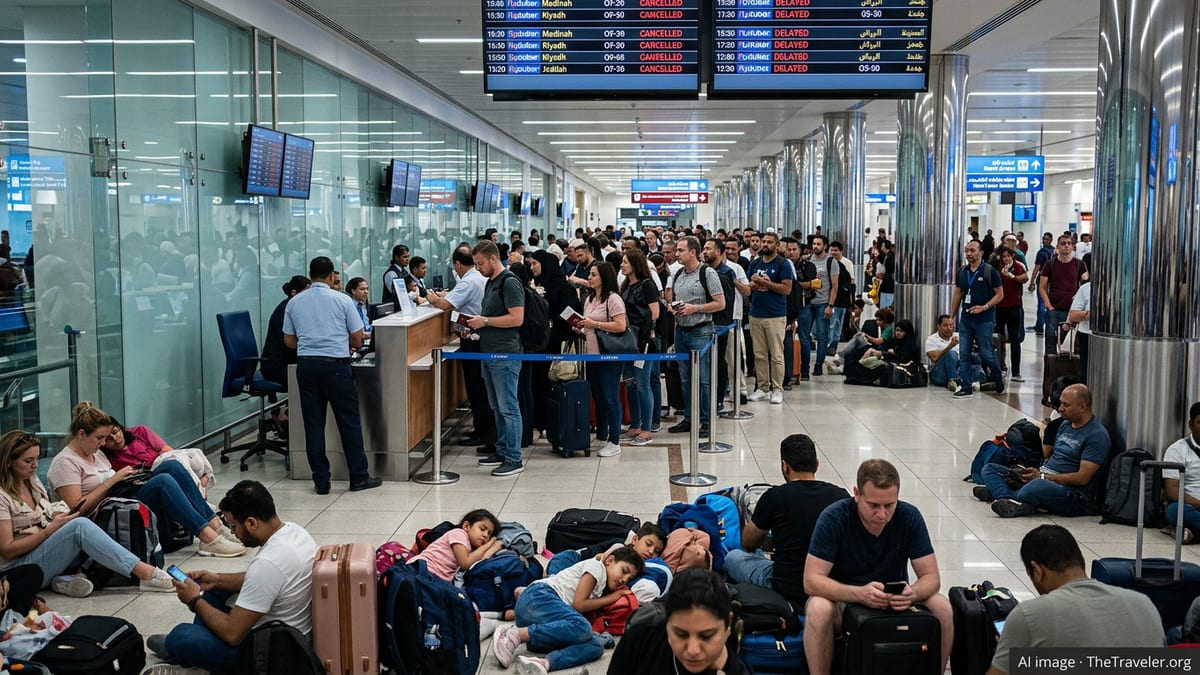
The article reports on a significant disruption in travel between Saudi Arabia and the United Arab Emirates, caused by FlyDubai cancelling seven flights and delaying 66 others. This operational turmoil is part of a broader regional airspace crisis, which has led to days of disruption. The situation has forced travelers to find alternative routes home, particularly from hubs like Madinah and Dubai. The article highlights the challenges faced by passengers and the broader implications for the travel industry, especially in terms of operational resilience and passenger management during crises.
Key Points:
- FlyDubai cancelled seven flights and delayed 66 others, disrupting travel between Saudi Arabia and the UAE.
- The disruption is part of a larger regional airspace crisis, adding to existing days of travel turmoil.
- Passengers are being forced to improvise routes home from major hubs such as Madinah and Dubai.
- The crisis underscores the challenges of managing travel operations during airspace restrictions and operational delays.
Actionable Takeaways:
-
Enhanced Operational Resilience: Travel companies should invest in robust operational planning and contingency strategies to mitigate the impact of airspace restrictions and flight cancellations. This includes real-time communication with passengers and flexible routing options to minimize disruption.
-
Leverage Technology for Passenger Management: Implement advanced passenger management systems that can quickly re-route travelers and provide real-time updates. This can help in managing the influx of passengers seeking alternative routes and reduce the stress on airports and airlines during crises.
-
Focus on Passenger Experience: During disruptions, prioritizing passenger comfort and information dissemination is crucial. Providing clear communication, assistance with rebooking, and ensuring access to necessary resources can significantly enhance passenger satisfaction and loyalty.
Contextual Insights:
The article reflects the current challenges faced by the travel industry in managing operational disruptions caused by external factors such as airspace restrictions. It highlights the importance of technological advancements in travel tech, particularly in real-time communication and passenger management systems. The crisis also underscores the need for travel companies to innovate and adapt quickly to maintain operational efficiency and passenger satisfaction. As the travel industry continues to evolve, integrating fintech solutions for seamless transactions and fintech-driven customer service can further enhance resilience and customer experience during such disruptions.
Read the Complete Article.



