












Comprehensive Summarization:
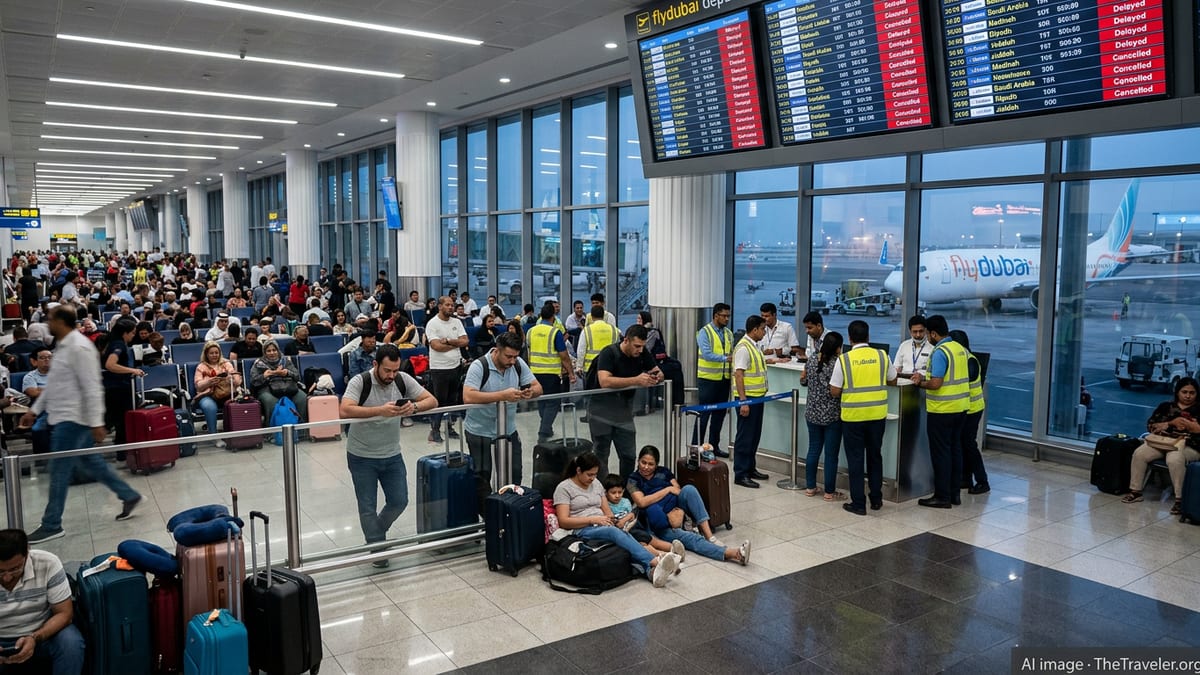
The article reports on a significant disruption affecting hundreds of travelers across Saudi Arabia and the United Arab Emirates due to FlyDubai cancelling seven flights and delaying 66 others. This disruption has left passengers stranded at key transit hubs such as Madinah and Dubai. The issue is part of a broader regional airspace crisis that has been causing turbulence for Gulf aviation carriers over several days. The article highlights the ongoing challenges faced by the travel industry in the region, emphasizing the impact on both passengers and the aviation sector.
Key Points:
- FlyDubai has cancelled seven flights and delayed 66 others, causing significant disruption for travelers in Saudi Arabia and the UAE.
- The disruption has left passengers stranded at major airports in Madinah and Dubai, impacting key transit hubs.
- This incident is part of a larger regional airspace crisis affecting Gulf carriers, which has been ongoing for several days.
- The article underscores the challenges faced by the travel industry in the region due to the ongoing crisis.
Actionable Takeaways:
-
Enhanced Communication Protocols: Airlines should implement more robust communication protocols to inform passengers promptly about flight cancellations and delays. This can help mitigate passenger frustration and improve overall travel experience during crises.
-
Investment in Resilient Airspace Management Systems: The ongoing regional airspace crisis highlights the need for Gulf carriers to invest in advanced airspace management systems. These systems can improve real-time tracking and management of flights, reducing the likelihood of disruptions caused by airspace issues.
-
Focus on Passenger Experience: Travel companies should prioritize enhancing the passenger experience during disruptions. This includes providing clear information, alternative travel options, and support services to stranded passengers, thereby maintaining customer satisfaction and loyalty.
Contextual Insights:
The FlyDubai disruption is a stark reminder of the vulnerabilities within the Gulf aviation sector, particularly in the face of regional airspace challenges. This incident is reflective of broader trends in the travel industry, where external factors such as geopolitical tensions and airspace restrictions can significantly impact operations. The article aligns with current industry trends emphasizing the importance of technological advancements in managing travel disruptions. Innovations in real-time tracking and communication systems are becoming increasingly crucial for airlines to navigate such crises effectively. Furthermore, the incident underscores the need for travel companies to focus on resilience and customer-centric solutions, ensuring they can adapt swiftly to unforeseen challenges and maintain high service standards.
Read the Complete Article.



