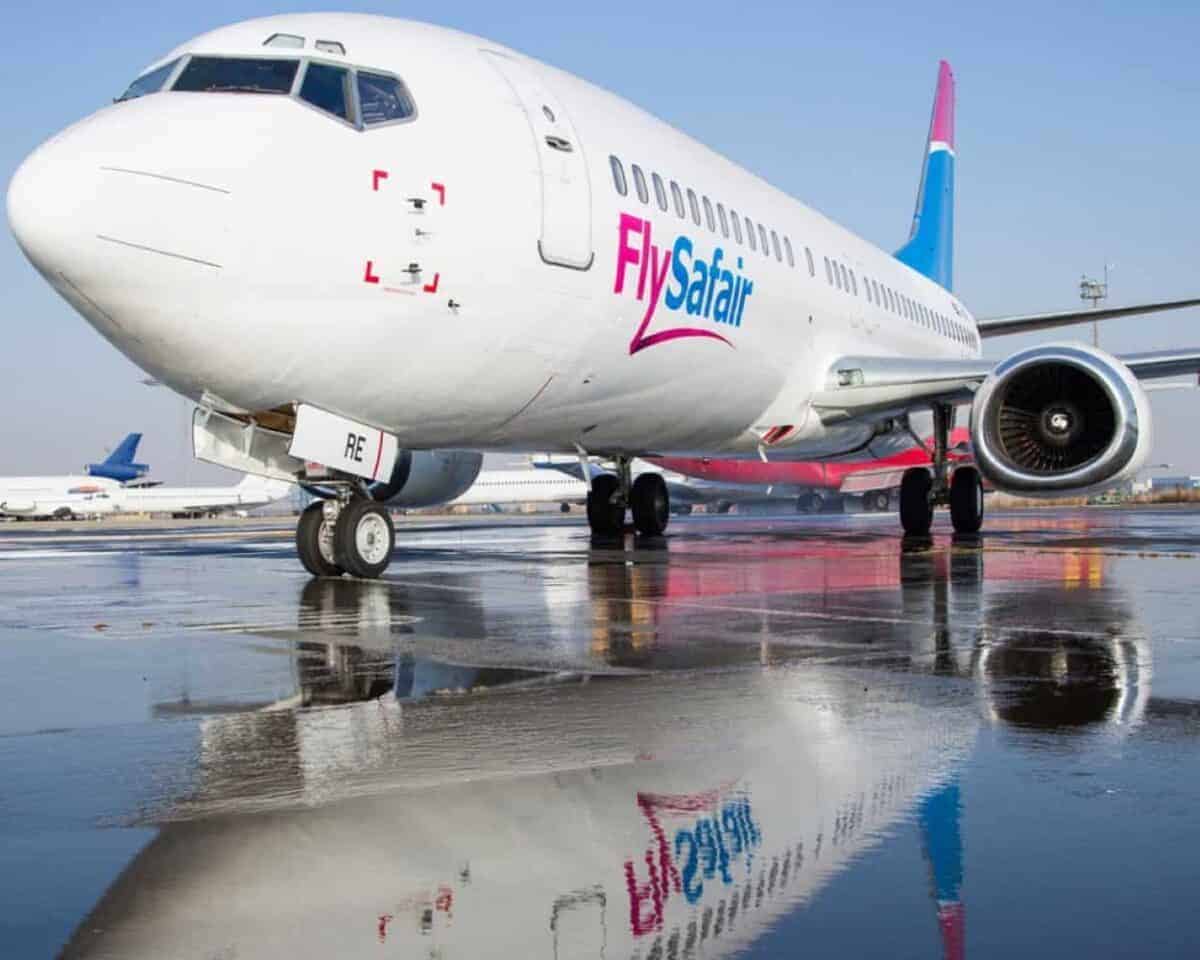













A proposed Black Economic Empowerment (BEE) deal involving FlySafair’s parent company, Safair, and a consortium of black investors has sparked concerns about potential state control and reduced competition within South Africa’s domestic aviation market. The deal, which requires approval from the Competition Commission, is intended to enhance FlySafair’s BEE credentials. However, critics argue it could inadvertently tighten the state’s grip on the skies due to existing connections between state entities and key aviation players.
The Department of Public Enterprises (DPE), responsible for state-owned enterprises, has indicated that the Competition Commission will assess the implications of the deal. Critics, including opposition politicians and industry commentators, highlight a complex web of relationships. The Takatso Consortium, which is the strategic equity partner for South African Airways (SAA), comprises infrastructure investor Harith General Partners and aviation group Global Aviation. Global Aviation is stated to be the current owner of Lift airline. The article also states that Safair, FlySafair’s parent company, also owns the domestic airline Lift. This situation, if the FlySafair BEE deal proceeds, could lead to the state holding an indirect ownership stake in Lift as well.
This potential increase in state influence comes at a sensitive time for the domestic aviation sector. Following the collapse of Comair, which operated British Airways and Kulula, the South African market currently sees only FlySafair and Lift flying domestic routes. Commentators express worry that if the state, through its links with Takatso and SAA, gains influence over FlySafair and potentially Lift, it could lead to a highly concentrated market dominated by state-linked entities.
### Concerns Over Market Concentration
Wikus van der Walt, the Democratic Alliance’s Shadow Minister of Public Enterprises, expressed concern that the BEE deal could allow the government to indirectly influence FlySafair, potentially hindering competition. He argued that allowing the state to gain control over FlySafair would reduce the number of truly independent airlines. Professor Jannie Rossouw from Wits Business School echoed these sentiments, noting that allowing the state to consolidate control over a vital sector like aviation would be detrimental, comparing it to an undesirable “monopoly.”
The Competition Commission itself raised concerns in 2019 regarding the SAA/Takatso deal, flagging potential issues about the creation of a monopoly with effectively only three domestic airlines (SAA, FlySafair, and Lift) if that deal was approved. This earlier concern reinforces the current anxieties surrounding the FlySafair BEE deal. Experts like Dr. Ndivhuho Tshishonga, a public administration expert, suggest that the state’s intervention might be driven by a desire to strengthen BEE and avoid job losses, but caution against actions that undermine free market principles.
### Impact on Competition and Consumers
Derek Luyt, CEO of the Right2Know Campaign, emphasized the importance of a competitive market for consumers, ensuring choices and fair pricing. He warned against the dangers of state capture, highlighting how state control could lead to inefficiency and corruption. Guy Leitch, editor and publisher of SA Flyer Magazine, noted that the proposed deal presents an opportunity for FlySafair to improve its BEE score but questioned the appropriateness of the state getting involved in a commercially successful independent airline.
The debate underscores a broader tension between promoting BEE and ensuring a competitive, open market. While BEE is a critical policy objective, critics fear that this specific deal, given the current market structure and the state’s existing involvements, risks concentrating too much power in the hands of state-linked entities, potentially at the expense of independent competition and consumer choice in the critical domestic aviation industry. The Competition Commission’s impending decision on the FlySafair BEE deal will therefore be closely watched for its implications on the future landscape of South African air travel.
Key Points
* R3 billion: Amount injected by Takatso Consortium into SAA.
* 10%: Proposed stake in Safair for BEE partners in the deal.
* Two: Number of airlines currently flying domestic routes (FlySafair and Lift).
* Three: Number of domestic airlines (SAA, FlySafair, and Lift) mentioned in the Competition Commission’s 2019 concerns about a potential monopoly.
* 2019: Year the Competition Commission flagged concerns regarding the SAA/Takatso deal potentially creating a monopoly.
Read the Complete Article.



