












Comprehensive Summarization:
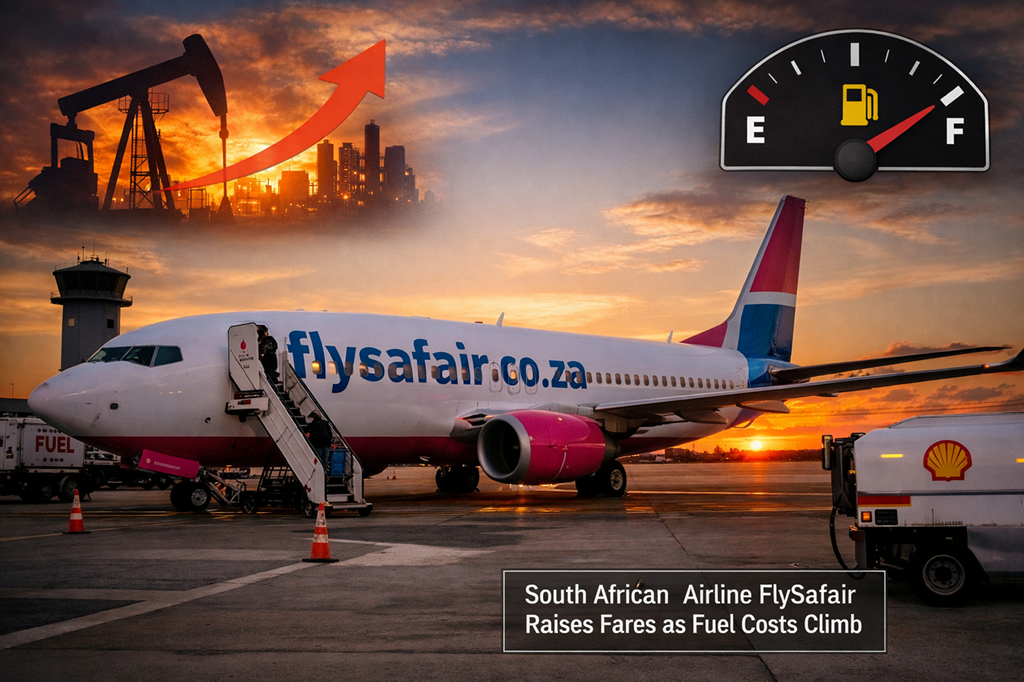
FlySafair, a South African airline, has announced the introduction of a temporary surcharge to offset rising fuel costs. Despite this, the broader fuel supply outlook in South Africa remains relatively stable, according to Skerdian Meta, the author of the article. The surcharge is a response to the increasing fuel prices, which have been impacting the airline’s operational costs. The article also highlights the stable petrol supply outlook from Nigeria, suggesting that while FlySafair is taking immediate measures, the long-term fuel situation in the region appears to be relatively secure.
Key Points:
- FlySafair is introducing a temporary surcharge to counteract the rise in fuel costs.
- The airline’s focus remains on maintaining stable fuel supply in South Africa, particularly from Nigeria.
- The surcharge is a direct response to the increasing operational costs due to fuel price fluctuations.
Actionable Takeaways:
-
Takeaway 1: Airlines should consider implementing temporary surcharges or adjusting ticket prices in response to rising fuel costs. This measure can help mitigate the financial impact on the airline while ensuring operational continuity. The relevance of this takeaway lies in its direct response to a current industry challenge, demonstrating adaptability and proactive cost management.
-
Takeaway 2: Stable petrol supply from Nigeria indicates a relatively secure fuel supply situation in South Africa. Airlines and stakeholders in the travel industry should monitor regional fuel supply trends closely. This insight is crucial for anticipating potential future challenges and planning accordingly, ensuring operational resilience in the face of fluctuating fuel prices.
Contextual Insights:
The introduction of a temporary surcharge by FlySafair reflects a common strategy among airlines facing rising operational costs. In the current travel industry, where fuel prices are a significant variable, airlines are increasingly adopting flexible pricing strategies to manage costs. This trend underscores the importance of financial agility in the sector. Furthermore, the stable petrol supply outlook from Nigeria suggests that while airlines may face short-term challenges, long-term stability in fuel supply can be achieved through regional partnerships and diversified sourcing. This contextual analysis highlights the interplay between operational challenges and strategic responses within the travel industry, emphasizing the need for proactive and adaptable business models.
Read the Complete Article.



