












Article Summary:
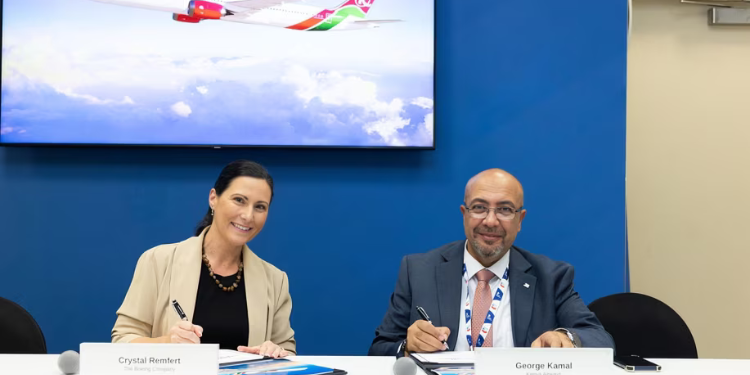
Kenya Airways has extended its agreement with Boeing for the Airplane Health Management (AHM) solution, aimed at enhancing reliability across its 787 Dreamliner fleet. This extension was confirmed during the 2025 Dubai Airshow, underscoring the airline’s commitment to safety and operational excellence. The agreement highlights the ongoing importance of advanced technology in ensuring the safety and well-being of passengers and crew, reflecting broader trends in travel tech and aviation innovation.
Key Points:
- Kenya Airways has extended its Boeing AHM solution agreement, confirmed at the 2025 Dubai Airshow.
- The extension is specifically aimed at supporting the airline’s 787 Dreamliner fleet, enhancing reliability and safety.
- The agreement emphasizes Kenya Airways’ commitment to prioritizing the safety and well-being of its guests and staff.
- The AHM solution is part of broader travel tech advancements, focusing on improving aircraft reliability and operational efficiency.
Actionable Takeaways:
- Investment in Advanced Aircraft Management Solutions: Airlines should consider investing in advanced aircraft management solutions like Boeing’s AHM to improve fleet reliability and safety. This aligns with current industry trends emphasizing technology-driven improvements in aviation operations.
- Prioritizing Safety and Well-being: Airlines must prioritize safety and well-being in their operations, as highlighted by Kenya Airways. This focus not only enhances passenger trust but also aligns with evolving consumer expectations in the travel industry.
- Leveraging Travel Tech for Competitive Advantage: Airlines can leverage travel tech innovations to gain a competitive edge. By adopting cutting-edge solutions, airlines can enhance operational efficiency, reduce costs, and improve the overall travel experience.
Contextual Insights:
The extension of Kenya Airways’ agreement with Boeing for the AHM solution reflects a broader trend in the travel industry towards integrating advanced technology to enhance safety and operational efficiency. This move underscores the critical role of technology in modern aviation, where reliability and passenger safety are paramount. As the industry continues to evolve, the adoption of such solutions is likely to become a standard practice among airlines, driving innovation and setting new benchmarks for service excellence. Furthermore, the emphasis on safety and well-being aligns with the growing consumer demand for secure and reliable travel experiences, positioning airlines that prioritize these aspects as leaders in the market.
Read the Complete Article.


