












Comprehensive Summarization:
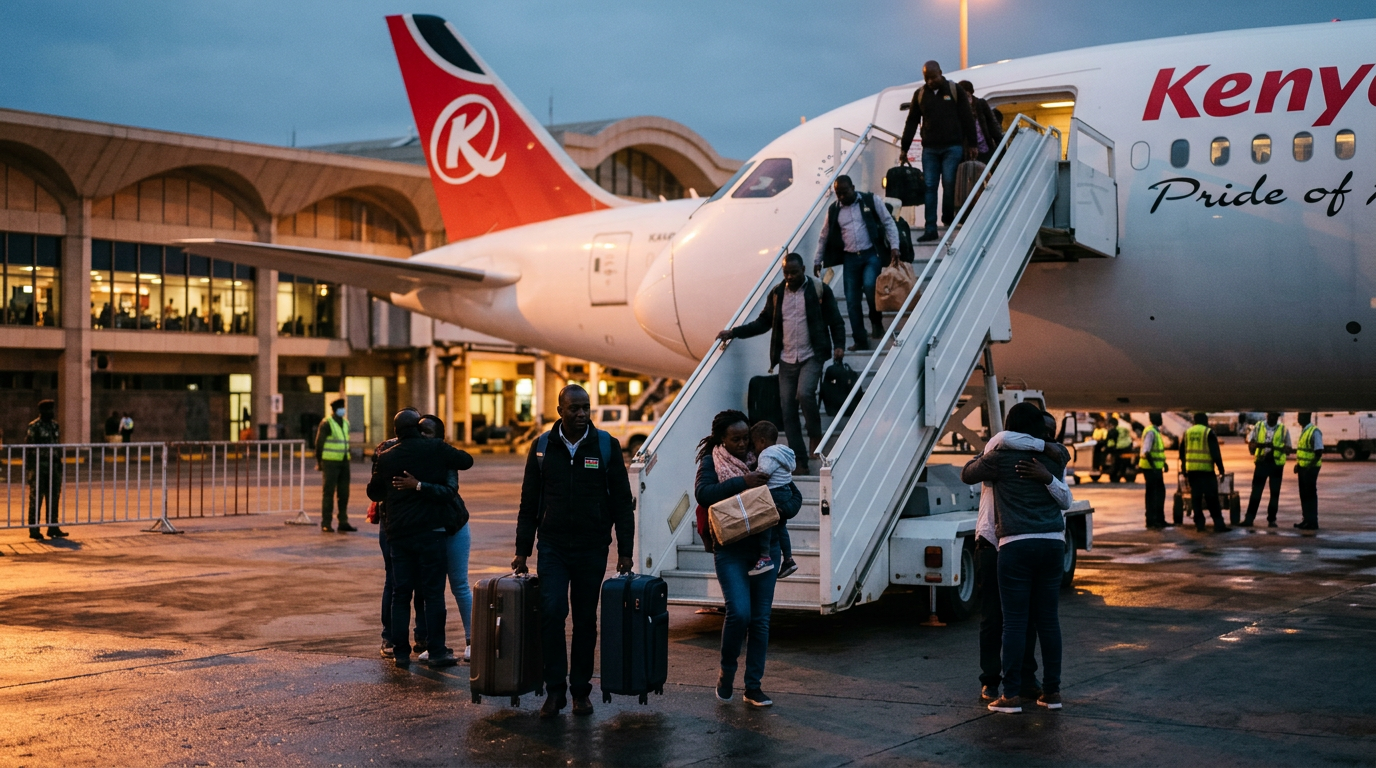
The article reports on a successful repatriation flight operated by Kenya Airways, which landed at Jomo Kenyatta International Airport on Thursday. The flight was a critical lifeline for Kenyans stranded due to escalating hostilities and airspace closures in the Middle East. Dozens of passengers, though exhausted, were relieved to be home after a challenging evacuation mission. The national carrier navigated through severely restricted airspace to ensure the safe return of citizens from a rapidly deteriorating conflict zone.
Key Points:
- Kenya Airways successfully evacuated dozens of stranded Kenyans from the Middle East to Nairobi.
- The flight navigated through restricted airspace, showcasing the airline’s operational capabilities in challenging conditions.
- The repatriation mission highlights the critical role of national carriers in managing crises and ensuring the safety of citizens abroad.
Actionable Takeaways:
-
Enhanced Crisis Management in Travel: The successful evacuation demonstrates the importance of strategic planning and operational flexibility in travel services, especially during geopolitical crises. Airlines should invest in advanced navigation systems and maintain strong relationships with air traffic control to manage restricted airspace effectively. This capability can enhance their reputation as reliable partners in times of crisis.
-
Role of National Carriers in Global Crises: The article underscores the vital role of national carriers in managing crises abroad. Airlines can leverage their extensive networks and local knowledge to provide essential services during emergencies. This role can be further amplified by integrating travel tech solutions that streamline communication and logistics during such operations.
Contextual Understanding:
The evacuation mission reflects the current challenges faced by the travel industry, particularly in regions experiencing political instability. It highlights the need for airlines to adapt to rapidly changing geopolitical landscapes. The use of advanced technologies, such as real-time navigation systems and communication tools, is crucial for ensuring the safety and comfort of passengers in such scenarios. Furthermore, the event underscores the importance of travel insurance and support services for stranded travelers, an area where travel startups can innovate and provide value-added services.
Handling Different Article Types:
The article is a news brief, providing factual information about a specific event in the travel industry. The structured output format ensures that the information is presented clearly and concisely, making it easy for readers to digest and act upon. The focus on actionable insights and contextual understanding aligns with the professional audience’s need for practical and forward-looking content.
json
{
“summary”: “A Kenya Airways repatriation flight successfully landed at Jomo Kenyatta International Airport, bringing dozens of stranded Kenyans home from the Middle East amid escalating hostilities and airspace closures. The flight navigated restricted airspace, showcasing the airline’s operational capabilities in challenging conditions.”,
“key_points”: [
“Kenya Airways evacuated dozens of stranded Kenyans from the Middle East to Nairobi.”,
“The flight navigated through restricted airspace, demonstrating the airline’s operational capabilities.”,
“The repatriation mission highlights the critical role of national carriers in managing crises and ensuring the safety of citizens abroad.”
],
“actionable_takeaways”: [
{
“takeaway”: “Enhanced Crisis Management in Travel”,
“explanation”: “The successful evacuation demonstrates the importance of strategic planning and operational flexibility in travel services, especially during geopolitical crises. Airlines should invest in advanced navigation systems and maintain strong relationships with air traffic control to manage restricted airspace effectively.”
},
{
“takeaway”: “Role of National Carriers in Global Crises”,
“explanation”: “The article underscores the vital role of national carriers in managing crises abroad. Airlines can leverage their extensive networks and local knowledge to provide essential services during emergencies. This role can be further amplified by integrating travel tech solutions that streamline communication and logistics during such operations.”
}
],
“contextual_insights”: [
“The evacuation mission reflects the current challenges faced by the travel industry, particularly in regions experiencing political instability. It highlights the need for airlines to adapt to rapidly changing geopolitical landscapes.”,
“The use of advanced technologies, such as real-time navigation systems and communication tools, is crucial for ensuring the safety and comfort of passengers in such scenarios. Furthermore, the event underscores the importance of travel insurance and support services for stranded travelers, an area where travel startups can innovate and provide value-added services.”
]
}
Read the Complete Article.



