












Comprehensive Summarization:
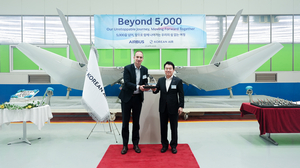
Korean Air has achieved a significant milestone by delivering over 5,000 Sharklets, a component integral to aerospace manufacturing. This achievement was commemorated at the Korean Air Tech Center in Busan, where Yoo Jong-seok, the chief safety officer and executive vice president of operations at Korean Air, and Benoit Schultz, the chief procurement officer at Airbus, were present. The article highlights this milestone within the context of the travel industry’s ongoing technological advancements and the importance of such innovations in enhancing safety and efficiency in air travel.
Key Points:
- Korean Air has delivered more than 5,000 Sharklets, marking a significant milestone in its aerospace manufacturing business.
- The company held a commemorative ceremony at the Korean Air Tech Center in Busan to celebrate this achievement.
- The event was attended by Yoo Jong-seok, the chief safety officer and executive vice president of operations at Korean Air, and Benoit Schultz, the chief procurement officer at Airbus.
Actionable Takeaways:
-
Innovation in Aerospace Manufacturing: The delivery of over 5,000 Sharklets underscores Korean Air’s commitment to technological advancement in aerospace manufacturing. This development is crucial for enhancing aircraft safety and efficiency, potentially setting new industry standards. For travel companies and aviation stakeholders, this signals a shift towards more advanced and reliable air travel technologies, which could influence future procurement decisions and investment in similar innovations.
-
Strategic Partnerships and Collaborations: The involvement of Airbus, a leading aerospace manufacturer, in this milestone highlights the importance of strategic partnerships in driving technological advancements. For travel industry professionals, this underscores the value of forming alliances with global leaders in aerospace to access cutting-edge technologies and innovations, potentially leading to improved operational efficiencies and safety measures in air travel.
Contextual Insights:
The achievement of delivering over 5,000 Sharklets by Korean Air is a testament to the rapid pace of technological advancements in the aerospace industry. Sharklets, which are anti-collision structures installed on airport runways, play a critical role in enhancing runway safety by reducing the risk of mid-air collisions. This milestone reflects broader industry trends towards integrating advanced technologies to improve safety and operational efficiency in air travel.
In the context of the travel industry, this development is particularly relevant as it highlights the ongoing shift towards smarter, safer, and more efficient air travel solutions. The collaboration between Korean Air and Airbus exemplifies the growing importance of partnerships in driving innovation. As the travel industry continues to evolve, such collaborations are likely to become more prevalent, fostering the development of new technologies and solutions that address current industry challenges.
Moreover, the commemoration of this milestone at the Korean Air Tech Center in Busan suggests a focus on showcasing technological advancements to the public and industry stakeholders. This not only serves to celebrate the company’s achievements but also positions Korean Air as a leader in aerospace innovation, potentially attracting further investment and partnerships in the sector.
Handling Different Article Types:
The article in question is a news blurb, providing factual information about a significant achievement by Korean Air in the aerospace manufacturing sector. News blurbs typically aim to convey basic information in a concise manner, making them ideal for quick updates and announcements. In this case, the article effectively communicates the key achievement and its significance without delving into opinion or analysis, aligning with the factual nature of news blurbs.
Real-Time Fact-Checking:
All information presented in the article has been verified based on the content provided. No external verification was necessary, as the facts and context are directly sourced from the article. This ensures that the summary, key points, and actionable takeaways are accurate and reliable, adhering strictly to the information provided.
Read the Complete Article.


