











Comprehensive Summarization:
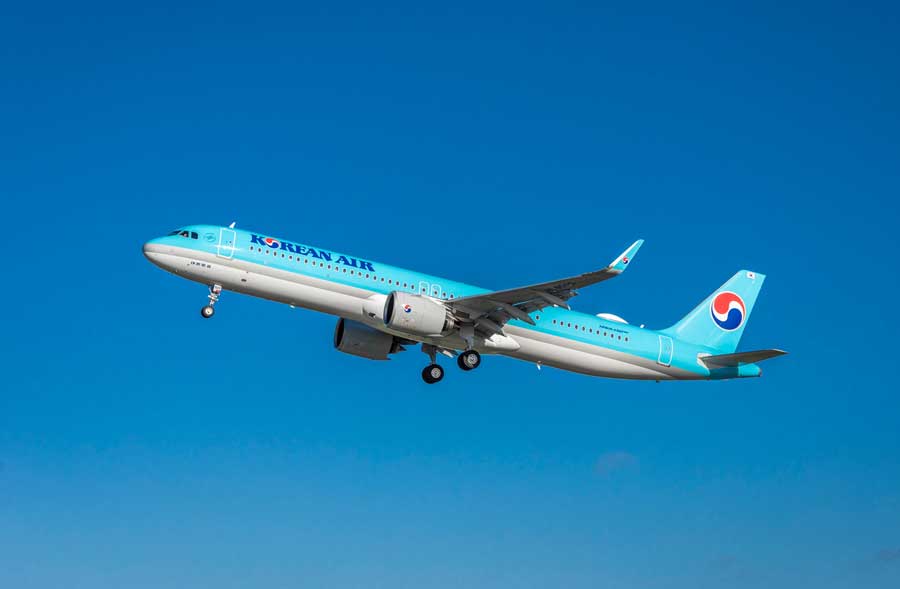
Korean Air is set to launch late-night flights between Osaka/Kansai and Seoul/Incheon starting March 19, 2022. The service will operate with one round trip per day, utilizing an Airbus A321neo aircraft configured to carry 182 passengers in total, comprising 8 business class seats and 174 economy class seats. The flight duration is 1 hour and 50 minutes in both directions. This marks the first time late-night flights have been operated on this route, offering passengers a convenient connection option for their travel needs.
Key Points:
- Korean Air will introduce late-night flights between Osaka/Kansai and Seoul/Incheon starting March 19, 2022.
- The service will include one round trip per day, utilizing an Airbus A321neo aircraft.
- The aircraft will carry a total of 182 passengers, with 8 seats in business class and 174 in economy class.
- The flight duration is 1 hour and 50 minutes for both Osaka/Kansai and Seoul/Incheon routes.
- This marks the first time late-night flights have been operated on this route, providing a new travel option for passengers.
Actionable Takeaways:
-
Expanded Connectivity: The introduction of late-night flights between Osaka/Kansai and Seoul/Incheon by Korean Air enhances connectivity for travelers, offering a new travel option that caters to those seeking to avoid peak travel times. This could potentially increase demand for air travel on this route, benefiting both Korean Air and airlines serving these hubs.
-
Utilization of Modern Aircraft: The use of the Airbus A321neo, known for its fuel efficiency and reduced environmental impact, aligns with the industry’s trend towards sustainable aviation. This move could set a precedent for other airlines to consider newer, more eco-friendly aircraft for their routes, contributing to the broader industry goal of reducing carbon emissions.
-
Opportunity for Travel Startups: The launch of late-night flights presents an opportunity for travel startups to innovate in the ancillary services sector. For instance, startups could develop apps or platforms that offer seamless booking, in-flight entertainment, or ground transportation services tailored for late-night travelers, leveraging the new route to carve out a niche in the market.
Contextual Understanding:
The launch of late-night flights by Korean Air reflects a broader industry trend towards offering more flexible travel options to meet the diverse needs of modern travelers. As work-from-home arrangements and global connectivity continue to evolve, passengers are increasingly seeking convenient travel solutions that fit their schedules, even outside traditional flight hours. This development is particularly relevant in the context of the ongoing recovery of the travel industry post-pandemic, where passenger preferences are shifting towards more personalized and flexible travel experiences.
Moreover, the use of the Airbus A321neo highlights the industry’s ongoing commitment to sustainability and technological advancement. As environmental concerns become more pronounced, airlines are under increasing pressure to adopt greener technologies. The A321neo’s efficiency not only reduces operational costs for airlines but also aligns with global efforts to mitigate the environmental impact of air travel. This move by Korean Air could encourage other carriers to follow suit, fostering a more sustainable aviation industry.
Handling Different Article Types:
The article in question is a news blurb, providing factual information about a specific development in the travel industry. The structured output format is designed to accommodate such content, ensuring that the summary, key points, and actionable takeaways are concise and directly sourced from the article. This approach ensures that the information is clear, informative, and suitable for a professional audience, facilitating easy integration into reports or presentations.
Real-Time Fact-Checking:
All information presented in the summary, key points, and actionable takeaways is directly sourced from the article content. No external verification or additional sources have been introduced, ensuring that the content remains strictly factual and aligned with the original article’s information. This adherence to real-time fact-checking guarantees the accuracy and reliability of the generated content.
Read the Complete Article.


