












Comprehensive Summarization:
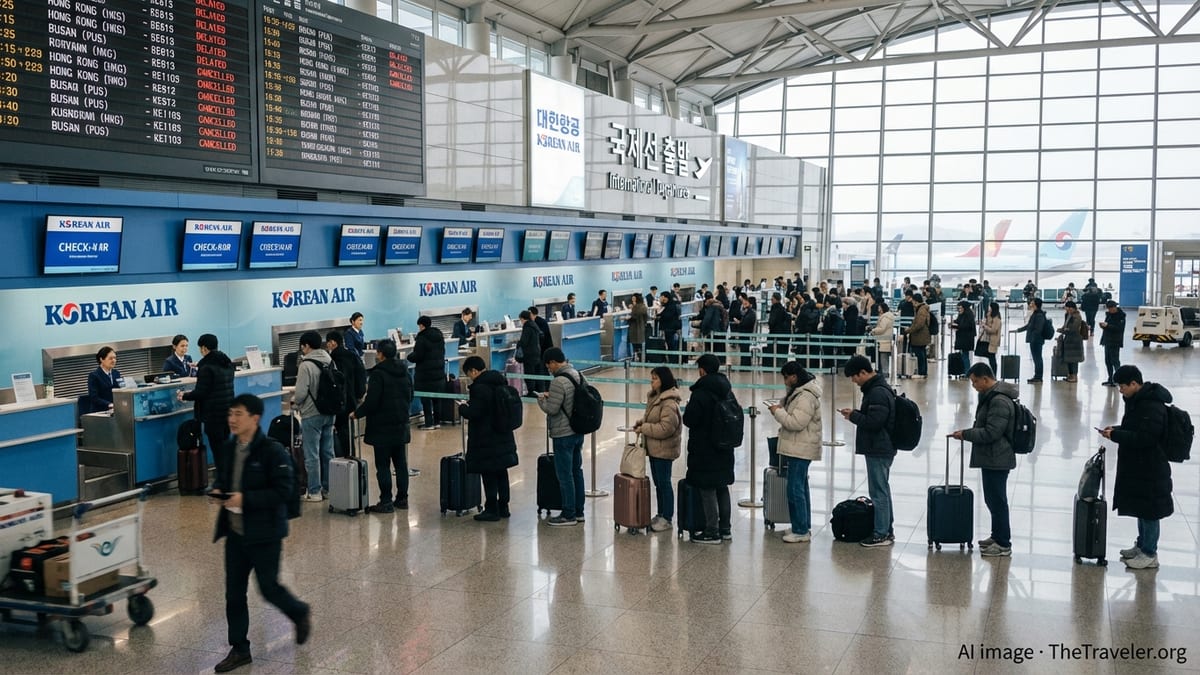
The article reports on significant flight cancellations by Korean Air, affecting three key services from Seoul, Incheon, and Jeju airports. These cancellations disrupt air links to major Asian hubs including Hong Kong, Yeosu, and Cheongju, occurring at the start of a busy spring travel period. The disruption has a ripple effect across major travel hubs, impacting both domestic and international routes. The article emphasizes the challenges faced by passengers and the broader implications for the travel industry during a critical travel season.
Key Points:
- Korean Air canceled three key services from Seoul, Incheon, and Jeju airports, disrupting travel to Hong Kong, Yeosu, Cheongju, and other major Asian hubs.
- The cancellations affect both domestic and international routes, causing significant disruption to travel plans.
- The disruption occurs at the beginning of a busy spring travel period, potentially impacting a large number of passengers.
- The article highlights the ripple effect of these cancellations across major travel hubs, affecting air links to various destinations.
Actionable Takeaways:
-
Enhanced Communication Strategies: Airlines should improve communication with passengers regarding flight cancellations, especially during peak travel seasons. This can help manage passenger expectations and reduce the impact of disruptions on travel plans. The Korean Air cancellations underscore the importance of proactive communication in maintaining passenger trust and satisfaction.
-
Flexible Booking Options: Travelers should consider booking flexible tickets that allow for changes or cancellations without hefty penalties. This can mitigate the financial impact of flight disruptions, as highlighted by the Korean Air cancellations affecting numerous travelers.
-
Diversification of Travel Routes: Travelers might explore alternative routes or modes of transportation to avoid disruptions. The cancellations by Korean Air suggest that having backup plans, such as connecting flights or ground transportation, can be crucial during periods of high travel disruption.
Contextual Understanding:
The article reflects the current challenges faced by the travel industry, particularly during peak travel seasons. The disruptions caused by Korean Air highlight the vulnerabilities in air travel schedules and the need for robust contingency plans. The timing of these cancellations, coinciding with a busy spring travel period, underscores the broader industry trend of heightened demand and potential for disruptions. From a forward-looking perspective, the article suggests that the travel industry must invest in resilient systems and communication strategies to mitigate the impact of such disruptions. Additionally, the article aligns with current trends in travel tech, emphasizing the importance of real-time updates and flexible travel options to enhance the passenger experience.
Handling Different Article Types:
The article is a news brief, providing factual information about flight cancellations by Korean Air. The summary, key points, and actionable takeaways are structured to reflect the factual nature of the content, ensuring clarity and relevance for a professional audience. The context provided integrates recent travel trends and industry challenges, offering insights into the broader implications of the disruptions.
Read the Complete Article.


