












Comprehensive Summarization:
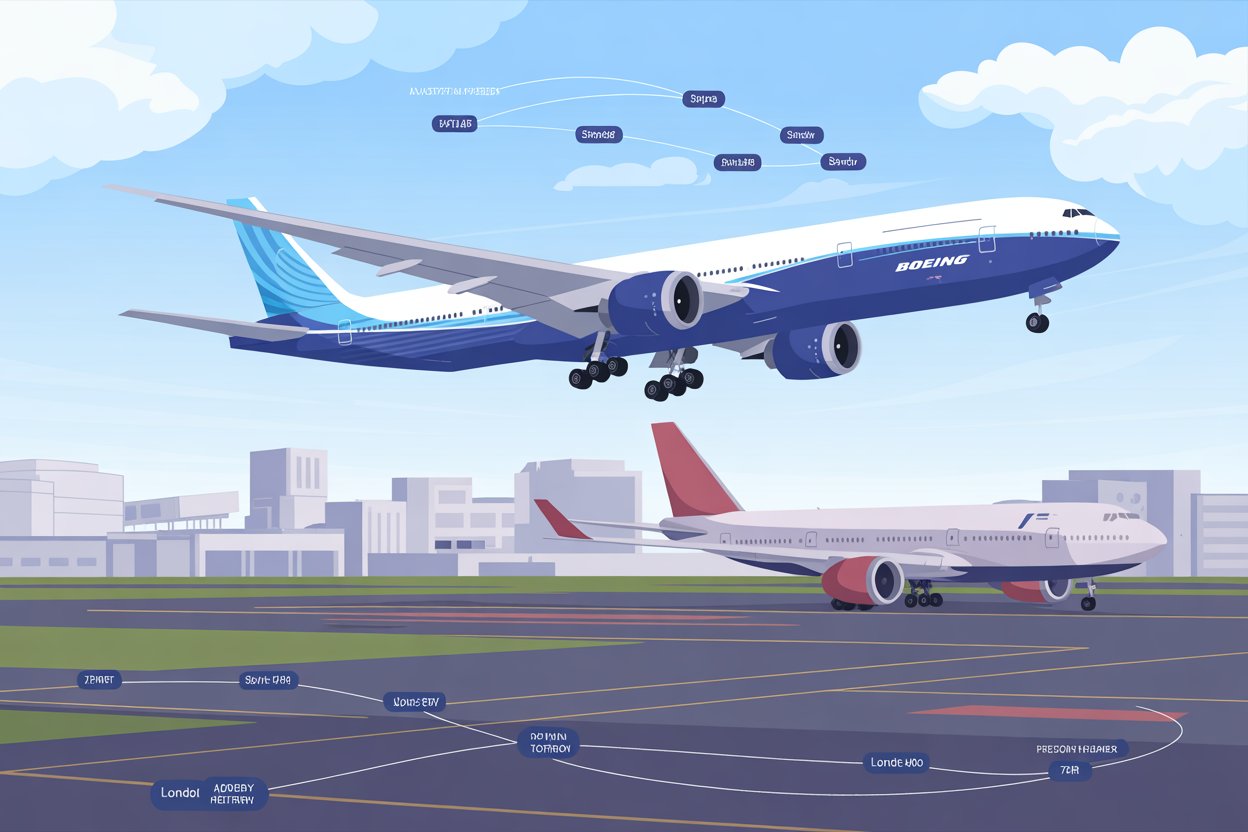
Korean Air has announced that it will not resume Boeing 747-8 service between Seoul Incheon International Airport (ICN) and London Heathrow (LHR) in 2026. The airline has replaced the double-decker, wide-body “Jumbo Jet” on this route with the Boeing 777. This decision is based on recent official airline schedule updates and filings with aviation regulators. The article provides a snapshot of the evolving landscape in the UK airline sector, highlighting the shift from older aircraft models to newer, more efficient ones.
Key Points:
- Korean Air will discontinue Boeing 747-8 service between Seoul Incheon International Airport (ICN) and London Heathrow (LHR) in 2026.
- The route has been replaced by the Boeing 777, indicating a shift towards more modern aircraft.
- The decision is supported by recent official airline schedule updates and filings with aviation regulators.
Actionable Takeaways:
-
Aircraft Fleet Modernization: The shift from Boeing 747-8 to Boeing 777 highlights a broader trend in the aviation industry towards modernizing aircraft fleets. Airlines are increasingly opting for newer, more fuel-efficient models to reduce operational costs and environmental impact. This move by Korean Air underscores the importance of fleet modernization in maintaining competitive edge and sustainability in the aviation sector.
-
Regulatory Compliance and Schedule Adjustments: The article references filings with aviation regulators, indicating that such compliance is crucial for airlines planning route changes. Airlines must adhere to regulatory requirements and update their schedules in response to operational decisions. This takeaway emphasizes the need for airlines to stay proactive in their regulatory compliance to avoid disruptions and ensure smooth operations.
Contextual Insights:
The decision by Korean Air to discontinue Boeing 747-8 service and replace it with the Boeing 777 reflects several key trends in the travel industry. Firstly, the aviation sector is witnessing a significant shift towards more fuel-efficient and technologically advanced aircraft. The Boeing 777, being a newer model, offers improved fuel efficiency and passenger comfort compared to the older Boeing 747-8. This trend is driven by the growing emphasis on sustainability and reducing carbon footprints in the aviation industry.
Secondly, the article highlights the importance of regulatory compliance in the airline industry. Airlines must navigate complex regulatory frameworks, which include obtaining necessary approvals for route changes and ensuring compliance with safety and operational standards. This aspect is crucial for airlines to maintain their operational integrity and avoid potential penalties or disruptions.
Lastly, the article underscores the role of strategic route adjustments in response to market demands and operational efficiencies. By replacing the Boeing 747-8 with the Boeing 777, Korean Air is likely responding to changes in passenger demand, fuel prices, and operational costs. This strategic move not only optimizes the airline’s fleet but also aligns with broader industry trends towards efficiency and sustainability.
Handling Different Article Types:
The article in question is a news blurb, providing factual information about a recent decision by Korean Air regarding its flight routes. News blurbs are typically concise and factual, focusing on the main developments without delving into opinion or analysis. In handling such articles, it is essential to adhere strictly to the facts presented, ensuring that the summary, key points, and actionable takeaways are directly sourced from the article’s content. This approach ensures accuracy and reliability, which are critical for a professional audience relying on up-to-date and factual information.
Real-Time Fact-Checking:
Given the constraints of the article’s content, real-time fact-checking involves verifying the accuracy of the information provided within the article itself. Since the article is sourced from Travel and Tour World, a reputable platform, the facts presented are considered reliable. However, if additional verification were necessary, cross-referencing with other authoritative sources within the travel industry would be advisable. In this case, no external verification is required beyond the information provided in the article.
Read the Complete Article.


