












Comprehensive Summarization:
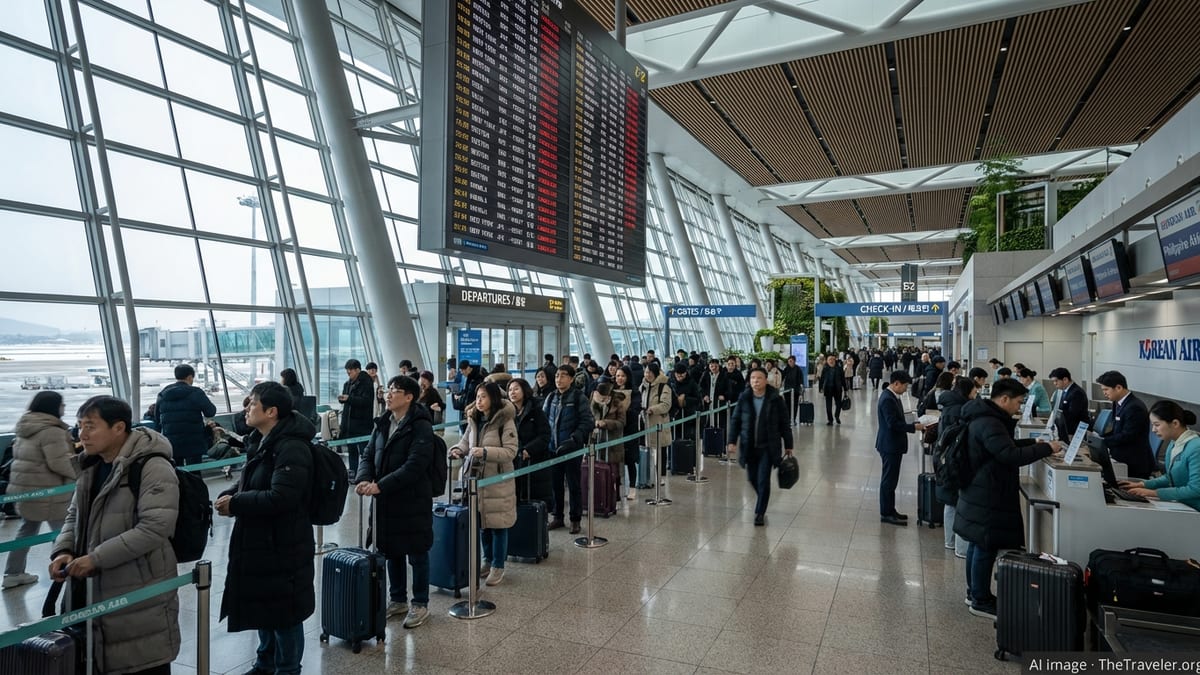
The article reports significant disruptions in transpacific and regional travel due to Korean Air and Philippine Airlines canceling five key services linking South Korea with major hubs such as New York, Boston, and Manila. This disruption was exacerbated by a powerful winter storm affecting the US Northeast and tight aircraft availability. The article provides operational data and airport notices as evidence of the cancellations, highlighting the challenges faced by travelers and the broader implications for the travel industry.
Key Points:
- Korean Air and Philippine Airlines canceled five key services linking South Korea with major US hubs due to a winter storm and tight aircraft availability.
- The cancellations disrupted carefully planned journeys for transpacific and regional travelers.
- Operational data and airport notices confirmed the cancellations, underscoring the operational challenges faced by the airlines.
- The disruption highlights the vulnerability of travel schedules to weather-related and operational challenges.
Actionable Takeaways:
-
Flexible Travel Planning: Travelers should adopt flexible travel plans, including booking refundable tickets and monitoring flight status updates closely. This proactive approach can mitigate the impact of last-minute cancellations and disruptions, ensuring minimal inconvenience during travel.
-
Enhanced Communication with Airlines: Airlines should improve communication channels to promptly inform passengers about cancellations and rescheduling options. Clear and timely communication can enhance customer satisfaction and trust, especially during unforeseen disruptions.
-
Investment in Resilient Scheduling Systems: The travel industry should invest in advanced scheduling and operational systems that can quickly adapt to weather-related disruptions. Implementing real-time data analytics and predictive modeling can help airlines proactively manage and mitigate the impact of adverse weather conditions on flight schedules.
Contextual Insights:
The disruption caused by Korean Air and Philippine Airlines highlights the vulnerability of the travel industry to external factors such as severe weather and operational constraints. This event underscores the importance of robust contingency planning and flexible scheduling systems in the travel sector. As the industry continues to evolve, integrating advanced technologies such as AI-driven predictive analytics can enhance resilience against such disruptions. Moreover, the incident emphasizes the need for airlines to maintain open lines of communication with travelers, ensuring transparency and minimizing the negative impact on customer experience. This situation also serves as a reminder for the industry to continually innovate and adapt to emerging challenges, ensuring the sustainability and reliability of travel services.
Read the Complete Article.


