












Comprehensive Summarization:
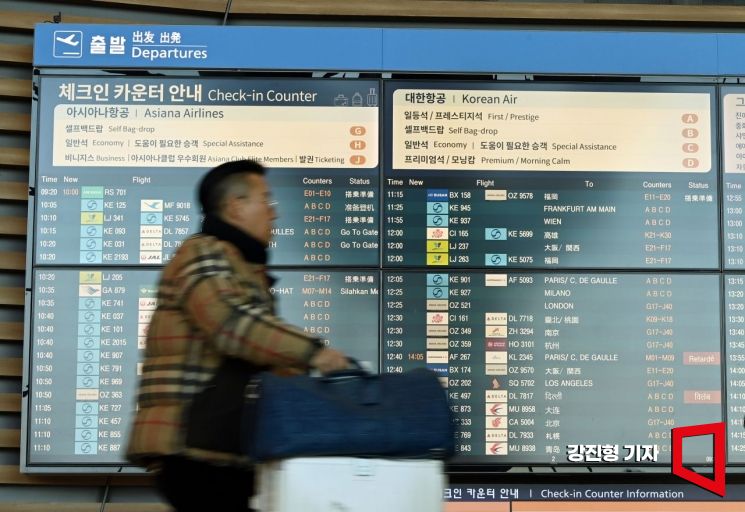
Korean Air, the sole domestic carrier operating the Incheon–Dubai route, announced on March 6 that it will extend the suspension of this route until March 15, following the aftermath of airstrikes by the United States and Israel against Iran. The suspension came after Korean Air urgently turned back flight KE951 and canceled flight KE952, both operating between Incheon and Dubai, on February 28. The article also includes a photo of passengers passing in front of the terminal digital display at Incheon International Airport, providing a visual context to the disruption caused by the route suspension.
Key Points:
- Korean Air has suspended the Incheon–Dubai route due to the aftermath of airstrikes by the United States and Israel against Iran.
- The suspension began on March 6, following urgent turnbacks of flights KE951 and KE952 on February 28.
- The article includes a photo of passengers at Incheon International Airport, illustrating the impact of the route suspension on travelers.
Actionable Takeaways:
-
Route Suspension Impact: The suspension of the Incheon–Dubai route by Korean Air highlights the vulnerability of air travel to geopolitical events. Airlines operating on critical routes should have contingency plans in place to mitigate the impact of such disruptions on their operations and customer experience.
-
Importance of Real-Time Communication: The article underscores the importance of timely communication with passengers during route suspensions. Korean Air’s decision to suspend the route and provide updates to passengers demonstrates the need for effective communication strategies to manage customer expectations and maintain trust during crises.
Contextual Insights:
The suspension of the Incheon–Dubai route by Korean Air is a direct consequence of the geopolitical tensions between the United States, Israel, and Iran. This event underscores the broader context of how international conflicts can disrupt global supply chains, including air travel. In the current travel industry, characterized by increasing geopolitical uncertainties, airlines must adopt resilient strategies to manage such disruptions. This includes diversifying routes, enhancing communication protocols, and leveraging technology to offer alternative travel solutions to passengers. Furthermore, the incident highlights the critical role of travel tech in managing operational challenges and ensuring continuity in service delivery during crises. As the industry evolves, integrating advanced travel tech solutions will be essential for airlines to navigate future uncertainties effectively.
Read the Complete Article.


