












Comprehensive Summarization:
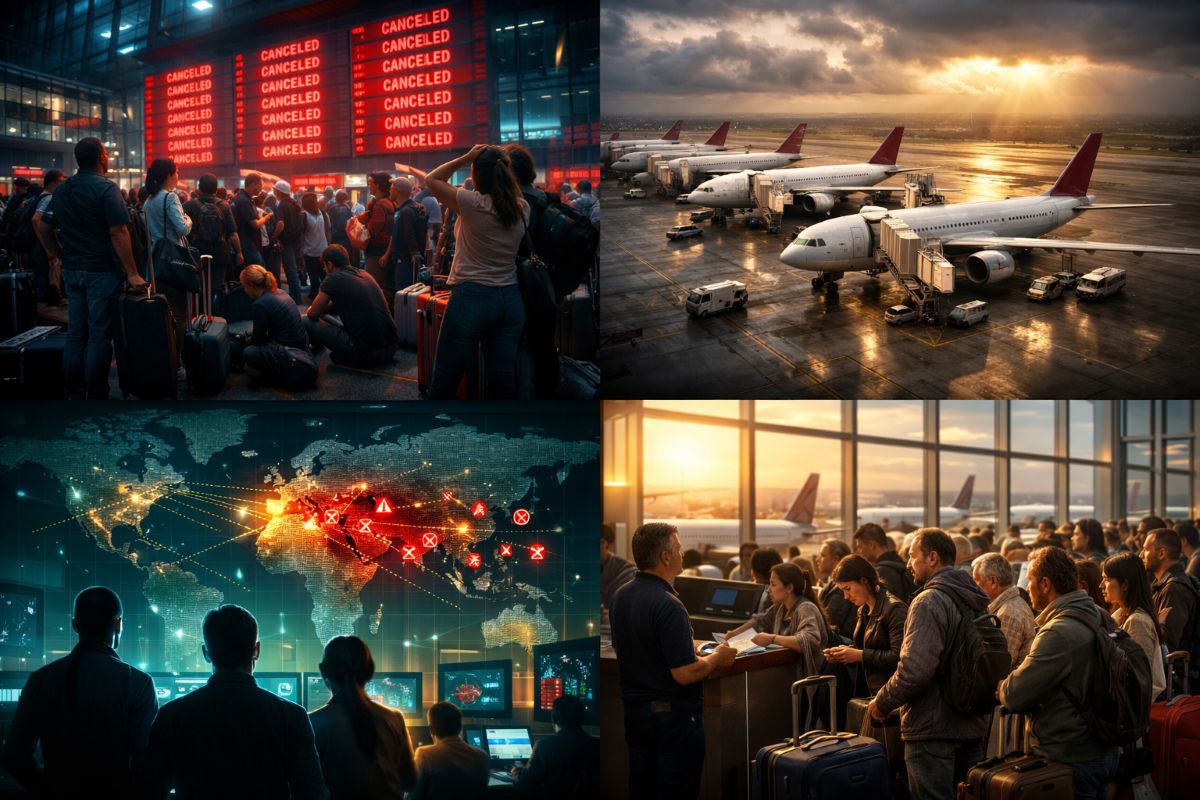
The article reports on a significant disruption in air travel across the Middle East, triggered by Qatar Airways’ cancellation of 497 flights and the delay of 5 others due to regional conflict and associated missile and drone threats. This situation has led to widespread travel disruptions in countries including Qatar, the United Arab Emirates, Saudi Arabia, Oman, and beyond. The civil aviation authorities in the region have responded by restricting or closing key airports, causing chaos at the gates and affecting hundreds of thousands of passengers. The article underscores the impact of geopolitical tensions on the travel industry, highlighting the vulnerability of air travel to such disruptions and the challenges faced by both airlines and passengers in navigating these turbulent times.
Key Points:
- Qatar Airways canceled 497 flights and delayed 5 others due to regional conflict and missile/drone threats.
- The disruption has caused widespread travel chaos across multiple countries in the Middle East, including Qatar, the UAE, Saudi Arabia, and Oman.
- Civil aviation authorities in the region have taken measures to restrict or close key airports in response to the threats.
- The incident highlights the vulnerability of air travel to geopolitical tensions and the challenges faced by the travel industry in such scenarios.
Actionable Takeaways:
-
Implement Flexible Booking Policies: Airlines should consider offering more flexible booking options, such as free rescheduling or fare adjustments, to mitigate the impact of sudden flight cancellations or delays on passengers. This can help maintain customer satisfaction and loyalty during times of uncertainty.
-
Enhance Communication with Passengers: Airlines and airports should improve communication channels to keep passengers informed about changes in flight schedules, potential delays, or cancellations. Real-time updates via mobile apps, emails, or SMS can help manage passenger expectations and reduce anxiety during disruptions.
-
Invest in Alternative Transportation Solutions: Travel agencies and tour operators should explore alternative ground transportation options, such as ground transportation or sea travel, to offer passengers viable alternatives when air travel is disrupted. This can help mitigate the economic impact on tourism and ensure that travelers have access to essential services.
Contextual Insights:
The article reflects the current state of the travel industry, where geopolitical tensions and security threats pose significant challenges to air travel. The incident involving Qatar Airways and the subsequent disruptions highlight the interconnectedness of global travel networks and the ripple effects of regional conflicts. This situation underscores the need for the travel industry to develop robust contingency plans and invest in technologies that enhance safety and resilience. Furthermore, the disruption serves as a reminder of the importance of flexible travel policies and effective communication strategies in maintaining customer trust and satisfaction during crises. As the industry evolves, embracing innovative solutions and fostering collaboration among stakeholders will be crucial in navigating future uncertainties and ensuring the continuity of travel services.
Read the Complete Article.



